Are Affricate Resonant Consonants: Genius Tool?
Quick Summary: Affricate consonants are NOT resonant consonants. They are a unique type of sound produced by a quick release of air that stops and then continues, creating a distinct sound. Understanding this difference is key to mastering pronunciation and phonetics.
Are Affricate Resonant Consonants: Decoding Speech Sounds
Have you ever struggled to say a word correctly, and it sounds a little “off”? Sometimes, it’s because we’re not quite sure about the sounds our mouths and tongues are making. It’s like trying to tune a guitar without knowing which strings are which! This is especially true when we talk about different types of consonant sounds. One that often causes a bit of confusion is the affricate sound. Many people wonder if these sounds are also resonant consonants. Let’s break down what affricates are and why they are special, so you can feel more confident about how we make the sounds we use every day to communicate.
What Exactly Are Consonant Sounds?
Consonants are the building blocks of spoken language that allow us to distinguish between words. They are produced by blocking or stopping the airflow from your lungs in some way as it passes through your mouth, nose, or throat. Think about the difference between “S” and “A”: “A” is a vowel where your mouth is open, and air flows freely. But with “S,” you’re creating a blockage with your tongue or lips. This blockage is what makes it a consonant.
There are many ways to categorize consonants, based on how they are made and where in the mouth the airflow is blocked. This detailed classification helps linguists understand how languages work and how people learn to speak.
Understanding Consonant Types: Place and Manner of Articulation
To really get a handle on consonant sounds, we look at two main things:
- Place of Articulation: This describes where in your mouth the airflow is blocked or narrowed. Are your lips coming together (like for ‘p’ or ‘b’)? Is your tongue touching your teeth (like for ‘th’)? Or is it near the roof of your mouth (like for ‘k’ or ‘g’)?
- Manner of Articulation: This describes how the airflow is blocked or narrowed. Is the airflow completely stopped for a moment (like for ‘t’ or ‘d’)? Is it narrowed so air hisses through (like for ‘s’ or ‘f’)? Or does it involve a combination of stopping and releasing?
These two categories help us sort all the different consonant sounds into groups. For example, ‘p’ and ‘b’ are both made by closing the lips strongly. The difference is in our vocal cords: ‘p’ is voiceless (vocal cords don’t vibrate), and ‘b’ is voiced (vocal cords vibrate). This is why they are grouped together as “bilabial stops.”
Introducing Affricates: The Hybrid Champions of Sound
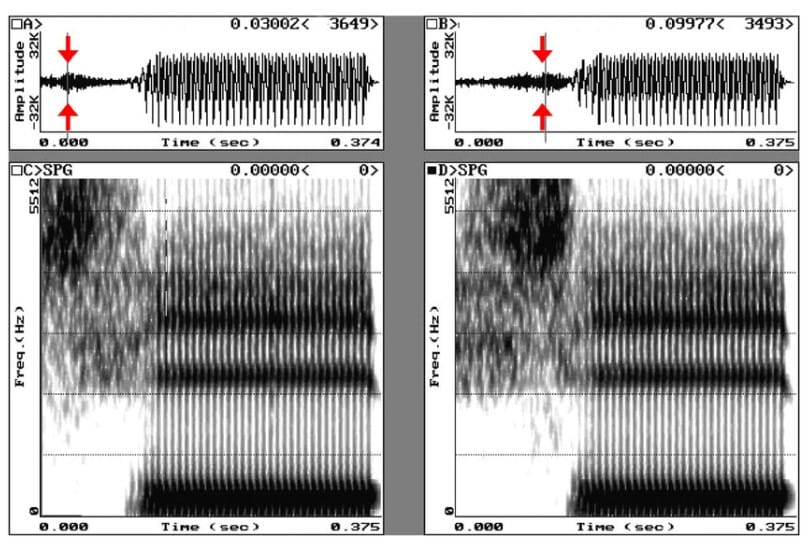
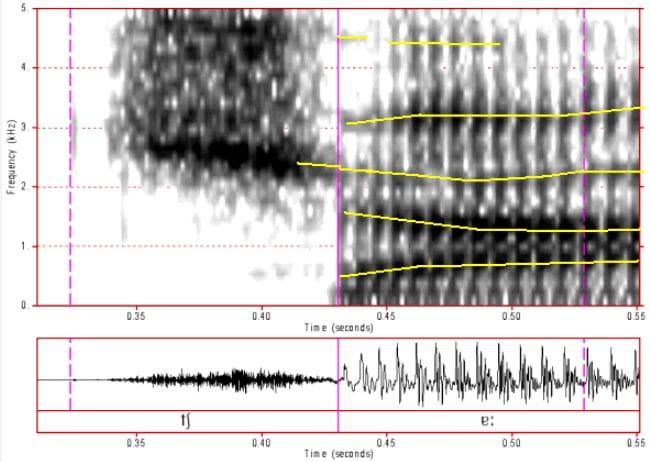
Now, let’s dive into affricates, which are really fascinating! An affricate is a consonant sound that starts like a stop consonant (where the airflow is completely blocked for a moment) and then finishes like a fricative (where the airflow is narrowed and creates friction, like a hissing or buzzing sound).
So, it’s a two-part process, but it happens so quickly it’s heard as a single sound. Think of it like a quick “T” sound that immediately bursts into a “sh” sound, all in one go.
How are Affricates Made?
The production of an affricate involves a specific sequence of events in your mouth:
- Stop Phase: First, the airflow is completely blocked at a specific point in the mouth. This part is just like a regular stop consonant (like ‘p’, ‘t’, or ‘k’).
- Closure Release: Then, instead of just releasing the air in a puff (like a stop), the closure is released much more slowly and with less open space.
- Fricative Phase: This slow, narrow release causes the air to make friction noise – the “fricative” part. It’s like air being forced through a small, tight opening.
This combined action creates a sound that is distinct from just a stop or just a fricative. They are like the dynamic duo of consonant sounds!
Common Examples of Affricates
You actually use affricates all the time without even thinking about it! Here are some of the most common ones in English:
- /tʃ/ as in “chair” or “church”: This sound starts with a ‘t’ position and releases into a ‘sh’ sound.
- /dʒ/ as in “judge” or “gem”: This sound is the voiced version of /tʃ/. It starts with a ‘d’ position and releases into a ‘zh’ sound (like the ‘s’ in “measure”).
- /ts/ as in “cats” or “hats”: While less common as a strong affricate in some dialects, it’s often found at the end of words. It’s a ‘t’ followed by an ‘s’.
- /dz/ as in “beds” or “roads”: This is the voiced version of /ts/, a ‘d’ followed by a ‘z’.
These sounds are formed using the alveolar ridge (the bumpy part behind your upper front teeth) and the palate (the roof of your mouth).
What are Resonant Consonants?
Now, let’s contrast this with resonant consonants. Resonant consonants, also known as sonorants or continuants, are sounds where the airflow is continuous and relatively unimpeded. The sound is produced with a vibration of the vocal cords, creating a more “singing” or “humming” quality. They can be held for a longer time than non-resonant consonants.
The key characteristic of sonorants is that the air flows smoothly through the vocal tract without forceful interruption. They are naturally voiced.
Types of Resonant Consonants
Resonant consonants are typically divided into a few main categories:
- Nasals: Produced with air flowing through the nose. Examples include /m/, /n/, and /ŋ/ (as in “sing”).
- Liquids: Produced with the tongue creating some obstruction but not closing off the airway completely. These include the “lateral” approximant /l/ (where air flows around the sides of the tongue) and the “rhotic” approximant /r/.
- Glides (or Semivowels): Produced with the tongue moving quickly to or from a vowel position. Examples include /j/ (as in “yes”) and /w/ (as in “wet”).
These sounds are the backbone of melody in speech because of their continuous, free-flowing airflow.
Are Affricate Resonant Consonants? The Direct Answer
So, to answer the main question directly and clearly: No, affricate consonants are NOT resonant consonants.
While resonant consonants have a continuous, unimpeded airflow, affricates are defined by their initial stop followed by a restricted, fricative release. This means there is an interruption and a distinct noise-making process that is fundamentally different from the smooth, continuous airflow of sonorants.
Think of it this way: A resonant consonant is like a gentle, flowing river, while an affricate is more like a controlled dam release – initially stopped, then a burst of turbulent water. Both involve water, but the way the water flows and the resulting sound or effect is completely different.
Comparing Affricates and Resonants Side-by-Side
To make it even clearer, let’s look at how these two types of sounds differ:
| Feature | Affricate Consonants | Resonant Consonants (Sonorants) |
|---|---|---|
| Airflow | Starts with a complete stop, then a narrow, turbulent release (friction). | Continuous, unimpeded airflow (or only slightly obstructed). |
| Production | Combination of stop and fricative. | Produced with vocal cord vibration and open vocal tract (nasals, liquids, glides). |
| Sound Quality | Has both a plosive (stop) and a fricative (hissing/buzzing) quality. | Singing, humming, or smooth, flowing quality. Can be held for longer. |
| Voicing | Can be voiced (like /dʒ/) or voiceless (like /tʃ/). | Always voiced. |
| Examples in English | /tʃ/ (chair), /dʒ/ (judge) | /m/ (man), /n/ (no), /l/ (lip), /r/ (run), /j/ (yes), /w/ (wet) |
Why This Distinction Matters
Understanding the difference between affricates and resonant consonants isn’t just for linguists or speech therapists! It can actually help you in a few practical ways:
- Improved Pronunciation: Knowing how sounds are formed can help you articulate words more clearly, which is great for clear communication in your professional or personal life.
- Learning New Languages: Many languages have different sets of affricates or resonants. Recognizing these distinctions is a big step in mastering a new language’s sounds. Spanish, for example, has affricates like /ts/ in words like “pizza.”
- Understanding Speech Science: It gives you a deeper appreciation for the amazing mechanics of your own voice and how humans create such a variety of sounds. You can explore resources on phonetics from institutions like UCLA Linguistics to learn more about the scientific study of speech sounds.
- Acting and Public Speaking: For those in professions where clear delivery is key, understanding nuances of articulation can be a huge advantage.
The “Genius Tool” Aspect: How to Use This Knowledge
You might be thinking, “Is this knowledge a ‘genius tool’?” Well, in a way, it absolutely is! Think of it like a mechanic understanding the different parts of an engine. Knowing that a spark plug is different from a piston allows them to diagnose problems and make repairs effectively. Similarly, knowing the difference between voiced/voiceless, stops/fricatives/affricates/resonants gives you a set of tools to:
- Diagnose pronunciation difficulties: If you or someone you know struggles with a particular sound, knowing its classification can pinpoint the issue. For instance, if someone has trouble with “church,” understanding that /tʃ/ is an affricate (stop + fricative) can help identify if they are doing the stop part, the fricative part, or the release correctly.
- Identify and practice sounds in different languages: Many languages have sounds that are similar but not identical to English. For example, in Mandarin Chinese, the “zh” sound is similar to the English /dʒ/ but is produced slightly further back on the tongue.
- Appreciate the complexity of language: It’s a subtle but powerful insight into how humans communicate so effectively.
Affricate Production: A Closer Look
Let’s revisit the mechanics of those affricate sounds. It’s a swift, coordinated effort!
The /tʃ/ Sound (like in “chair”)
To make the /tʃ/ sound:
- Place the tip of your tongue just behind your alveolar ridge, similar to where you’d make a ‘t’ sound.
- Stop the airflow completely for a tiny moment.
- Quickly release the airflow, but this time, don’t open your mouth as wide as for an unreleased ‘t’. Instead, press your tongue closer to the roof of your mouth, creating a narrow channel.
- As air rushes through this narrow channel, it creates a “sh” sound.
This stop-then-fricative combination is what defines the affricate.
The /dʒ/ Sound (like in “judge”)
The /dʒ/ sound is very similar in production but is voiced:
- Start with your tongue in the same position as for /tʃ/, behind the alveolar ridge, and stop the airflow.
- Crucially, vibrate your vocal cords during this stop phase.
- Release the airflow slowly through the narrow channel, creating a “zh” sound (like the ‘s’ in “measure”).
The vibration of the vocal cords makes this a “voiced” affricate.
Common Misconceptions About Affricates
One common confusion is thinking that an affricate is simply a stop consonant followed by a fricative spoken very quickly, like saying “tk” or “dg” separately. However, in true affricates, the stop and fricative phases blend together into a single, unified sound. The release of the stop forms the beginning of the fricative, rather than being two distinct sounds.
Another point can be distinguishing them from clusters of consonants. For example, in English, “ts” in “cats” functions more like an affricate than a true stop-fricative combination in some analyses. However, linguists often distinguish between true affricates (like /tʃ/ and /dʒ/) which are considered single phonemes (basic sound units), and consonant clusters which are sequences of two distinct sounds.
Connecting to Other Speech Science Concepts
The study of sound production (phonetics) and sound systems (phonology) uses these classifications extensively. For instance, understanding affricates helps in:
- Phonological Acquisition: How children learn sounds. They often learn simpler sounds like stops and nasals before mastering more complex sounds like fricatives and affricates.
- Speech Disorders: Issues like lisps or difficulties with certain sounds can be understood and treated by identifying which aspect of sound production is affected – the stop, the fricative, or the release. Organizations like the American Speech-Language-Hearing Association (ASHA) offer a wealth of information on these topics.
- Cross-linguistic Phonology: Comparing sound inventories across languages often highlights the prevalence or absence of certain affricates or resonant sounds, influencing language learning and teaching.
Let’s Practice!
Ready to try some sounds? You can feel the difference with your own mouth!
Try saying:
- “Pee” (a stop)
- “Fee” (a fricative)
- “Peace” (ends in a fricative cluster)
- Now, try “Cheese” (starts with an affricate /tʃ/). Notice how your tongue moves from the stop position to a narrower position to create the sound.
Try saying:
- “Mop” (ends in a stop)
- “Moan” (a nasal, which is resonant)
- “Moo” (a vowel, which is resonant)
- Now, try “Judge” (starts with an affricate /dʒ/). Feel the vibration and the slight friction at the end of the initial sound.
Pay attention to the air movement and the feel in your mouth for each sound. It’s a small detail, but it makes a big difference in clarity!
Frequently Asked Questions
Q1: What is the main difference between affricates and fricatives?
A1: Fricatives involve continuous airflow creating friction (like ‘s’ or ‘f’). Affricates start with a complete blockage of airflow (like a stop consonant) and then a slow release into friction. It’s a stop-fricative combination in one sound.
Q2: Are all consonant sounds either resonant or non-resonant?
A2: Generally, yes. Consonants are often broadly classified into sonorants (resonant) and obstruents (non-resonant, which include stops, fricatives, and affricates). Affricates fall into the obstruent category.
Q3: Can you give me another example of an affricate besides /tʃ/ and /dʒ/?
A3: Yes, in some languages and dialects, sounds like /ts/ (as in “hats”) and /dz/ (as in “beds”) are clearly articulated as single affricate sounds. While in some English pronunciations they might sound more like two separate sounds, their structure is affricative.
Q4: Why do affricates sound like two sounds combined?
A4: Because they are produced with a two-part articulation: first a complete stop, then a release with friction. This sequence is compressed into a single, swift sound event. It’s a rapid transition that our ears interpret as one sound.