Does Side Exhaust Wear Tires Out? Essential Guide
No, a proper side exhaust system, when correctly installed and maintained, does not directly cause uneven tire wear. Tire wear is primarily influenced by wheel alignment, tire pressure, driving habits, and the tires themselves.
Hey there, car owners! Ever noticed your exhaust pipes sticking out on the side of your car and wondered if it’s secretly wearing down your tires? It’s a valid question, and one many drivers ponder as they do their regular car checks. You’re not alone if this has been on your mind, especially with all the different exhaust styles out there today. We’re here to clear things up and give you the straightforward, easy-to-understand answers you need. Let’s dive in and find out what really affects your tires and how your exhaust fits into the picture.
Understanding Your Car’s Exhaust System
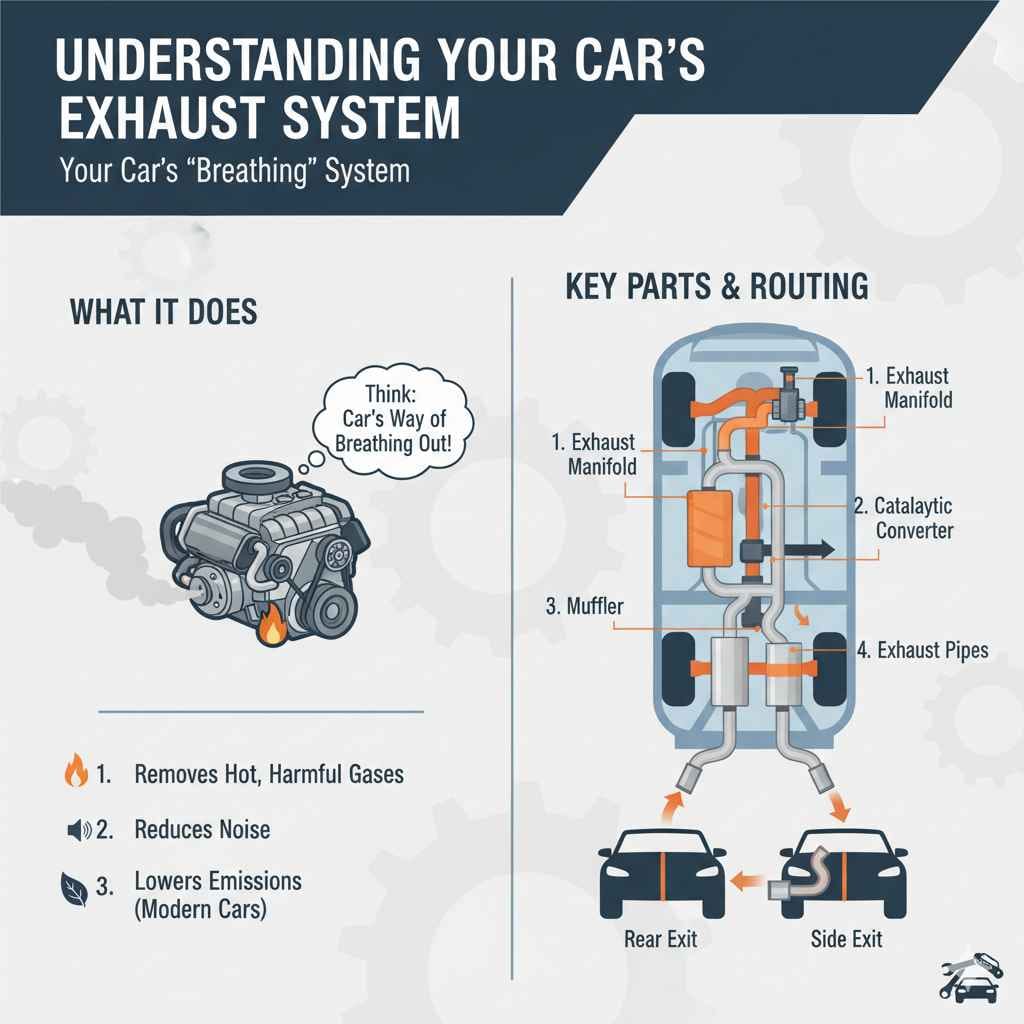
Before we talk about tires, let’s quickly understand what an exhaust system does. Think of it as your car’s way of breathing out. When your engine burns fuel, it creates exhaust gases. The exhaust system’s job is to safely channel these hot, harmful gases away from the engine and out of your car. It also helps reduce noise and, in modern cars, emissions.
An exhaust system typically includes several parts: the exhaust manifold, catalytic converter, muffler, and exhaust pipes. The pipes themselves can be routed in different ways. Some go straight to the back, while others might exit on the sides of the vehicle before or after the rear wheels. This is where the “side exhaust” comes in.
What is a Side Exhaust System?
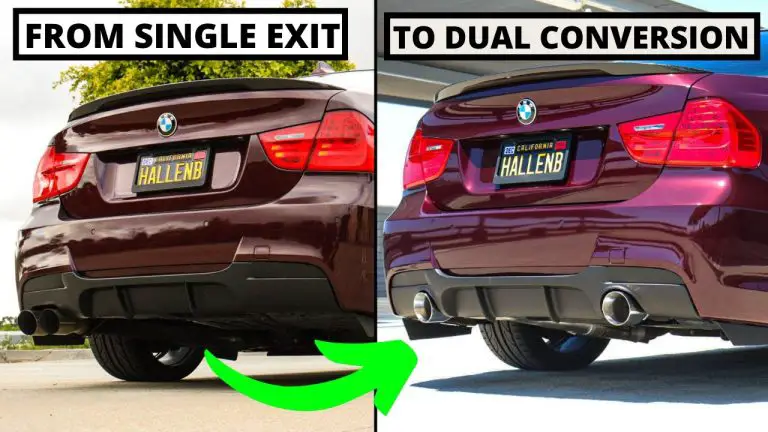
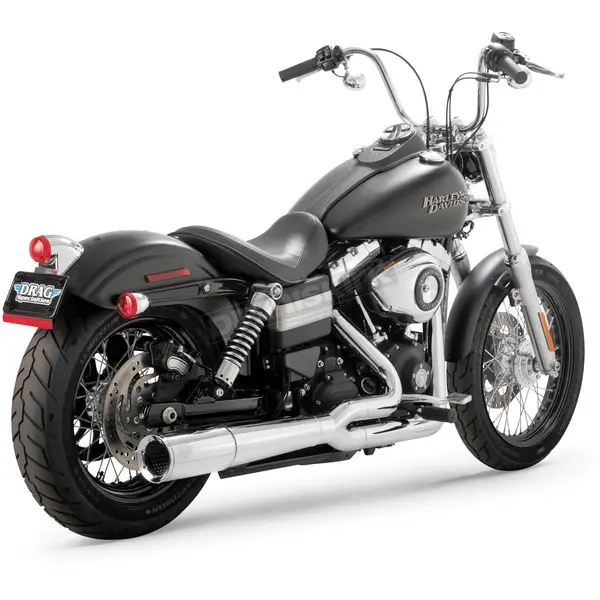
A side exhaust system, often seen on performance vehicles or custom builds, is simply an exhaust system where the tailpipe(s) exit out the side of the car, usually in front of the rear wheels or just behind them. They can be one pipe on each side, or sometimes dual pipes on one side, or even a single pipe exiting on one side. They are often chosen for their aggressive look and the distinctive sound they can produce.
When you see a side exhaust, it’s designed to be a clear, unobstructed exit for the exhaust gases. The pipes are usually angled downwards or slightly upwards and are positioned to be clear of the road and the vehicle’s body.
The Real Causes of Tire Wear
Now, let’s get to the heart of the matter: what actually causes your tires to wear out, and specifically, wear unevenly?
1. Wheel Alignment
This is probably the MOST common culprit for uneven tire wear. Wheel alignment refers to the angles of your wheels relative to the road and to each other. If your alignment is off even slightly, your tires can be forced to scuff against the road, leading to rapid and uneven wear.
- Toe: This is the angle of the wheels pointing inward or outward, like your feet when you stand. If the toe is out (pointing away from each other), the outer edges of your tires wear down. If the toe-in (pointing towards each other), the inner edges wear down.
- Camber: This is the inward or outward tilt of the top of the tire when viewed from the front. Too much negative camber (top tilted in) wears the inside edge. Too much positive camber (top tilted out) wears the outside edge.
- Caster: This angle affects steering stability. While less likely to cause direct tire wear on its own, severe imbalances can contribute to steering issues that indirectly impact tire wear.
You can learn more about the specifics of wheel alignment at reputable sources like Edmunds, a leading automotive resource.
2. Tire Pressure
Keeping your tires properly inflated is crucial. Underinflated tires flex excessively, creating more heat and wearing out the outer edges. Overinflated tires have a smaller contact patch with the road, leading to the center of the tire wearing out faster.
Always check your tire pressure when the tires are cold. The recommended pressure is usually found on a sticker inside the driver’s doorjamb or in your owner’s manual.
3. Driving Habits
How you drive plays a big role. Aggressive driving—hard acceleration, sudden braking, and sharp cornering—puts excessive stress on your tires, accelerating wear and making it irregular. Smooth, consistent driving is the best way to maximize tire life.
4. Tire Condition and Quality
The quality and type of tires you use matter. Some high-performance tires, designed for grip, might naturally have a softer tread compound that wears faster. Your tires also age over time, and old rubber can become brittle and prone to cracking and uneven wear.
5. Vehicle Load
Consistently carrying heavy loads can put extra stress on your tires, especially if the vehicle isn’t designed for it. This can lead to premature and uneven wear, particularly on the drive wheels.
Does Side Exhaust Have Any Direct Impact on Tire Wear?
The short answer is: no, not directly. A properly designed and installed side exhaust system should have absolutely no physical contact with your tires, nor should it alter the forces on your wheels in a way that causes the tires to wear unevenly. The exhaust pipes are typically routed away from the wheels, and their primary function is to expel gases.
However, there are some indirect scenarios where a side exhaust could become associated with tire wear issues, though the exhaust itself isn’t the cause:
- Improper Installation: If a side exhaust is poorly designed or installed incorrectly, it’s possible (though highly unlikely in modern, reputable systems) for a component to be too close to a tire. This could lead to heat transfer or even physical contact in extreme cases. However, this would be a clear installation defect, not a characteristic of side exhausts in general.
- Associated Modifications: Cars that get side exhausts are often modified for performance. These modifications might include different suspension setups or wider wheels and tires. If these other modifications are not installed or set up correctly (e.g., poor alignment after lowering the car), then the tire wear issues would stem from those changes, not the side exhaust itself.
- Heat Transfer (Minor): Exhaust pipes get very hot. While the pipes are routed to maintain a safe distance from tires, in very specific, high-performance situations with extremely aggressive driving for extended periods, some minimal heat could transfer to nearby components. However, tires are designed to withstand significant heat during normal operation, and this effect is generally negligible and not enough to cause noticeable tire wear.
How to Check for Tire Wear Issues
It’s smart to regularly inspect your tires for any signs of trouble. Here’s what to look for:
Visual Inspection
- Even Tread Depth: Run your hand or a tire tread depth gauge across the tire. The depth should be consistent from the inside edge to the outside edge and across the width of the tire.
- Wear Patterns:
- Feathering: Saw-tooth pattern on the tread blocks.
- Cupping/Scalloping: Bald spots or dips in the tread.
- Edge Wear: Significant wear on one edge of the tire.
- Center Wear: The middle of the tread is significantly more worn than the edges.
- Cracks or Bumps: Look for any visual damage to the rubber.
When to See a Professional
If you notice any of the wear patterns mentioned above, or if your car pulls to one side, vibrates, or makes unusual noises, it’s time to visit a trusted mechanic or tire shop. They can perform a thorough inspection and recommend the necessary adjustments.
Common Tire Wear Patterns and Their Causes
Let’s break down some common tire wear patterns you might find and what they tell you about your car:
| Wear Pattern | What It Looks Like | Likely Cause(s) |
|---|---|---|
| Feathering | Tread edges feel smooth in one direction and jagged in the other, like a feather’s barbs. | Improper toe alignment (most common), worn steering components. |
| Cupping/Scalloping | Dips or bald spots appearing sporadically around the tire’s circumference. | Worn suspension components (shocks, struts, ball joints), imbalance. |
| Edge Wear (Inner or Outer) | Excessive wear on only the inner or outer shoulder of the tire. | Incorrect camber, underinflated tires (outer edges), low profile tires with excessive cornering. |
| Center Wear | The center of the tread is worn down much faster than the edges. | Overinflated tires. |
| One-Sided Wear | Significant wear on one side of the tire, could be edge or center. | Severe camber issue, or one side of alignment is way off. |
What Side Exhaust REALLY Replaces (If Applicable)
Sometimes, a side exhaust is an upgrade or replacement for a standard rear exit exhaust. If you had a damaged or poorly routed rear exhaust and replaced it with a side exit, the goal is to improve flow and looks. A correctly fitted side exhaust won’t introduce new tire wear problems that weren’t already there or associated with other parts of the vehicle.
The Society of Automotive Engineers (SAE) provides extensive research and standards related to vehicle emissions and exhaust systems, which you can explore if you’re interested in the technical aspects.
Maintenance Tips for Your Exhaust and Tires
Keeping both your exhaust system and your tires in good shape is key to a safe and efficient vehicle. Here are some simple maintenance steps:
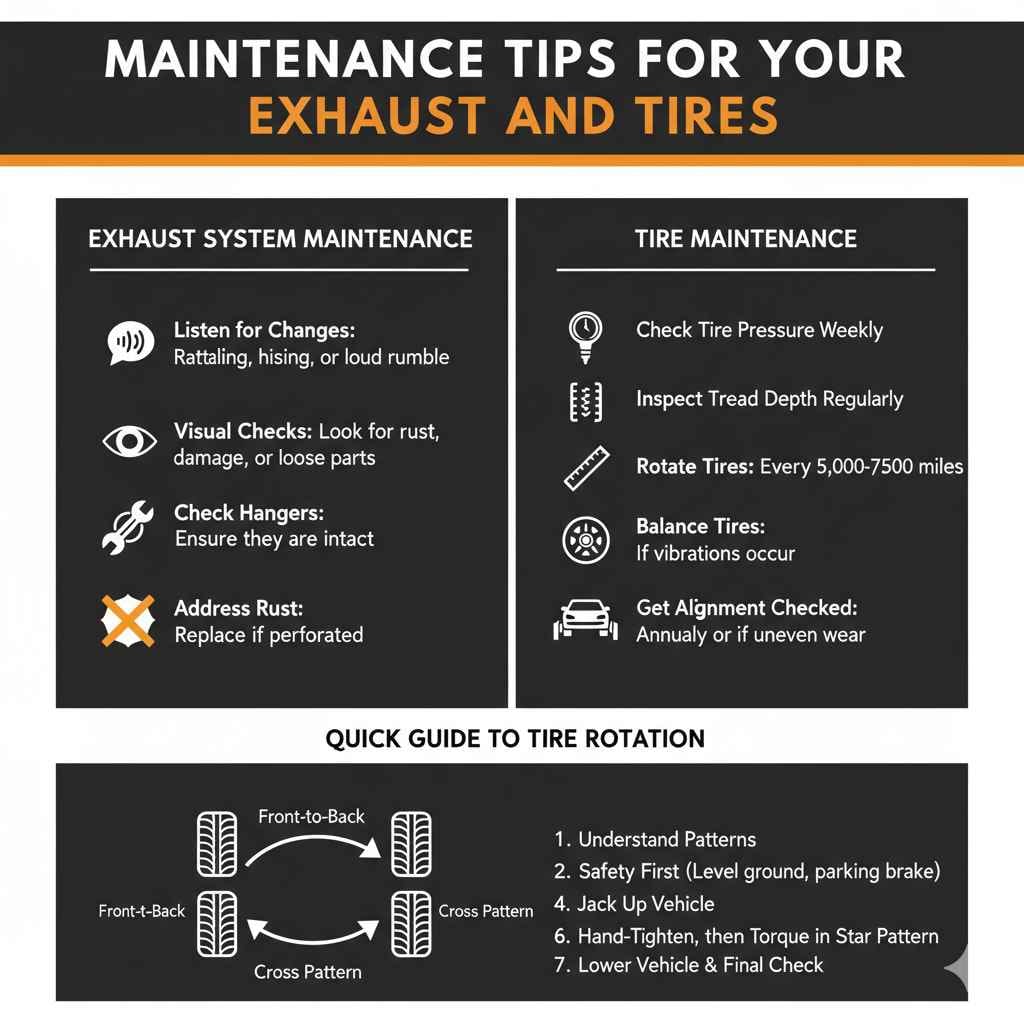
Exhaust System Maintenance
- Listen for Changes: Unusual noises like rattling, hissing, or loud rumbling could indicate a leak or damage.
- Visual Checks: Periodically look under your car (when it’s safely parked and cooled down!) for any signs of rust, damage, or loose parts on the exhaust pipes, muffler, or hangers.
- Check Hangers: Ensure the rubber hangers holding the exhaust system are intact and not cracked or broken.
- Address Rust: Surface rust is common, but significant perforation means it’s time for replacement.
Tire Maintenance
- Check Tire Pressure Weekly: Use a reliable tire pressure gauge.
- Inspect Tread Depth Regularly: Look for even wear.
- Rotate Tires: Follow your owner’s manual recommendations (usually every 5,000-7,500 miles) to ensure even wear across all tires.
- Balance Tires: If you notice vibrations, get your tires balanced.
- Get Alignment Checked: At least once a year, or if you notice uneven wear or the car pulling.
Here’s a quick guide to tire rotation, a vital step for even wear:
- Understand Patterns: Learn the recommended rotation pattern for your vehicle (e.g., front-to-back, cross pattern). Your owner’s manual is the best source for this.
- Safety First: Ensure the car is on a level surface, the parking brake is engaged, and use wheel chocks.
- Loosen Lug Nuts: Slightly loosen the lug nuts on all wheels before jacking up the car.
- Jack Up Vehicle: Use a jack at the designated lift points.
- Remove Wheels: Fully remove the lug nuts and take off the wheels.
- Mount New Positions: Mount the tires in their new positions according to your vehicle’s rotation pattern.
- Tighten Lug Nuts: Hand-tighten the lug nuts, then use a torque wrench to tighten them to the manufacturer’s specifications in a star pattern.
- Lower Vehicle: Carefully lower the vehicle and give the lug nuts a final check with the torque wrench.
Frequently Asked Questions (FAQ)
Here are some common questions beginner car owners ask about side exhausts and tire wear:
Q1: Can a side exhaust affect my car’s performance?
A: A well-designed side exhaust can often improve performance by allowing exhaust gases to escape more freely. However, a poorly designed or installed one might hinder performance. It’s typically chosen for sound and aesthetics over a significant performance gain in most cases.
Q2: Is a side exhaust louder than a regular exhaust?
A: Generally, yes. Side exhausts often have a shorter, more direct path to exit the vehicle, which can result in a louder and more aggressive sound. The specific muffler and pipe diameter also greatly influence the sound level and tone.
Q3: How much does a side exhaust system typically cost?
A: The cost can vary widely, from a few hundred dollars for a basic cat-back system to several thousand for high-end, custom-tuned systems. Installation costs will add to this.
Q4: Are side exhausts legal everywhere?
A: Legality can vary by state and local ordinances, particularly concerning noise levels and emissions. It’s always best to check your local regulations before installing an aftermarket exhaust system, especially one designed for increased sound. For emissions, ensure the system complies with federal standards.
Q5: Will a side exhaust void my car’s warranty?
A: Modifying your exhaust system could potentially void your warranty on related components. If the side exhaust causes an issue with the engine, emissions system, or drivetrain, the warranty claim for that specific issue might be denied. It’s wise to consult your warranty documentation or dealership.
Q6: Can heat from a side exhaust damage my tires?
A: This is highly unlikely with a properly installed system. Exhaust pipes are routed with significant clearance from tires. While exhaust components get hot, tires are designed to withstand substantial heat generated during normal driving. Damage due to heat transfer from a side exhaust to tires would indicate a serious installation defect.
Conclusion
So, to circle back to our main question: does a side exhaust wear out tires? The definitive answer is no, not when properly designed and installed. Tire wear is a complex issue, but its main drivers are alignment, tire pressure, driving style, and the tires themselves. A side exhaust is a stylistic and sonic choice that, in itself, doesn’t interact with your tires in a way that would cause them to wear prematurely or unevenly.
If you’re experiencing uneven tire wear, focus your attention on your car’s alignment, the condition of your suspension components, and your tire pressures. Regularly inspecting your tires and seeking professional advice when needed will ensure they last longer and keep you safe on the road. Remember, keeping your car running smoothly involves looking at all its parts, and for tires, the exhaust pipe on the side is rarely the issue.