Do Oxygen Sensors Have Heater? Essential Guide
Quick Summary: Yes, most modern oxygen sensors (O2 sensors) have an internal heating element. This heater quickly warms the sensor up when you start your car, allowing it to accurately read exhaust gases much sooner. A working heater is vital for good fuel economy and lower emissions.
As your friendly automotive guide, I know the world of exhaust parts can seem tricky. Maybe you saw a strange code pop up, or worry about your gas mileage dip. You might be wondering about a small, vital part under your car: the oxygen sensor. A common question I hear is, “Do oxygen sensors have a heater?” The answer is usually yes! This little heater is super important for making your car run smoothly right after you turn the key. It stops frustrating confusion in your engine computer. We are going to break down exactly what this heater does, why it matters, and how you can tell yours is working correctly. Let’s get your engine running efficiently together!
Understanding the Oxygen Sensor: What It Does
Before we talk about heat, let’s remember what the oxygen sensor (or O2 sensor) does for your vehicle. Think of the O2 sensor as the engine’s eyes in the exhaust pipe. Its main job is simple: it measures how much unburned oxygen is floating around in the exhaust stream leaving your engine.
Why Oxygen Measurement Matters for Your Engine
Your car’s computer, the Engine Control Unit (ECU), uses this oxygen reading to make constant, tiny adjustments to the fuel mix going into the engine.
- Too Much Oxygen (Lean Mixture): Means the engine is using too much air or not enough fuel. This can cause rough idling or engine damage over time.
- Too Little Oxygen (Rich Mixture): Means the engine is using too much fuel. This wastes gas, creates black smoke (if severe), and gums up your spark plugs.
The ECU constantly tries to hit the “perfect balance,” known as Stoichiometric ratio, where the burning is cleanest and most efficient. The O2 sensor provides the feedback loop to make this happen.
The Crucial Role of the Sensor Heater Element
Now, let’s dive into the part everyone asks about: the heater. Why does an O2 sensor need to heat up?
The Cold Start Problem
When you first start your car, the engine and the entire exhaust system are cold. Chemical reactions just don’t happen efficiently when things are cold, and this applies to sensing oxygen too.
Older, unheated oxygen sensors needed the hot exhaust gas to warm them up before they could start sending accurate voltage signals to the ECU. This wait time might only be a few minutes, but during those few minutes, your car runs in an insecure, fuel-wasting mode because the ECU has to guess the right fuel mixture. This is called “Open Loop” mode.
How the Heater Solves the Waiting Game
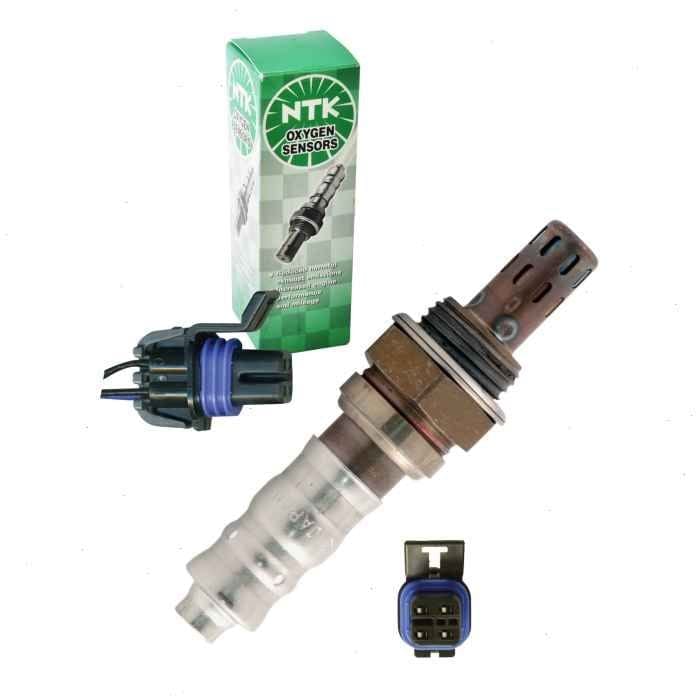
Modern vehicles use what are called “Heated Oxygen Sensors” (or HHO2S). These sensors have a built-in electrical heating coil—the heater element.
When you turn the key, the ECU immediately sends electricity to this heater element. The sensor element heats up to its ideal operating temperature (often around 1,300°F or 700°C) very quickly—sometimes in just 10 to 30 seconds. This allows the ECU to switch into “Closed Loop” mode faster.
This fast transition is key for modern emission standards and overall performance. If you want reliable data from your exhaust, you need the sensor hot and ready.
Two Main Types of Oxygen Sensors: Heated vs. Unheated
Not every car uses a heated sensor, though most cars made in the last 20 years do. It’s helpful to know which one you might have depending on your vehicle’s age.
1. Unheated (Narrowband) Sensors
These are older technology, usually found on cars made before the mid-1990s, or sometimes still used as secondary sensors on very specific systems. They rely entirely on the hot exhaust gas to reach operating temperature.
Pros and Cons of Unheated Sensors:
- Pro: Simpler construction.
- Con: Slow to react, especially in cold weather.
- Con: Causes increased emissions and poor fuel economy during warm-up.
2. Heated Oxygen Sensors (The Modern Standard)
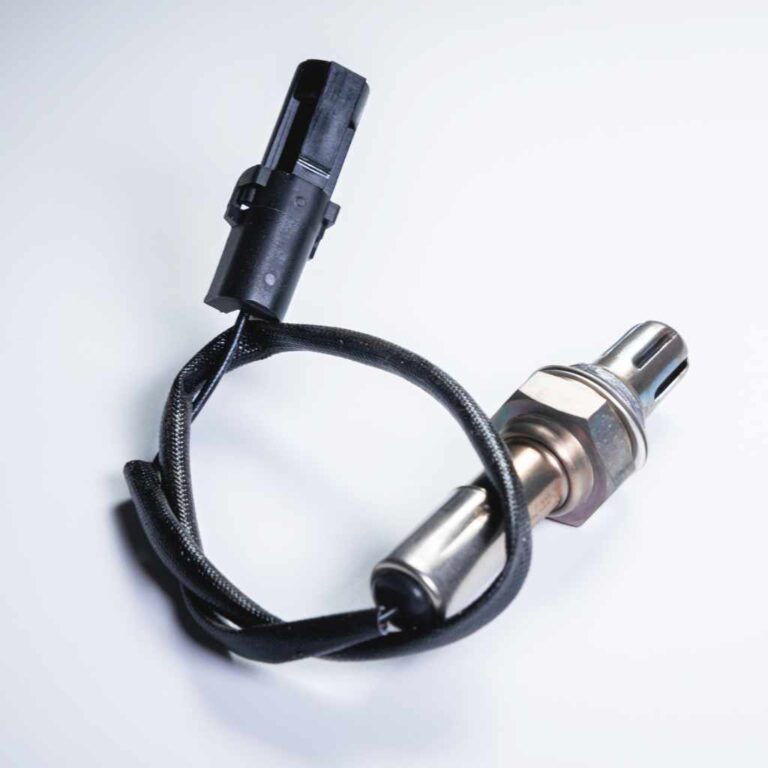
Almost all new cars utilize these. They typically have three or four wires instead of the two wires found on unheated sensors. That extra wire (or two) is dedicated to powering the heater circuit.
Pros and Cons of Heated Sensors:
- Pro: Rapid warm-up time, leading to immediate fuel efficiency improvements.
- Pro: Allows the engine to run in efficient Closed Loop mode sooner.
- Pro: Better monitoring, leading to lower harmful emissions (a big focus for agencies like the EPA, see data on vehicle emissions control here: EPA Air Quality Science).
- Con: More complex circuitry; the heater element can fail.
How to Tell if Your O2 Sensor Has a Heater
If you are looking at replacement parts or trying to troubleshoot a Check Engine Light, knowing if your sensor uses a heater is essential.
The Easiest Way: Counting the Wires
The number of wires connected to the sensor is the biggest visual clue. The wire colors generally follow a standard pattern, though you should always check your specific vehicle repair manual.
| Wire Count | Typical Sensor Type | Function of Wires |
|---|---|---|
| 1 Wire | Unheated (Very Old) | Signal |
| 2 Wires | Unheated (Older) | Signal and Ground |
| 3 Wires | Heated (Older Heated Systems) | Signal, Ground, and Heater Power |
| 4 Wires | Heated (Most Common Modern) | Signal, Ground, Heater Power, and Heater Reference/Control |
In short: If your sensor has three or four wires, it definitely has an internal heating element the ECU is powering up.
Checking the Sensor Connector
If you can safely get under the car (always put safety first—see the safety section below), look at the sensor itself. Usually, heated sensors look a bit bulkier due to the added heating components and wiring insulation. Check the sensor’s part number against an online auto parts catalog. Searching the part number will immediately tell you if it is designated as a “Heated Sensor.”
Why an O2 Sensor Heater Fails and What Happens
Since the heater is an electrical component, it can wear out, fail due to high heat cycling, or break due to physical damage.
Signs of Heater Failure
If the heater element inside the sensor fails, the sensor still functions, but only when the exhaust gets very hot—which takes a long time or might never happen fully if the ECU can’t command the heat cycle.
- Check Engine Light (CEL): This is the most common sign. Your ECU monitors the heater circuit. If it sends power but doesn’t see the correct resistance or temperature change, it flags a Diagnostic Trouble Code (DTC). Common codes related to heater circuits include P0030 through P0059.
- Poor Fuel Economy: Because the sensor stays in “Open Loop” mode longer (guessing the fuel mix), the ECU defaults to a safer, richer fuel mixture. More fuel means worse MPG.
- Slow Response Time: Your vehicle might idle roughly or hesitate for the first few minutes of driving until the exhaust naturally heats the sensor up enough to start working.
- Increased Emissions: Failed sensors mean poor fuel control, resulting in higher levels of pollutants exiting your tailpipe.
The Heater Circuit Monitoring Process
The ECU doesn’t just turn the heater on; it watches it constantly. It sends a small current through the heater element and measures the resistance. If the resistance is too high or too low (indicating an open circuit or a short circuit), the ECU logs the error. This monitoring ensures the heater is actually working as intended to keep emissions low.
Safety First: Working Around Exhaust Components
Working near the exhaust system requires special attention to safety. Heat is a major factor here.
The area around the oxygen sensor gets incredibly hot when the engine is running. Never attempt to touch, inspect, or remove an O2 sensor immediately after driving. Give the vehicle at least an hour to cool down completely.
Essential Safety Checklist:
- Ensure the vehicle is completely cool before touching exhaust parts.
- Always wear safety glasses to protect against debris falling from underneath the car.
- Use sturdy jack stands if you must raise the vehicle; never rely only on a jack.
- Disconnect the negative battery terminal before working on any electrical circuits to prevent accidental shorts or shocks.
How to Test the Oxygen Sensor Heater (Beginner Steps)
If you suspect the heater is bad, you can perform some basic checks using a multimeter—a fantastic tool every beginner should learn to use.
Tools You Will Need:
- Digital Multimeter (DMM)
- Vehicle Repair Manual (to locate wire functions)
- Safety Glasses and Gloves
Step-by-Step Heater Circuit Test:
This test checks the circuit connecting the ECU to the heater element. Note: For a definitive test of the element itself, you often need specialized power supplies, but this check covers the most common failure points.
Preparation: Turn the ignition key to the “ON” position (engine off). Locate the O2 sensor connector under the car and unplug it.
- Identify Heater Wires: Using your repair manual or an online resource specific to your car’s year, make, and model, identify which two wires on the vehicle harness side (the side going toward the ECU) are for the heater circuit. These are often White wires on many manufacturers’ sensors.
- Check for Battery Voltage (Power Supply): Set your multimeter to measure DC voltage (20V scale). Probe one heater wire terminal with the positive (red) lead and probe a good ground point (like a clean, unpainted metal bolt on the chassis) with the negative (black) lead. You should read battery voltage (around 12 volts). If you see 12V, the ECU is successfully sending power to the heater.
- Check for Ground Signal: Now, swap your leads. Probe the second heater wire terminal with the positive lead hooked to the battery positive post (or use the 12V setting on your meter and check against ground again). If the first test passed, the second wire should be your ground path back to the ECU.
- Test Sensor Resistance (If Possible): If you have successfully confirmed power and ground are present at the connector, the issue likely lies within the sensor itself (the heating element inside the sensor housing). Set your multimeter to measure Ohms (resistance, usually the 200Ω or 2kΩ scale). Carefully probe the two heater wires on the sensor side of the connector (not the harness side). Consult your manual for the expected resistance range (often between 3 and 20 Ohms).
Result Interpretation: If you read infinite resistance (OL or 1) when you test the sensor side resistance, the heater element inside the sensor is broken. If you read 0 Ohms or a very low, unexpected number, the element is likely shorted.
Heated O2 Sensor vs. Air/Fuel Ratio Sensor (AFR Sensor)
As automotive technology has advanced, you might hear the term “Air/Fuel Ratio Sensor” (AFR Sensor) used, especially on newer vehicles from manufacturers like Honda, Toyota, and many European brands.
It’s important to know that the AFR Sensor is an evolution of the O2 sensor. It’s still a sensor located in the exhaust, and it still measures oxygen, but it does so using a different electrochemical technology.
Do AFR Sensors Have Heaters?
Yes, absolutely. Modern, high-precision AFR sensors also incorporate internal heaters for the exact same reasons: rapid response time to switch into Closed Loop operation quickly. In fact, because AFR sensors are used for primary fuel mixture control, their heating mechanism is even more critical and tightly controlled by the ECU than older O2 sensors.
When shopping for a replacement, the term used might change (e.g., “Primary AFR Sensor” or “Upstream Sensor”), but functionally, if it’s a primary sensor on a modern car, it has a heater.
The Impact of Heater Failure on Emissions and Efficiency
The ability of the sensor to heat up quickly isn’t just about convenience; it has major legal and financial implications for you as a driver.
According to the U.S. Environmental Protection Agency (EPA), controlling emissions during the vehicle warm-up period is crucial for clean air. A functioning heater helps the catalyst (the catalytic converter) reach its operational temperature faster, which means it starts cleaning up harmful exhaust gases sooner.
Financial and Environmental Costs
When the heater fails, the negative consequences add up:
- Fuel Cost: Running rich wastes gasoline unnecessarily. Over the course of a year, this can mean hundreds of dollars lost at the pump.
- Emissions Failure: If you live in an area requiring periodic emissions testing, a failed heater circuit often results in an automatic failure, as the excess unburned fuel poisons the $text{CO}_2$ and $text{HC}$ readings.
- Catalytic Converter Damage: Running excessively rich for long periods dumps excessive unburned fuel into the catalytic converter. This fuel burns inside the converter itself, causing it to overheat drastically. Overheating can melt the internal ceramic structure, leading to extremely expensive converter failure.
Replacing a Failed Heated O2 Sensor: A Quick Overview
If your testing confirms the heater circuit is bad, replacement is usually necessary. This is a very achievable DIY task if you take your time.
Required Tools for Replacement:
- Jack and Jack Stands (or Ramps)
- Oxygen Sensor Socket (a specialized deep socket with a side cutout for the wire harness)
- Wrench or Breaker Bar (to turn the socket)
- New Replacement Sensor (ensure it matches your car exactly!)
- Anti-Seize Compound (often pre-applied on new sensors)
- Old rags or drain pan (to catch oily exhaust residue)
Replacement Procedure Highlights:
- Safety First: Cool engine, chocked wheels, vehicle securely supported. Disconnect the battery (negative terminal).
- Locate and Unplug: Find the sensor (upstream/before the converter usually has the heater; downstream/after the converter may or may not if it’s only monitoring catalyst efficiency). Unplug the electrical connector.
- Remove Old Sensor: Attach the specialized O2 sensor socket over the sensor hex head. Turn counter-clockwise using significant force if the sensor is rusty or stuck. This is often the hardest step.
- Install New Sensor: Screw the new sensor in by hand first to prevent cross-threading. Once threaded, use the socket to tighten it firmly—but do not overtighten, as this can damage the threads in the exhaust pipe.
- Reconnect and Test: Plug the new sensor harness back in securely. Reconnect the battery. Start the vehicle and monitor the Check Engine Light. It should turn off shortly if the sensor was the only issue.
Remember, when buying a replacement, confirm the part specifically mentions being a “Heated” sensor if your original one was, ensuring you maintain the critical rapid warm-up capability.
Frequently Asked Questions (FAQ) About O2 Sensor Heaters
Q1: Can I drive my car if the oxygen sensor heater is bad?
A: Yes, you can drive it, but you shouldn’t drive far or for long. The car will run poorly on gas and potentially damage your expensive catalytic converter due to running too rich.
Q2: Is the oxygen sensor heater the same as the catalytic converter heater?
A: No. They are separate components. The O2 sensor heater warms the sensor so it can read exhaust fumes quickly. The catalytic converter itself sometimes has small heaters on newer, super-low-emission vehicles, but these are separate systems.
Q3: How long should it take for the O2 sensor heater to warm up?
A: A healthy heated sensor should reach operating temperature in under 30 seconds, sometimes as fast as 10 seconds, based on the ambient temperature and vehicle design.
Q4: Does a failed O2 sensor heater always turn on the Check Engine Light?
A: Usually, yes. The Engine Control Unit (ECU) constantly supervises the heater circuit resistance. If it detects a break (infinite resistance) or a short (zero resistance), it triggers a diagnostic trouble code almost immediately.
Q5: Can a mechanic bypass the heater if my sensor fails?
A: While technically you can wire around a known bad heater, it is not recommended. If the ECU expects a heated sensor signal and doesn’t get one, it will default the engine to a safe, rich mode, destroying your fuel economy and potentially leading to catalyst damage.