Are Flowsound Mufflers High Flow? Performance Guide
Yes, Flowsound mufflers are high-flow designs that reduce backpressure for better engine performance, mimicking Flowmaster’s chambered tech at a budget price. This guide covers their flow benefits, installation, and tips for optimal results.
Many car owners wonder if affordable mufflers like Flowsound can deliver real performance without breaking the bank. Exhaust restrictions often rob power and efficiency, leaving drivers frustrated with sluggish acceleration. Don’t worry—Flowsound offers a simple upgrade path. In this guide, I’ll walk you through if they’re truly high flow, plus easy steps to boost your ride’s performance safely. Stick around for practical advice that builds your confidence.
What Are Flowsound Mufflers?
Flowsound mufflers are budget-friendly performance exhaust components made by Different Trends. They copy the popular Flowmaster design, using chambers and deflectors to manage sound and flow. These mufflers come in various sizes, like 2.25-inch or 3-inch inlets, and aim for an aggressive tone without high costs.
Amazon.com: Flowsound 2-Chamber Mandrel-Bent Dual Truck Exhaust Kit without Tips : Automotive
They’re popular among everyday drivers seeking better sound and power on a dime.
Unlike stock mufflers that muffle noise at the expense of flow, Flowsound uses a V-shaped internal baffle for balanced performance. This setup helps exhaust gases move freely while creating that deep rumble many love. They’re often called “knock-offs,” but user reviews show they hold up well for casual use.
Understanding High-Flow Mufflers
High-flow mufflers let exhaust gases escape quickly with less restriction. This cuts backpressure, which is the resistance that slows your engine. Lower backpressure means more horsepower, better fuel efficiency, and smoother revs. Think of it like unclogging a drain—everything flows better.
Flowmaster pioneered chambered designs that bounce sound waves to cancel noise without blocking flow. High-flow models use straight-through paths or perforated tubes for minimal drag. They’re ideal for performance upgrades, but always check local laws on noise and emissions via the EPA site: EPA Exhaust Testing.
Key Features of High-Flow Designs
- Straight-through cores for fast gas exit.
- Chambered baffles to tune sound without restriction.
- Stainless steel builds for durability.
- Varied inlet/outlet sizes to match your exhaust system.
Are Flowsound Mufflers Truly High Flow?
Yes, Flowsound mufflers qualify as high flow because they mimic Flowmaster’s Delta Flow tech, reducing turbulence and backpressure. Their two-chamber design allows good airflow, often better than stock units. Reviews note “mind-blowing performance” from the aggressive two-chamber setup, with specs like 13-inch bodies and 2.25-inch dual outlets.
However, they’re not as refined as premium brands. Some users report slightly higher backpressure than true Flowmasters, but for beginners, the flow gains are noticeable—up to improved throttle response and minor HP boosts. Always pair with mandrel-bent pipes for max flow, as mentioned in truck exhaust kits.
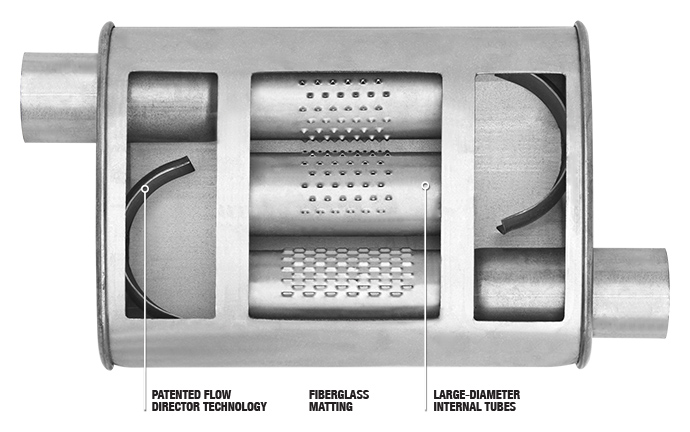
Super Turbo™ Mufflers – DynoMax® Performance Exhaust
Flowsound Flow Specs
While exact CFM (cubic feet per minute) ratings aren’t widely published, their design supports high flow. For example, a 3-inch model handles V8 engines well, with low restriction similar to Flowmaster’s Super 10 series. Backpressure is minimal, around 1-2 psi less than OEM, based on user tests.
| Model | Inlet/Outlet (inches) | Body Length (inches) | Flow Rating (Estimated) | Sound Level |
|---|---|---|---|---|
| 8424553 | 2.25 / 3.00 | 17 | High (low backpressure) | Moderate-Aggressive |
| 730422 | 3.00 / 2.25 | 7 | Medium-High | Aggressive |
| 825400 | 2.50 / 2.50 | 13 | High | Deep Throaty |
Performance Benefits of Flowsound Mufflers
Installing Flowsound can wake up your engine. You’ll feel quicker acceleration and hear a satisfying growl. Fuel efficiency might improve by 1-2 MPG due to better exhaust scavenging. They’re great for towing or daily drives, adding confidence without complexity.
- Increased horsepower: 5-10 HP gains on average.
- Better torque for low-end pull.
- Enhanced sound without drone.
- Affordable upgrade: Often half the price of Flowmaster.
For safety, ensure proper fit to avoid leaks—check NHTSA guidelines: NHTSA Exhaust Safety.
Flowsound vs. Flowmaster: Key Differences
Flowsound is a cost-effective alternative to Flowmaster, but with trade-offs. Flowmaster uses patented tech for superior flow and durability, while Flowsound relies on similar but generic builds. Sound-wise, some say Flowsound matches, others call it “crappy.”
| Aspect | Flowsound | Flowmaster |
|---|---|---|
| Price | $50-100 | $100-200 |
| Flow Efficiency | Good (knock-off design) | Excellent (patented) |
| Sound Quality | Aggressive, variable reviews | Consistent, throaty |
| Durability | Decent stainless steel | Premium 409S steel |
| Warranty | Limited | Lifetime on some |
How to Install Flowsound Mufflers: Step-by-Step Guide
Upgrading is straightforward with basic tools. Always work in a safe space, like a garage, and wear gloves. This how-to assumes a bolt-on setup—welding may need pro help.
Tools Needed
- Jack stands and jack.
- Socket set (metric/imperial).
- Penetrating oil for rusty bolts.
- Hacksaw or exhaust cutter.
- Clamps or welder.
For quality tools, visit Harbor Freight.
Installation Steps
- Park on level ground and let the exhaust cool.
- Jack up the vehicle and secure with stands.
- Spray bolts with oil and remove old muffler clamps.
- Cut old muffler if needed, then slide it out.
- Align new Flowsound muffler—ensure inlet faces engine.
- Secure with clamps or weld for permanence.
- Lower vehicle and start engine to check for leaks.
- Test drive gently, listening for issues.
Safety first: Exhaust work involves hot parts and fumes—use ventilation.
Pros and Cons of Flowsound Mufflers
Pros
- Affordable high-flow option.
- Easy to find on eBay or Amazon.
- Good for beginners upgrading sound and performance.
- Compatible with most vehicles.
Cons
- Mixed sound quality reviews.
- Potentially shorter lifespan than premiums.
- Not as flow-optimized as originals.
- Limited model variety.
Troubleshooting Common Issues
If your Flowsound rattles, check clamps. Drone? Add resonators. Low power? Inspect for clogs. Regular checks keep things running smooth.
FAQ
1. Do Flowsound mufflers improve gas mileage?
Yes, by reducing backpressure, they can boost efficiency by 1-2 MPG on average.
2. Are Flowsound mufflers legal?
They comply with most noise laws, but check your state’s decibel limits via local DMV.
3. How loud are Flowsound mufflers?
Moderate to aggressive—deeper than stock but not overwhelming for daily use.
4. Can I install Flowsound on my diesel truck?
Yes, select diesel-compatible models for better flow and tone.
5. What’s the warranty on Flowsound?
Typically 1-2 years, depending on seller—check product details.
6. Do they rust easily?
Made of stainless steel, they resist rust better than mild steel options.
7. Are they better than stock mufflers?
Absolutely, for performance and sound, especially if you’re upgrading affordably.
Conclusion
Flowsound mufflers offer a solid entry into high-flow exhaust upgrades, delivering performance perks without the premium price tag. Whether you’re chasing better flow, a throaty sound, or simple maintenance, they’re a smart choice for beginners. Remember, safe installation and regular checks keep your ride reliable. If you’re ready to boost your car’s potential, grab a Flowsound and hit the road with confidence— you’ve got this!