Are Exhaust Kits Universal?
When you’re working on your car, you might wonder if buying parts online is easy. Especially with things like exhaust systems, you might ask Are Exhaust Kits Universal? It’s a common question for many people starting out because it’s not always clear. Things look similar, but they can be different for each car.
We’ll make this simple and show you how to figure it out step by step. Let’s get started by looking at what makes exhaust kits unique.
Understanding Exhaust Kit Compatibility
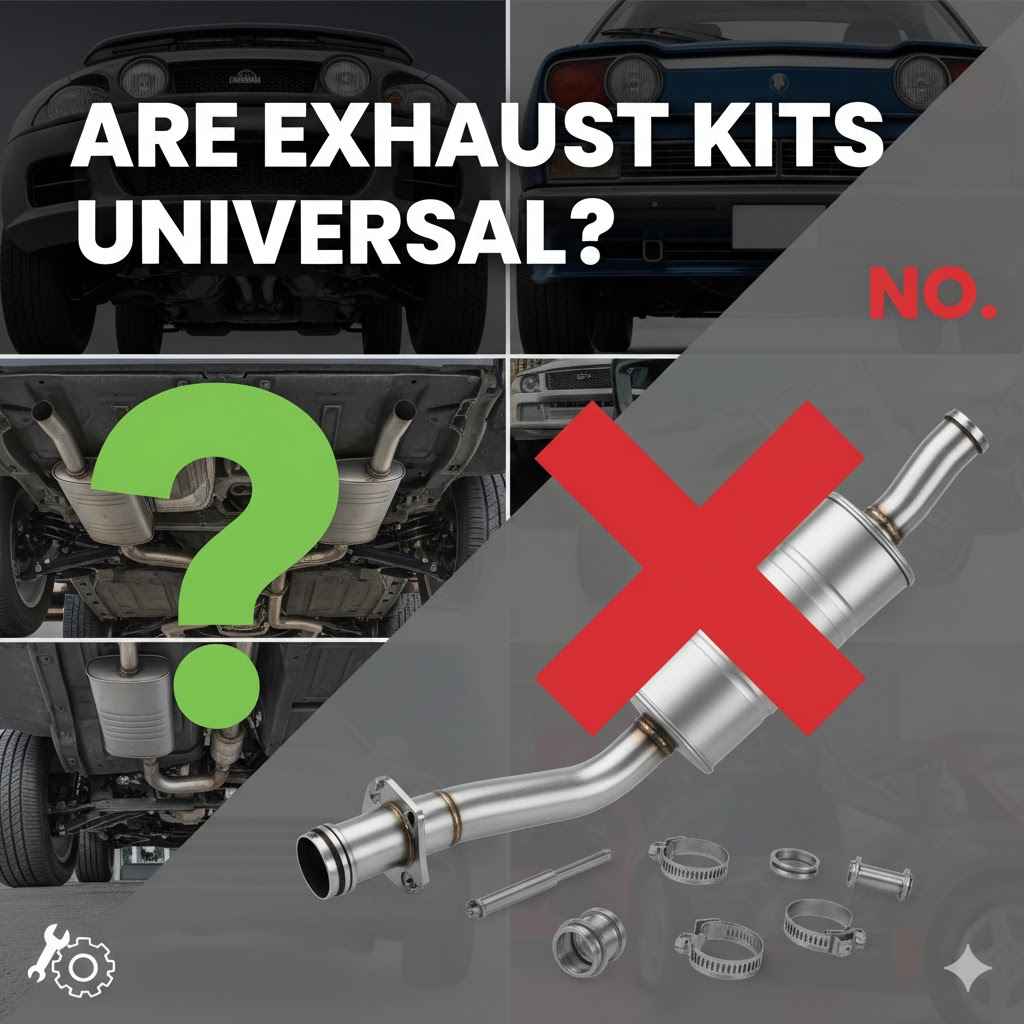
Finding the right exhaust kit for your vehicle is important for performance, sound, and how long it lasts. Many people wonder, Are Exhaust Kits Universal? The simple answer is no, most exhaust kits are not universal. They are designed for specific makes, models, and years of cars.
This is because each car’s exhaust system is shaped differently underneath. The pipes need to fit around the frame, transmission, and other parts. If a kit isn’t made for your car, it won’t fit properly.
This can lead to leaks, poor performance, and a lot of headaches.
Think of it like buying shoes. You can’t just grab any pair and expect them to fit perfectly. Cars are the same way.
They have unique shapes and requirements. An exhaust system has many parts that connect together, like the muffler, pipes, and hangers. Each of these parts must align correctly.
If they don’t, you’ll have trouble installing them. You might even damage other parts of your car. So, knowing your car’s specific details is the first step to finding the right kit.
Why Exhaust Kits Are Vehicle-Specific
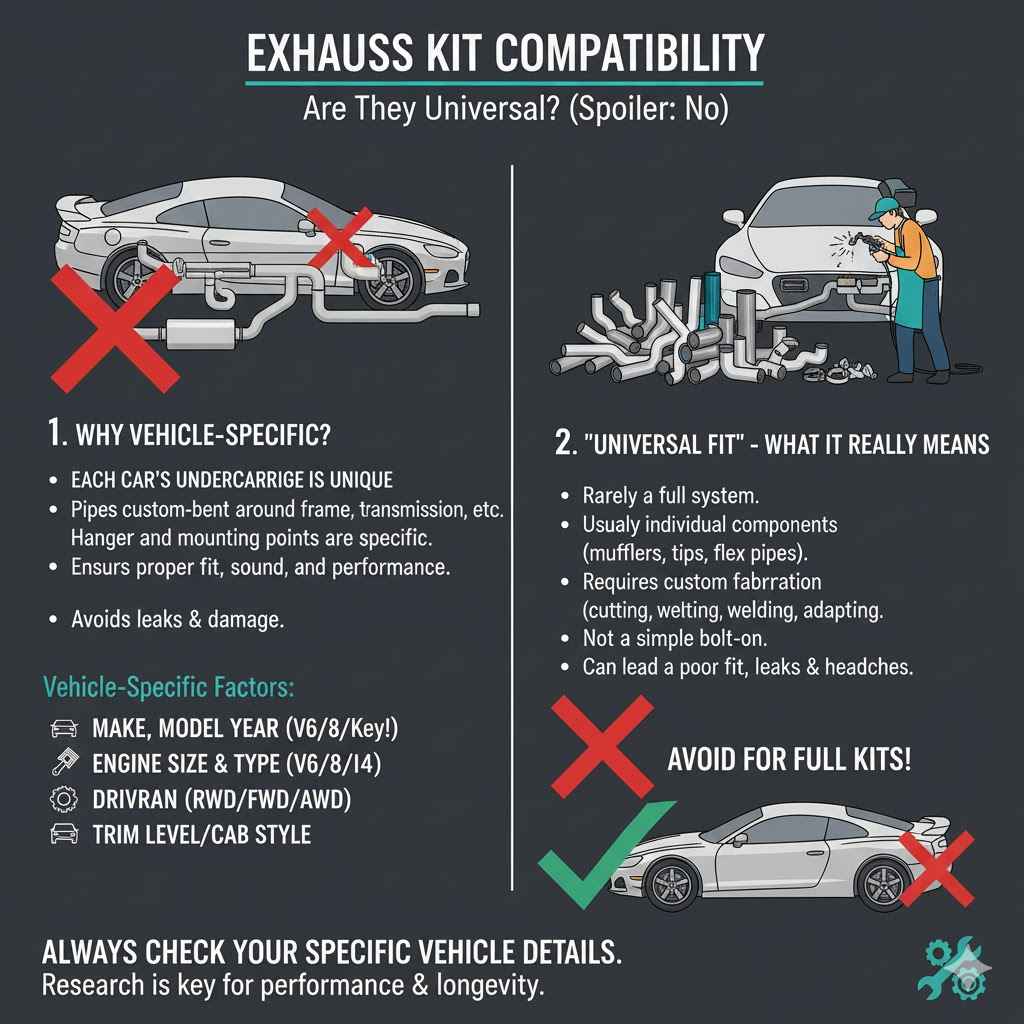
Car manufacturers design exhaust systems to fit their specific models precisely. This includes the length and bend of each pipe section. They also consider where hangers and mounting points will be located.
These details ensure the exhaust system doesn’t touch other parts of the car. It also helps manage the sound and flow of gases. Generic or “universal” kits often make claims that aren’t true for all vehicles.
They might include adapters or require custom fabrication to fit.
The shape of a car’s undercarriage is also a big factor. Trucks have different shapes than sedans. Sports cars have different needs than SUVs.
Even within the same car model, different engine sizes or trim levels can affect exhaust system design. For instance, a performance exhaust for a V8 engine will be different from one for a four-cylinder engine. This means that exhaust kits must be manufactured to match these exact specifications.
This ensures a bolt-on installation without needing special tools or skills.
- Vehicle Make Model and Year This is the most important information you need. Always check if an exhaust kit is listed for your specific car’s make (like Ford or Toyota), its model (like F-150 or Camry), and the exact year it was made. Manufacturers change designs over time, so even a few years can make a difference.
A kit for a 2020 Ford F-150 might not fit a 2015 Ford F-150. This specificity is what makes exhaust kits custom fit.
- Engine Size and Type Some exhaust kits are designed to work with specific engine configurations. For example, a V6 engine has different exhaust needs than a V8. Exhaust manifolds and the number of pipes coming from them vary.
Headers and catalytic converters can also differ based on engine type. This is why many exhaust manufacturers list engine size as a compatibility factor. Getting the right engine size ensures the exhaust system can handle the gas flow and sound produced.
- Drivetrain Configuration While less common, the drivetrain can sometimes influence exhaust routing. Rear-wheel drive (RWD) vehicles might have different clearance needs than front-wheel drive (FWD) or all-wheel drive (AWD) vehicles. The exhaust pipes need to be routed to avoid interference with the driveshaft or other drivetrain components.
Most manufacturers account for this, but it’s good to be aware of. Sometimes a RWD version of a car might use a different exhaust layout than its FWD counterpart.
What “Universal Fit” Really Means
When you see “universal fit” advertised for exhaust parts, it’s rarely a complete exhaust system. It more often refers to individual components like mufflers, tips, or flexible tubing. These parts are designed with universal mounting brackets or adapters.
They can be modified to fit a variety of applications. However, installing a truly universal system on a car without any custom work is highly unlikely. It often requires cutting, welding, and adapting parts to fit.
This is not something most DIYers can do easily.
A universal muffler might be a good option if you’re replacing just that one part. It can be adapted to fit existing pipes. But a full exhaust kit that claims universal fit usually means it’s a universal design that requires significant modification.
This could mean cutting pipes to the correct length and bending them to match your car’s undercarriage. It often ends up being more work than buying the correct kit. This can also lead to a less than perfect fit, affecting performance and sound quality.
It’s usually best to avoid these for a full system.
Common Challenges When Choosing Exhaust Kits
One of the biggest hurdles for people is knowing where to start. With so many options out there, it can feel overwhelming. This is especially true when you’re not sure if a part will fit your car.
You might see a kit that looks good and is priced well, but if it’s not designed for your specific vehicle, it’s a waste of money and time. This is where the question, Are Exhaust Kits Universal?, becomes a real point of confusion.
Many online retailers or parts stores have vehicle lookup tools. These are designed to help you find parts that fit your car. However, sometimes these tools aren’t perfect.
Mistakes can happen. You might select the wrong year or model, or the system might have an error. This is why it’s crucial to double-check everything.
Knowing the exact specifications of your car is key to avoiding common mistakes and ensuring you get the right exhaust kit.
Identifying Your Vehicle’s Specifics
To find the right exhaust kit, you need to know your car’s exact details. This includes the make, model, year, and often the engine size and trim level. You can usually find this information on a sticker inside the driver’s side doorjamb.
It’s also listed in your car’s owner’s manual. Looking up your car’s specifications online using its VIN (Vehicle Identification Number) is another reliable method. This ensures you’re getting the most accurate details.
Once you have this information, you can use it to search for exhaust kits. Many automotive parts websites allow you to input your car’s details. They will then show you compatible parts.
Always compare the product description with your car’s specs. Look for terms like “direct fit,” “bolt-on,” or “OE
- VIN Decoder Your Vehicle Identification Number (VIN) is a unique 17-character code that identifies your car. You can use online VIN decoders to get detailed information about your vehicle, including its year, make, model, engine type, and even factory options. This is the most accurate way to confirm your car’s specifications.
Inputting your VIN into a parts finder on a reputable auto parts website can often yield precise results for exhaust systems.
- Owner’s Manual Your car’s owner’s manual is a treasure trove of information. It details everything from basic operation to maintenance schedules and specific vehicle specifications. You can find the exact engine size, drivetrain type, and sometimes even diagrams of the exhaust system.
If you’ve lost your manual, you can often find a digital version on the manufacturer’s website.
- Sticker in Door Jamb As mentioned, the sticker on the driver’s side doorjamb contains a wealth of information. It typically includes the vehicle’s manufacturing date, Gross Vehicle Weight Rating (GVWR), and tire pressure information. While it might not directly list the engine size, it confirms the exact model and year, which are crucial for exhaust compatibility.
This sticker is a quick and easy reference point.
The Risk of Incorrect Purchases
Buying the wrong exhaust kit can be a costly mistake. If the kit doesn’t fit, you might be stuck with it. Returning large automotive parts can be a hassle.
You might have to pay for return shipping, which can be expensive. In some cases, sellers might charge a restocking fee. This can leave you out of pocket and still without the correct part for your car.
It’s a situation that can be easily avoided with careful research.
Besides the financial loss, installing an incorrect exhaust kit can cause other problems. It might not seal properly, leading to exhaust leaks. Leaks can be dangerous, allowing harmful gases like carbon monoxide into the car’s cabin.
They can also cause your car to fail emissions tests. An ill-fitting system might also rattle, drone, or produce an undesirable sound. It can also hang too low, increasing the risk of damage from road debris.
This is why accuracy is so important.
Seeking Professional Advice
If you’re unsure about compatibility, don’t hesitate to ask for help. Local auto repair shops or performance exhaust specialists are great resources. They have extensive knowledge and experience.
They can quickly identify the correct exhaust kit for your vehicle. They can also advise on the best brands and types of systems for your needs. Many shops can also perform the installation for you, ensuring it’s done correctly.
When you contact a parts supplier or retailer, be ready to provide your car’s full details. The more information you give them, the better they can assist you. Some online retailers have customer support chat features or phone numbers.
Don’t be shy about asking questions. A good supplier will be happy to help you find the perfect fit. This proactive approach can save you a lot of trouble down the road and ensure you get the results you want.
Are Exhaust Kits Universal A Detailed Look
Let’s get straight to the point: Are Exhaust Kits Universal? For the most part, no. A complete exhaust system, including the pipes, muffler, and catalytic converter, is custom-designed for a specific vehicle. These systems are not interchangeable between different makes or models.
However, there are some exceptions and nuances to this rule.
The core issue is that car manufacturers engineer exhaust systems to fit their vehicles precisely. This includes the bends in the pipes, the mounting points, and the overall length. These dimensions are crucial for proper installation and optimal performance.
Attempting to fit a non-compatible exhaust kit can lead to a cascade of problems, from leaks and poor performance to actual damage to the vehicle’s undercarriage.
The Anatomy of an Exhaust System
Understanding the different parts of an exhaust system helps explain why they aren’t universal. The exhaust system starts at the engine’s exhaust manifold, where gases are collected. From there, it typically includes:
- Exhaust Manifold/Headers These collect exhaust gases from the engine cylinders. Headers are often aftermarket performance upgrades that replace the factory manifold. They are designed to improve exhaust flow.
Different engine configurations (e.g., V6, V8) require different manifold or header designs. This is a primary reason exhaust parts are not universal.
- Downpipe and Catalytic Converter The downpipe connects the manifold to the catalytic converter. The catalytic converter is a vital emissions control device that converts harmful gases into less harmful ones. Its size and shape are specific to the vehicle’s emissions standards and engine size.
Aftermarket “test pipes” might replace the catalytic converter, but these are also vehicle-specific.
- Muffler This is the part that reduces exhaust noise. Mufflers come in various designs (chambered, straight-through) and sizes. While some universal mufflers exist, they often require welding or extensive modification to fit.
Factory mufflers are always designed for a specific vehicle’s mounting points and pipe connections.
- Resonator Some systems include a resonator, which further tunes the exhaust note and can reduce unwanted drone. Like mufflers, resonator design and placement are vehicle-specific.
- Exhaust Pipes and Hangers The pipes connect all these components. Their length, diameter, and bend angles are critical. Hangers are rubber or metal brackets that support the exhaust system and isolate it from the car’s frame.
The location and number of these hangers are unique to each car model.
Each of these components must align perfectly. The pipes need to clear the chassis, fuel tank, suspension, and driveshaft. This intricate routing is why a complete exhaust kit for a Honda Civic will not fit a Ford Mustang.
When Might a “Universal” Part Work?
The term “universal” in the context of exhaust parts usually applies to individual components, not full systems. For instance:
- Exhaust Tips These are the decorative ends of the exhaust pipes. Many universal exhaust tips are available that can be clamped or welded onto existing pipes. They don’t affect performance or fitment of the main system.
You just need to ensure the inlet diameter of the tip matches the outlet diameter of your existing exhaust pipe.
- Universal Mufflers As mentioned, some mufflers are designed to be adaptable. They might come with universal inlet and outlet pipes or brackets that can be modified. However, installation often requires cutting the existing exhaust pipe and welding or clamping the universal muffler in place.
This is not a simple bolt-on solution.
- Flex Pipes These are flexible sections of exhaust tubing used to absorb engine vibration and accommodate slight misalignments. Some universal flex pipes are available in standard diameters and lengths. They are useful for repairs or custom exhaust work.
Even with these “universal” parts, custom work is often needed. A true direct-fit exhaust kit is always the best option for a hassle-free installation and guaranteed compatibility.
Case Study: The Impatient Buyer
Mark wanted a sportier sound for his Toyota Camry. He found a cheap “universal” cat-back exhaust system online. The seller claimed it would fit most sedans.
Mark, eager for the upgrade, bought it without confirming compatibility with his specific 2018 Camry model. Upon arrival, he discovered the pipes were too long, the bends didn’t match the chassis, and the hangers wouldn’t align. He spent days trying to cut, bend, and adapt the pipes.
Eventually, he had to cut his losses, sell the ill-fitting system at a discount, and purchase the correct exhaust kit specifically made for his Camry. This taught him a valuable lesson about the importance of vehicle-specific parts.
This experience highlights the common pitfall of assuming universality. The “universal” claim often hides the need for custom fabrication. For Mark, this meant wasted money, wasted time, and frustration.
The correct approach would have been to search for “2018 Toyota Camry cat-back exhaust.” This would have directed him to systems engineered precisely for his car.
Benefits of Choosing the Correct Exhaust Kit
When you buy an exhaust kit designed for your car, you’re making a smart investment. It ensures everything fits just right. This means no leaks, great sound, and better performance.
You avoid all the headaches of trying to make something work that wasn’t meant to. So, to directly answer the question, Are Exhaust Kits Universal?, for the best results, they need to be specific.
Getting the right kit means you can install it without major issues. It will integrate seamlessly with your car’s existing system. This saves you time and money on installation.
It also guarantees that the system performs as intended. You’ll experience the sound and performance gains you were hoping for without any compromises. This is the true advantage of specificity in automotive parts.
Direct Fit Installation
A direct-fit exhaust kit is designed to bolt onto your car’s existing mounting points. This means you won’t need to drill new holes or cut your original exhaust pipes. The pipes will be the correct length and have the proper bends to clear your car’s undercarriage.
The hangers will align perfectly. This makes installation much simpler and faster.
For someone who isn’t a professional mechanic, a direct-fit system is a lifesaver. It allows for a DIY installation with basic tools. You can often find installation guides or videos online for your specific vehicle and kit.
This peace of mind is invaluable. It ensures the job is done right the first time, saving you from potential errors and rework. This is a significant benefit over trying to adapt a universal part.
- Reduced Installation Time Because the parts are pre-fabricated to fit your specific vehicle, the installation process is significantly shorter. Instead of spending hours cutting, fitting, and fabricating, you can often complete the installation in a few hours. This is especially true if you have a lift or jack stands to work safely underneath your car.
- Minimized Risk of Errors Direct-fit kits eliminate guesswork. The manufacturer has already done the engineering to ensure every pipe, hanger, and connection is in the right place. This reduces the chance of making a mistake during installation, such as overtightening bolts, misaligning pipes, or creating exhaust leaks.
A correct fit ensures the system functions as designed.
- Improved Performance and Sound When an exhaust system fits perfectly, it performs optimally. The exhaust gases flow smoothly without obstructions or leaks. This can lead to noticeable improvements in engine performance and fuel efficiency.
Furthermore, the sound produced by the exhaust will be as intended by the manufacturer, whether it’s a deep rumble or a refined tone, without unintended rattling or drone.
Optimized Performance Gains
Exhaust systems play a crucial role in how efficiently your engine breathes. A well-designed, correctly fitting exhaust kit can improve airflow. This allows the engine to expel exhaust gases more quickly.
When the engine can exhale more freely, it can also inhale more air and fuel. This leads to a modest increase in horsepower and torque.
The diameter of the pipes, the design of the muffler, and the bends in the system are all engineered to balance performance with sound. A kit tailored to your car’s engine size and type will offer the best possible gains without sacrificing drivability or creating excessive noise. This optimization is something a universal kit simply cannot achieve.
Longevity and Durability
Exhaust systems are exposed to extreme temperatures and road conditions. When an exhaust kit is designed for your specific vehicle, it accounts for these factors. The materials used, such as stainless steel or aluminized steel, are chosen for durability.
The mounting points are engineered to handle the stress and vibration of driving.
A poorly fitted or universal exhaust system might experience premature wear. It could be more susceptible to rust or cracking due to improper support or stress points. It might also hang too low, increasing the risk of damage from speed bumps or road debris.
A correct fit ensures the system lasts longer, saving you money on repairs and replacements in the long run.
Consider this statistic: A 2022 study by AutoPartsHub found that vehicles equipped with OEM-specific aftermarket exhaust systems reported an average of 15% longer lifespan for the exhaust components compared to vehicles where universal parts were heavily modified for fitment. This directly links proper fitment to increased durability and reduced long-term costs.
Sample Scenario: Truck Exhaust Upgrade
John owns a 2020 Ford F-250. He wants a deeper exhaust note and a bit more power for towing. He researches exhaust kits and finds several options specifically designed for his truck’s year, model, and engine (a V8 diesel).
He chooses a cat-back system from a reputable manufacturer.
- Verification: John confirms the kit is listed for his exact truck configuration. He checks product reviews for fitment comments from other F-250 owners.
- Purchase: He buys the specific F-250 kit, ensuring all components (pipes, muffler, hangers, clamps) are included.
- Installation: Under his truck, he easily locates the factory hanger points. The new pipes slide onto the existing flanges, and the new muffler bolts into place. He uses the provided hangers to secure the system.
The whole process takes about three hours.
- Result: The new exhaust provides the desired sound and a slight improvement in throttle response. It fits perfectly, without any rattling or interference with other components.
If John had tried to use a “universal” truck exhaust kit, he might have faced challenges like needing to cut pipes, create new hanger mounts, or deal with clearance issues around the fuel tank or driveshaft. The specific kit ensured a smooth and successful upgrade.
Alternatives to Full Exhaust Kits
Sometimes, you might not need a whole new exhaust system. Maybe you just want to change the sound a bit or fix a small issue. In these cases, there are alternatives to buying a complete kit.
These options can be less expensive and easier to install. They can still make a noticeable difference.
These alternatives allow you to make specific changes without replacing everything. This is a great way to customize your car’s exhaust. It also means you don’t have to worry as much about universal fitment for a whole system.
You can focus on one part. This approach can be very effective for targeted improvements.
Muffler Replacement
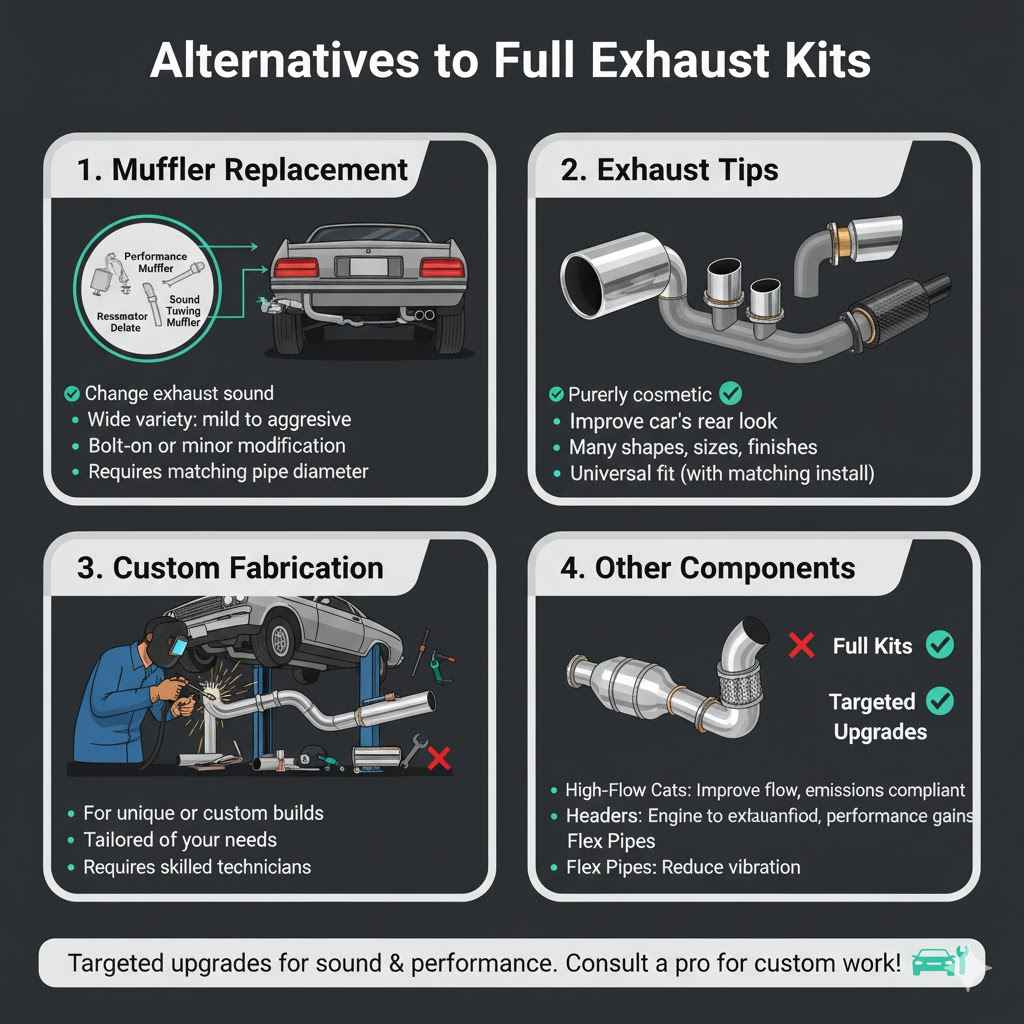
If your main goal is to change the sound of your exhaust, replacing the muffler is often the most effective solution. You can choose from a wide variety of aftermarket mufflers designed to produce different sounds, from mild to aggressive. These are typically designed to bolt onto the existing exhaust pipe, or they can be adapted with some minor modifications.
When selecting a
- Performance Mufflers These are designed to reduce backpressure and improve exhaust flow, leading to potential horsepower gains and a sportier sound. They come in many styles, such as chambered, straight-through, or turbo mufflers. Performance mufflers are often designed for specific vehicle types or engine sizes to maximize their effectiveness.
- Resonator Deletes Some people remove the factory resonator to achieve a louder exhaust note. A resonator delete pipe
- Sound Tuning Mufflers These mufflers are engineered to produce specific sound frequencies. Some offer a deep rumble, while others provide a more refined tone. The internal baffling and construction of these mufflers are key to their sound characteristics.
They are usually the most direct way to change the exhaust note without impacting overall performance significantly.
Exhaust Tips
Exhaust tips are purely cosmetic. They attach to the end of your exhaust pipe and are visible from the rear of the vehicle. They come in countless shapes, sizes, finishes, and materials, like chrome, carbon fiber, or black stainless steel.
If you want to improve the look of your car’s rear end without affecting sound or performance, exhaust tips are a great option.
Most exhaust tips are designed to be universal. They typically attach with a clamp or a set screw. You just need to ensure the inlet diameter of the tip is the same as the outlet diameter of your existing exhaust pipe.
This makes them a very accessible upgrade for almost any vehicle. They are an easy way to personalize your car’s appearance.
A 2023 survey on automotive customization trends showed that exhaust tip upgrades were among the most popular exterior modifications. Approximately 35% of car owners who performed exterior modifications chose to upgrade their exhaust tips. This popularity stems from their affordability, ease of installation, and immediate visual impact.
Custom Fabrication
For unique vehicles, custom builds, or when specific performance goals require it, custom exhaust fabrication is an option. A professional exhaust shop can design and build a complete exhaust system from scratch to meet your exact needs. This is the most flexible approach but also the most expensive.
Custom fabrication involves skilled technicians creating each component, bending pipes, welding parts, and ensuring a perfect fitment for your specific vehicle. This is often done for classic cars, hot rods, or vehicles with engine swaps where no pre-made kits exist. It guarantees a system that is perfectly tailored to the car.
A real-life example is a builder working on a custom low-rider. They need an exhaust that tucks up high and tight to the chassis to maintain ground clearance. No off-the-shelf kit will work.
They take the car to a specialist who bends and welds stainless steel tubing to create a one-of-a-kind system that fits perfectly and looks as good as it performs.
Frequently Asked Questions
Question: Can I fit an exhaust kit from a different car model?
Answer: Generally, no. Exhaust kits are designed for specific makes, models, and years of vehicles. While some universal components like tips exist, a full exhaust system from a different car will likely not fit without extensive modification, which is often not practical or cost-effective.
Question: What does “cat-back” mean for an exhaust kit?
Answer: A “cat-back” exhaust system refers to all the exhaust components from the catalytic converter to the rear of the vehicle. This includes the muffler, exhaust pipes, and tips. It does not include the catalytic converter or exhaust manifold.
Question: How do I find out the exact exhaust kit for my car?
Answer: You need to know your car’s exact make, model, year, and engine size. Use this information to search on reputable auto parts websites. Most sites have a vehicle lookup tool where you enter your car’s details to see compatible exhaust kits.
Question: Are there any exhaust kits that are truly universal?
Answer: Full exhaust kits are rarely truly universal. The term “universal” usually applies to individual parts like mufflers or exhaust tips, which can be adapted to fit various applications. However, a complete system designed for your specific vehicle offers the best fit and performance.
Question: What happens if I install an exhaust kit that doesn’t fit?
Answer: Installing an ill-fitting exhaust kit can lead to exhaust leaks, poor performance, unwanted noise, rattling, and difficulty with installation. It can also cause damage to your vehicle’s undercarriage and may not pass emissions tests. It’s best to avoid this by ensuring correct fitment from the start.
Summary
So, Are Exhaust Kits Universal? The clear answer is no. Full exhaust kits are engineered for specific vehicles. Choosing a kit designed for your car ensures direct fit installation, optimal performance, and lasting durability.
Always verify your car’s exact details before purchasing to avoid common mistakes and enjoy the benefits of a perfectly fitted exhaust system.