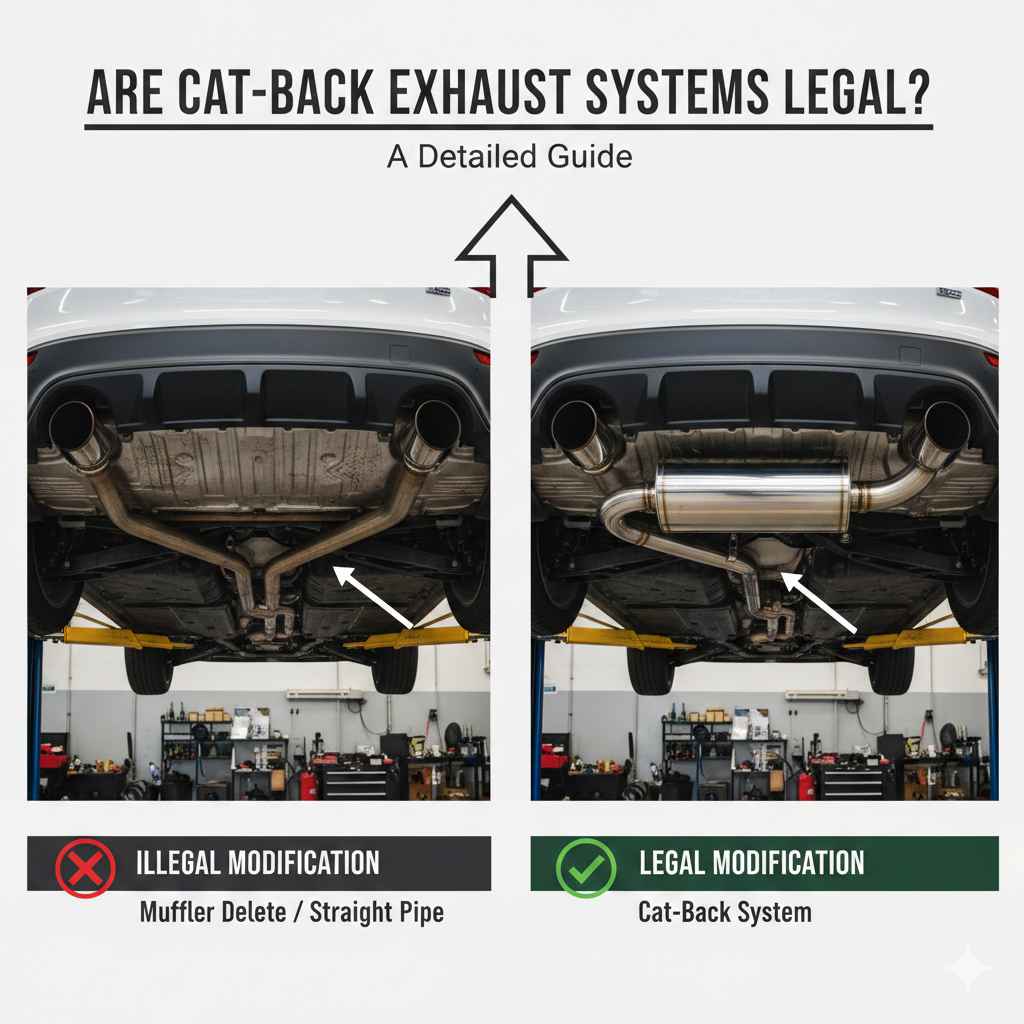
Are Cat-Back Exhaust Systems Legal? A Detailed Guide
Many car fans wonder, Are Cat-Back Exhaust Systems Legal? It’s a question that pops up a lot when people start modifying their vehicles. The rules can be tricky, and it’s easy to get confused. Don’t worry, this guide will break everything down simply. We’ll explore the main points so you know exactly what’s what. We’ll start with the basics, so everyone can get a good grip on the subject. Ready to get started?
What Exactly Is a Cat-Back Exhaust System?
A cat-back exhaust system is a car part that makes your vehicle’s exhaust better. It starts right after the catalytic converter, a device that reduces harmful emissions. This system usually includes pipes, a muffler, and sometimes a resonator. It’s often changed to improve performance and sound. Many car enthusiasts replace this part of their exhaust system because it can boost horsepower, torque, and change the sound. It can make a car sound more aggressive or sporty. Installing a cat-back exhaust is usually less complex than other modifications, making it a popular option for car owners.
Key Parts of the System
Several parts come together to form a cat-back exhaust system. These components work together to direct exhaust gases out of your vehicle. Knowing each piece helps with a better grasp of the entire system. Understanding what each part does helps when thinking about legality and performance. These parts also influence the sound and how your car runs.
- Pipes: These are the main tubes that carry exhaust from the catalytic converter to the muffler and beyond. They can be made from various materials, such as stainless steel, to endure high temperatures and resist corrosion. Pipe diameter affects exhaust flow, which can impact engine performance.
Pipes are very important because they allow exhaust gases to move smoothly from your engine. The size of these pipes can also impact your engine’s power. - Muffler: The muffler reduces the noise from the engine by using chambers and sound-absorbing materials to quiet the exhaust pulses. Different muffler designs create different sound profiles. The muffler is critical for meeting noise regulations in many areas.
The muffler is a crucial piece to keep your car quiet, keeping your car within the set noise limits. - Resonator (Optional): Resonators further refine the exhaust sound and reduce certain frequencies that might cause drone, a low-frequency hum. Some cat-back systems do not include a resonator, while others incorporate it to fine-tune the exhaust note. It is most often found in the mid-section of the cat-back system.
Resonators are not included in every system, but they improve the sound of the exhaust. They’re often used to eliminate unwanted noises. - Tips: Exhaust tips are the visible end of the exhaust system. They can be cosmetic, but they can also affect exhaust flow slightly. Tips come in various styles and materials, allowing for customization of your vehicle’s appearance.
The exhaust tip is the last piece of the exhaust system. It is meant to allow exhaust gases to escape easily, and it also changes how your car looks.
Material Matters: Choosing the Right Components
When picking a cat-back exhaust, the material makes a big difference. The materials used impact how well the system performs, its lifespan, and how it sounds. Stainless steel is a popular choice for durability and resistance to rust. Other materials, like aluminized steel, are available. The material selection also influences cost.
- Stainless Steel: This is a favorite due to its resistance to rust and corrosion, along with its ability to withstand high temperatures. Stainless steel lasts a long time and looks good, making it a good investment. It often gives a nice, clean look.
Stainless steel exhaust systems are known for their durability and attractive finish. It can handle extreme heat without damage, so they are a great option for performance vehicles. - Aluminized Steel: This steel has an aluminum coating that offers some rust protection. It is usually more affordable than stainless steel, but may not last as long in harsh conditions. It is ideal for those on a budget.
Aluminized steel is cheaper than stainless steel and offers some protection against rust. It’s an excellent choice if you’re watching your budget. - Titanium: Titanium is a premium choice. It’s super light and strong and offers excellent corrosion resistance. Titanium is usually more expensive, but it gives the best performance. It’s often used in high-performance applications.
Titanium exhaust systems are top-of-the-line. They’re super light, tough, and resistant to corrosion, offering the best performance. - Carbon Fiber: Used for exhaust tips or other trim parts, it’s known for its light weight and sleek appearance. It’s often combined with other materials for optimal performance and style. Carbon fiber looks great and doesn’t add much weight.
Carbon fiber is usually found in exhaust tips and other trim pieces. It offers a stylish look without adding a lot of extra weight to your car.

Legal Aspects of Cat-Back Exhaust Systems
The main question is: Are Cat-Back Exhaust Systems Legal? The answer isn’t simple. It relies on the rules of where you live. These regulations cover noise levels, emissions, and how the exhaust system is installed. Knowing the rules can help you avoid fines and keep your car legal.
Noise Regulations: Keeping It Quiet
Noise regulations are put in place to control how loud vehicles can be. These rules vary by state or locality. Rules usually limit the noise levels a car is allowed to produce. It is usually measured in decibels (dB). It is important to know the specific limits to stay within the law.
- Decibel Limits: Most places have specific decibel limits for car noise. These limits can vary based on the type of road, time of day, and location. Police officers use sound meters to measure noise levels, so knowing the specific limits is very helpful.
Decibel limits tell you the maximum noise your car is allowed to make. Be sure to find out what these limits are in your area. - Testing Procedures: Noise tests may be done in various ways, such as stationary tests or driving tests. Some areas do noise tests as part of regular vehicle inspections. Testing is done to make sure that a car meets the required noise levels.
Some areas do stationary tests, and some do drive-by tests. Know what to expect during a noise test to make sure you are in compliance. - Enforcement and Penalties: If your car is too loud, you could get a ticket or fine. In extreme cases, your car might have to be inspected to fix the problem. Some areas will require you to return your car to a legal noise level before you can drive it again.
If your car is too loud, you could be fined. It’s important to know the rules in your area to avoid these problems.
Emissions Standards and Compliance
Emissions standards are set to cut down on pollution from cars. These rules control the amount of harmful gases that your car can release into the air. The standards are set by government agencies, like the EPA in the United States. Many cars have to pass emissions tests regularly.
- Catalytic Converter Requirement: The catalytic converter is a key component of your exhaust system. It reduces harmful emissions. Laws often require that your car keeps its catalytic converter to meet emissions standards. Replacing or removing it may violate the rules.
The catalytic converter is designed to clean the exhaust. It’s often required by law, so replacing or removing it can cause problems. - State and Federal Regulations: Emission rules change by location. Some states follow federal rules. Some states have stricter rules. It is very helpful to know the rules in your location.
Emission rules can vary a lot, depending on where you live. Some places follow federal rules, while others have more strict requirements. - Testing and Inspection: Many locations require cars to pass emissions tests, which are usually done as part of an inspection. During this test, a technician will check the exhaust system for leaks and make sure it meets emission standards. Failing these tests might mean you have to fix your car before it can be driven legally.
Regular testing makes sure cars are not polluting too much. If you fail, you’ll need to make fixes before you can drive.
Modifying Your Exhaust: What’s Allowed and What’s Not
Modifying a cat-back exhaust system can make your car sound and perform better. But knowing the limits of how much you can modify it is important. Some changes are usually legal, and some are against the law. If you know the rules, you can make informed decisions when you customize your vehicle.
Legal Modifications and Best Practices
Several modifications are often allowed, helping you improve your car’s exhaust system. Many changes are considered safe as long as they meet the noise and emission regulations. These practices can help you customize your car without running into legal problems.
- Replacing the Muffler: Changing the muffler is one of the most common changes. You can swap out the stock muffler for an aftermarket one. Ensure the new muffler keeps your car’s noise level within the legal limits. Many aftermarket mufflers are built to reduce noise levels.
You can often replace your muffler. Just make sure the new one is not too loud. - Upgrading the Pipes: Changing the exhaust pipes can often improve exhaust flow. Be sure to use the right materials, such as stainless steel. Make sure the pipes match the rest of the system, and that you do not interfere with emission controls.
Changing the exhaust pipes can often boost performance. Use the correct materials and make sure everything fits. - Ensuring Proper Installation: Getting your cat-back system installed correctly is important. Hire a qualified mechanic to prevent any issues with leaks or improper fit. A professional installation ensures your exhaust system performs well and stays within the law.
Get a professional to install your cat-back system to make sure it is done right. - Maintaining Compliance: Ensure your exhaust setup always meets local regulations. Perform regular checks on your exhaust system. Check for any leaks or damage. Make sure everything still meets noise and emission standards.
Keep your system in compliance by having it regularly inspected, and make any necessary repairs or replacements.
Illegal Modifications and Prohibited Actions
Some exhaust modifications are usually illegal and could get you in trouble. These modifications often impact a car’s emissions or noise. It’s important to avoid these changes to stay legal. Understanding the rules helps avoid penalties.
- Removing the Catalytic Converter: This is almost always against the law. The catalytic converter is designed to cut down on harmful emissions. Removing it causes pollution and is not allowed in most places.
Do not remove your catalytic converter. It is designed to reduce pollution and is often required by law. - Excessive Noise Levels: Making your car too loud is not permitted. Ensure that your exhaust system meets the noise level limits in your area. Loud exhaust systems can lead to fines and other penalties.
Do not make your car too loud. Check the noise level limits in your area to avoid getting tickets. - Tampering with Emissions Equipment: It is illegal to tamper with any emissions-related equipment. This includes changing the computer settings on your car. Always keep your emissions equipment intact and functioning properly.
Do not mess with your car’s emissions equipment. This is against the law and can cause serious problems. - Modifying the System to Bypass Regulations: Do not change your exhaust to get around regulations. For example, some people try to hide modifications. Following the law is always the best idea.
Avoid any changes that try to avoid regulations. Staying compliant is the best choice.
Real-Life Examples and Scenarios
Seeing real-world examples can help you better understand the legality of cat-back exhaust systems. It helps to explore different scenarios. These examples show how the law impacts car modifications.
- A car owner installs a cat-back exhaust system with a new muffler that’s designed to lower the noise. During a regular inspection, the car passes all emission and noise tests. This modification is legal and compliant with local regulations.
This is a great example of a legal modification. The owner kept the car within the legal limits and was fine. - A driver installs an aftermarket cat-back exhaust with a very loud muffler. The car is pulled over for excessive noise. The driver receives a ticket and is ordered to fix the exhaust or face further penalties. This is an example of an illegal modification due to noise violation.
This is an example of what can happen if your car is too loud. The driver got a ticket and had to fix their car.
Case Study 1: Noise Violation
A car owner installed a cat-back system without considering noise levels. Their car was excessively loud. They received several warnings and fines for noise violations. The owner eventually had to change the muffler. This case shows how important it is to consider noise regulations when modifying your exhaust. It highlights how the sound of your car is as important as its performance.
Case Study 2: Emissions Failure
A car owner modified their exhaust system, which caused their car to fail an emissions test. The modifications interfered with the catalytic converter or other parts of the emissions system. This case shows the need to keep all emissions equipment working as designed. It highlights the importance of staying within the law to prevent problems.
Frequently Asked Questions
Question: Can I install a cat-back exhaust myself?
Answer: Yes, you usually can. However, proper installation is key. Make sure you understand the steps involved. If you’re not comfortable, it’s best to have a professional do it.
Question: Will a cat-back exhaust increase my car’s horsepower?
Answer: It can. Cat-back systems help the exhaust flow better. This can sometimes lead to a slight increase in horsepower and torque. However, the exact gain can vary.
Question: Does a cat-back exhaust change the car’s sound?
Answer: Yes, usually. The muffler and pipes in a cat-back system affect the car’s sound. It can make your car sound sportier. Make sure it stays within the noise limits of where you live.
Question: Will a cat-back exhaust system affect my car’s warranty?
Answer: It might. This varies depending on the manufacturer and the type of modification. Review your warranty details before making changes. Consult your car’s manufacturer to confirm.
Question: How can I make sure my cat-back exhaust is legal?
Answer: Check your local laws regarding noise levels and emissions. Make sure your system meets those requirements. Have it installed by a pro. Keep all of your car’s emissions parts and components intact.
Final Thoughts
So, Are Cat-Back Exhaust Systems Legal? The answer is: It depends. You need to keep in mind the local laws. You’ve now seen that it’s all about following regulations and picking the correct parts. It can be done. You now have a better grasp of the parts of a cat-back system, the key regulations that are in place, and how to stay on the right side of the law. Remember to check local noise and emission rules. Always do your research and make informed decisions. This allows you to improve your car without problems. Now you’re ready to make informed choices. Get out there and enjoy your ride!