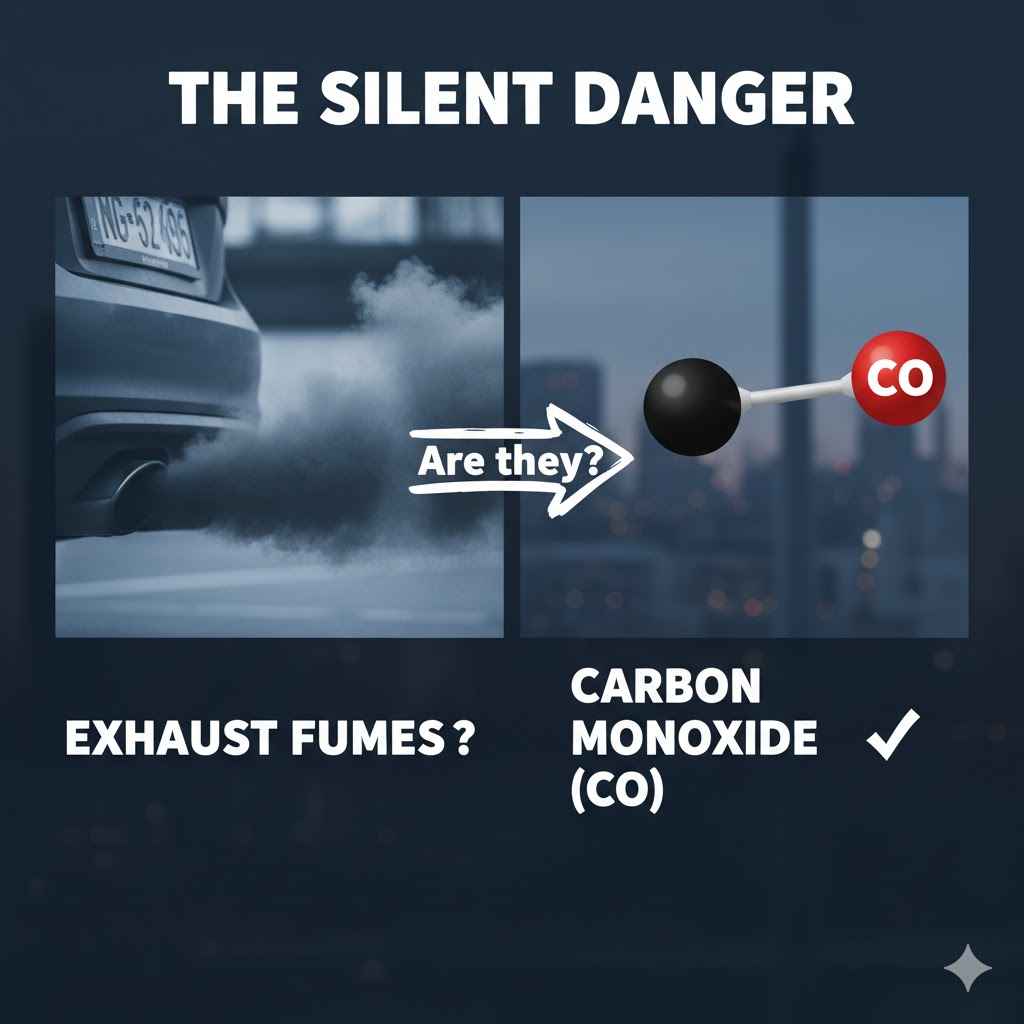
Are Exhaust Fumes Carbon Monoxide
Many people wonder, Are Exhaust Fumes Carbon Monoxide? This is a common question, especially when thinking about air quality and safety. It can be confusing because exhaust contains many different gases.
We will break down this question simply. You will learn exactly what exhaust fumes are made of and if carbon monoxide is one of them. Let’s get started so you can understand this clearly.
Understanding Vehicle Exhaust Gases
Vehicle exhaust is a complex mix of gases and particles released from an engine’s combustion process. When fuel burns, it creates byproducts. Not all of the fuel burns perfectly.
This means there are leftovers. These leftovers are what come out of your tailpipe. The exact composition can change based on the type of engine, fuel quality, and how the engine is running.
Many people are concerned about these emissions because they can affect the air we breathe. We will explore the main components found in exhaust.
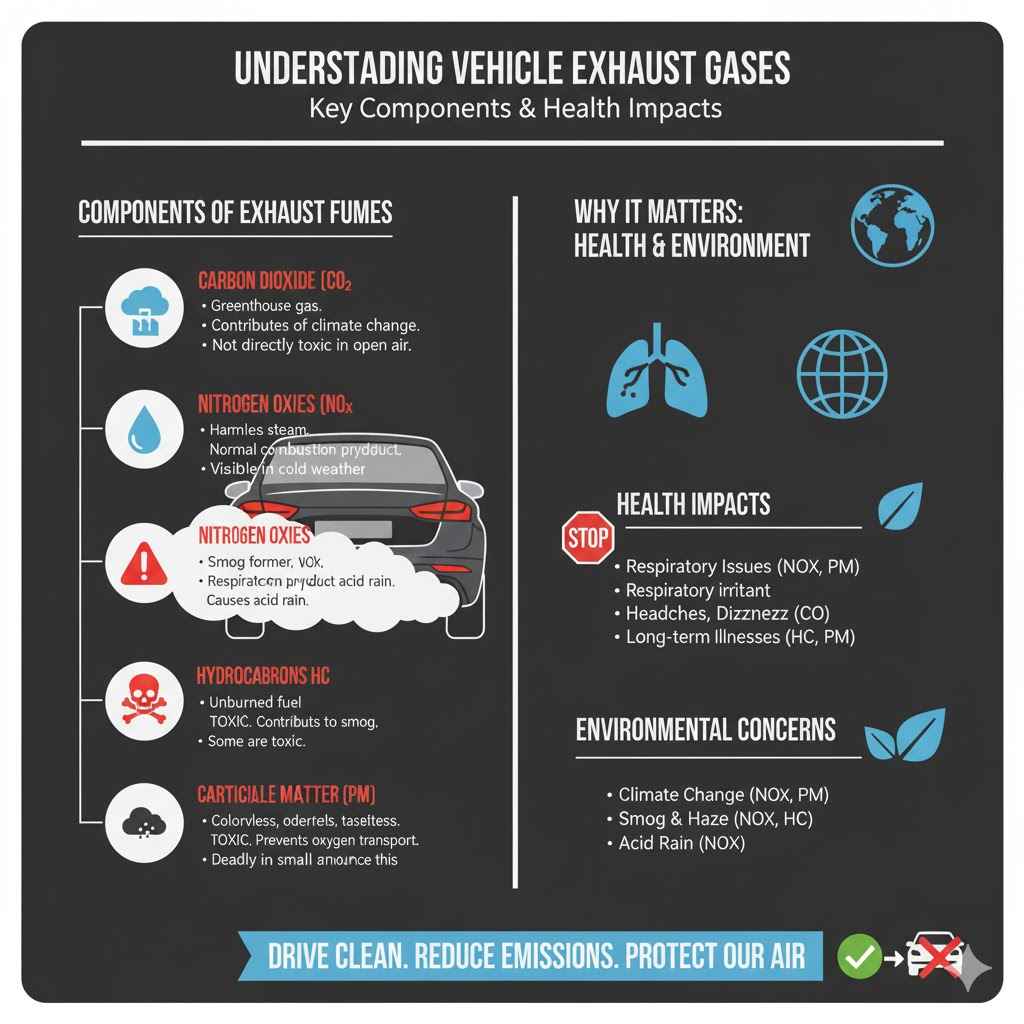
Key Components of Exhaust Fumes
Exhaust fumes contain several important gases. Understanding each one helps us see the whole picture. They are not all the same.
Some are more harmful than others. Knowing the difference is key to understanding car emissions.
Carbon Dioxide (CO2)
Carbon dioxide is a natural gas. It is part of the air we breathe. When fossil fuels like gasoline and diesel burn, they produce a lot of CO2.
This is a major greenhouse gas. It traps heat in the atmosphere. This contributes to climate change.
Cars produce significant amounts of CO2. It is a primary output of the combustion process. CO2 itself is not directly poisonous to humans at normal atmospheric levels.
However, its role in global warming is a major environmental concern. Cars and trucks are a large source of this gas globally.
Water Vapor (H2O)
When fuel burns, it combines hydrogen from the fuel with oxygen from the air. This creates water. So, a significant part of exhaust fumes is actually steam or water vapor.
It is the same water we find in clouds and rain. You can sometimes see this water vapor as a white mist coming from a car’s tailpipe, especially in cold weather. This is completely normal and harmless.
It is a direct result of the chemical reaction that powers the engine.
Nitrogen Oxides (NOx)
Engines create high temperatures. This causes nitrogen and oxygen in the air to react. This forms nitrogen oxides, often called NOx.
These gases are harmful air pollutants. They contribute to smog. They also cause respiratory problems.
NOx can irritate lungs. They can also make asthma worse. In the atmosphere, NOx can form nitric acid.
This causes acid rain. Acid rain can damage forests and lakes. Reducing NOx emissions is a big goal for car manufacturers.
Hydrocarbons (HC)
Hydrocarbons are unburned or partially burned fuel. Gasoline is made of hydrocarbons. When the engine doesn’t burn all the fuel completely, these unburned parts escape.
They come out in the exhaust. Hydrocarbons contribute to smog formation. Some hydrocarbons are also toxic.
They can cause health problems. They can irritate the eyes and throat. They can also lead to more serious issues over time.
Emission control systems are designed to reduce these.
Carbon Monoxide (CO)
This is the gas many people ask about. Carbon monoxide, or CO, is a colorless, odorless, and tasteless gas. It is produced when fuel burns with not enough oxygen.
This is called incomplete combustion. Cars produce CO because their engines sometimes don’t burn fuel perfectly. CO is very dangerous.
It can be deadly even in small amounts. It prevents the blood from carrying oxygen. This can happen very quickly.
It is a serious health hazard from vehicle exhaust. This directly answers the question: yes, exhaust fumes do contain carbon monoxide.
Particulate Matter (PM)
Diesel engines, in particular, produce particulate matter. This is also known as soot. It consists of tiny solid or liquid particles.
These particles are very small. They can be inhaled deep into the lungs. This can cause breathing problems.
It can also worsen heart conditions. Efforts to reduce diesel emissions focus heavily on controlling PM. Modern diesel filters capture most of these particles.
However, older vehicles may still release them.
The Danger of Carbon Monoxide
Carbon monoxide (CO) is a particularly concerning component of exhaust fumes. Its silent nature makes it incredibly dangerous. It does not smell or look like anything.
This means you cannot detect it without special equipment. The fact that it is a byproduct of engine operation means it is present in nearly all vehicle exhaust. Understanding its effects is vital for safety.
How Carbon Monoxide Affects the Body
Carbon monoxide is harmful because it interferes with your body’s ability to use oxygen. When you breathe in CO, it enters your bloodstream. It then binds to hemoglobin in your red blood cells.
Hemoglobin is supposed to carry oxygen from your lungs to your body’s tissues and organs. However, hemoglobin binds to CO much more strongly than it does to oxygen. This means that less oxygen can be transported throughout your body.
As a result, your brain, heart, and other vital organs don’t get enough oxygen to function properly. This can lead to a range of symptoms.
Symptoms can start subtly. They might include headaches, dizziness, nausea, and weakness. These symptoms can be mistaken for the flu.
As CO levels in the air increase, or exposure time lengthens, symptoms become more severe. This can include confusion, vomiting, loss of consciousness, and even death. Because CO is odorless and colorless, people can be exposed without realizing it.
This makes it a significant risk, especially in enclosed or poorly ventilated spaces.
Symptoms of Carbon Monoxide Poisoning
- Mild Exposure: Headaches, dizziness, nausea, fatigue. These are early warning signs.
- Moderate Exposure: Increased severity of mild symptoms. Confusion, impaired judgment, chest pain, shortness of breath.
- Severe Exposure: Loss of consciousness, seizures, coma, heart attack, brain damage, death. These can happen quickly.
It is important to recognize these symptoms. If you suspect CO poisoning, move to fresh air immediately. Seek medical attention right away.
CO detectors are highly recommended for homes and garages. They can alert you to dangerous levels of CO before they become life-threatening.
Real-Life Scenarios Involving Carbon Monoxide from Exhaust
There are many real-life situations where carbon monoxide from vehicle exhaust poses a risk. These often involve enclosed spaces where the gas can build up. Awareness of these scenarios can help prevent accidents.
- A person starts their car in a closed garage. They intend to warm it up or clear the windshield. If they leave the engine running for too long without ventilation, CO can fill the garage. This can lead to poisoning very quickly. The enclosed space traps the gas.
- Campers might run a generator or a car engine inside a tent or camper for heat or power. This is extremely dangerous. The fabric of a tent offers no protection against CO. Even a small amount of CO can build up to lethal levels.
- A person falls asleep in a running car in a closed garage. This is a tragically common cause of accidental death due to CO poisoning. The concentration of CO can reach deadly levels in minutes.
- Operating snow blowers or other fuel-burning equipment in attached garages or enclosed areas can also lead to CO buildup. The exhaust from these machines is just as dangerous.
These examples highlight the importance of ventilation. Never run an engine in an enclosed space. Always ensure good airflow.
CO detectors are a critical safety device. They provide an essential layer of protection.
Are Exhaust Fumes Carbon Monoxide A Direct Link?
So, to directly answer the question, Are exhaust fumes carbon monoxide? Yes, they are. Carbon monoxide (CO) is a specific chemical compound that is a direct product of incomplete combustion in engines.
It is not just present; it is a significant component of exhaust gases. However, it is not the only component. Exhaust fumes are a mixture of several gases and particles.
CO is one of the most dangerous ones in that mix.
The Process of Incomplete Combustion
Combustion is a chemical reaction. It involves burning a fuel, like gasoline, with an oxidizer, usually oxygen from the air. The ideal scenario is complete combustion.
This happens when there is enough oxygen available. In complete combustion, the fuel breaks down into carbon dioxide (CO2) and water vapor (H2O). These are relatively harmless byproducts, though CO2 is a greenhouse gas.
However, engines don’t always achieve complete combustion. Several factors can lead to incomplete combustion. These include a lack of sufficient oxygen.
This can happen if the fuel-air mixture is too rich (too much fuel, not enough air). It can also happen if the engine is not running efficiently. For instance, a faulty fuel injector or a dirty air filter can disrupt the ideal balance.
Engine temperature also plays a role. Cold engines are often less efficient at burning fuel completely.
When combustion is incomplete, the fuel doesn’t break down fully. Instead of just CO2 and H2O, carbon monoxide (CO) is produced. This happens because not all the carbon atoms in the fuel get enough oxygen to become CO2.
They end up as CO. The chemical equation for complete combustion of methane (a component of natural gas, similar to gasoline) is CH4 + 2O2 → CO2 + 2H2O. The equation for incomplete combustion is CH4 + O2 → CO + 2H2O (this is a simplified example).
This means CO is a direct indicator of less-than-perfect burning.
Why CO is a Major Concern
The reason CO is a major concern is its toxicity. As mentioned before, it is a silent killer. The Centers for Disease Control and Prevention (CDC) states that CO poisoning is a leading cause of accidental poisoning deaths in the United States.
This underscores the seriousness of the gas. Its presence in vehicle exhaust is unavoidable to some extent. Therefore, managing and minimizing CO emissions has been a priority in automotive engineering and regulation for decades.
Emission control systems are designed to address this directly.
Modern vehicles have advanced catalytic converters. These devices work to convert harmful gases like carbon monoxide, hydrocarbons, and nitrogen oxides into less harmful substances. A catalytic converter uses precious metals like platinum, palladium, and rhodium.
These act as catalysts to speed up chemical reactions. CO is oxidized to CO2. Unburned hydrocarbons are converted to CO2 and water.
NOx is reduced to nitrogen gas. While catalytic converters are highly effective, they are not perfect. They can degrade over time, and older vehicles may not have them or may have less efficient ones.
Even with a working converter, some CO is still produced.
Statistics show the impact. Before catalytic converters were mandated, carbon monoxide levels in urban areas were significantly higher. Studies have shown reductions of over 90% in CO emissions from new vehicles since the widespread adoption of catalytic converters.
However, millions of older vehicles still operate. They contribute to CO levels. Also, poorly maintained vehicles can emit much higher levels of CO than well-maintained ones.
This is why regular vehicle maintenance is crucial for both performance and safety.
Here is a comparison of exhaust components and their general impact:
| Gas | Primary Source | Health Impact | Environmental Impact |
|---|---|---|---|
| Carbon Dioxide (CO2) | Complete Combustion | None directly harmful at normal levels | Greenhouse gas, contributes to climate change |
| Water Vapor (H2O) | Combustion | None | None |
| Nitrogen Oxides (NOx) | High engine temperatures reacting with air | Respiratory problems, smog, acid rain | Smog, acid rain, contributes to greenhouse effect |
| Hydrocarbons (HC) | Incomplete Combustion | Irritant, potential long-term health effects | Smog, ozone formation |
| Carbon Monoxide (CO) | Incomplete Combustion | Highly toxic, prevents oxygen transport in blood, can be fatal | None directly environmental, but a major health hazard |
| Particulate Matter (PM) | Incomplete Combustion (especially diesel) | Respiratory and cardiovascular problems | Air pollution, visibility reduction |
This table clearly shows that while several components are present, CO stands out due to its direct and severe toxicity to human health. This is why the question “Are exhaust fumes carbon monoxide?” is so important. The answer is yes, and it is a critical aspect of exhaust emissions.
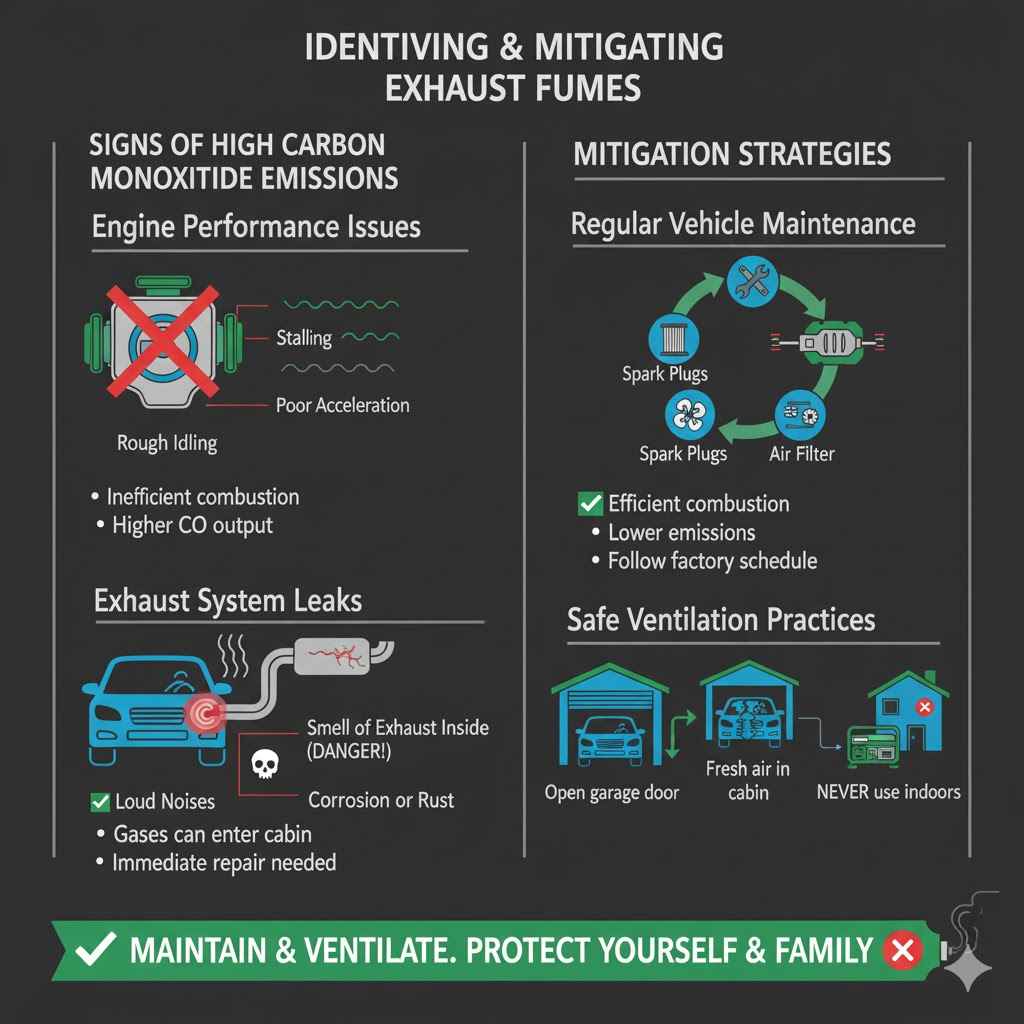
Identifying and Mitigating Exhaust Fumes
Knowing that exhaust fumes contain carbon monoxide is one thing. Understanding how to identify potential problems and what measures can be taken to mitigate risks is also important. This involves awareness of vehicle condition and proper ventilation practices.
Signs of High Carbon Monoxide Emissions
While CO itself is odorless and colorless, there can be indirect signs that a vehicle might be emitting higher than normal levels of carbon monoxide. These signs often point to engine or exhaust system issues that need attention. Paying attention to these can be an early warning.
Engine Performance Issues
- Rough Idling: An engine that runs unevenly or shakes when stopped can indicate an imbalanced fuel-air mixture. This imbalance often leads to incomplete combustion and higher CO output.
- Stalling: If the engine frequently stalls, especially when starting or at low speeds, it might be a sign of fuel system problems. This can cause a richer fuel mixture and thus more CO.
- Poor Acceleration: A noticeable lack of power when trying to speed up can also point to an engine that is not burning fuel efficiently.
These performance issues suggest that the engine is not operating at its peak efficiency. When an engine is not running efficiently, it is more likely to produce harmful byproducts like carbon monoxide. Regular tune-ups and maintenance are key to ensuring your engine runs smoothly and produces fewer emissions.
Exhaust System Leaks
The exhaust system is designed to safely channel exhaust gases away from the vehicle’s cabin. If there is a leak anywhere in this system, dangerous gases like carbon monoxide can escape. They can potentially enter the passenger compartment.
Signs of exhaust leaks include:
- Loud Noises: A sudden increase in the noise level of your exhaust can indicate a hole or crack in the pipes, muffler, or manifold.
- Smell of Exhaust Inside the Car: If you notice the smell of exhaust fumes inside your vehicle, even when the windows are closed, it is a critical warning sign.
- Corrosion or Rust: Inspecting the exhaust system for visible signs of rust or corrosion can reveal potential weak spots where leaks can occur.
Addressing exhaust leaks promptly is crucial for safety. A mechanic can inspect the system and repair any leaks. This not only prevents CO from entering the cabin but also helps the vehicle run more efficiently and quietly.
Mitigation Strategies
Mitigating the risks associated with carbon monoxide from exhaust fumes involves both vehicle maintenance and safe practices. These strategies aim to reduce emissions and prevent dangerous exposure.
Regular Vehicle Maintenance
This is perhaps the most important step. A well-maintained vehicle runs more efficiently. This means better fuel combustion and lower emissions.
Key maintenance aspects include:
- Spark Plug Replacement: Worn spark plugs can lead to misfires and incomplete combustion, increasing CO levels.
- Air Filter Replacement: A clogged air filter restricts airflow, causing the fuel-air mixture to become too rich, leading to higher CO emissions.
- Oxygen Sensor Checks: Oxygen sensors help the engine computer monitor and adjust the fuel-air mixture for optimal combustion. A faulty sensor can cause increased emissions.
- Catalytic Converter Inspection: Ensure the catalytic converter is functioning properly. A failing converter will not effectively break down CO into CO2.
- Exhaust System Inspection: Regularly check for leaks or damage to the exhaust pipes, muffler, and catalytic converter.
Following the manufacturer’s recommended maintenance schedule is essential. A properly running engine produces significantly less carbon monoxide. This is good for your health and the environment.
Safe Ventilation Practices
Even with a well-maintained vehicle, it is vital to practice safe ventilation. This is especially true when the engine is running.
- Never warm up a car in an enclosed garage. Always open the garage door fully before starting the engine. Better yet, drive the car out of the garage immediately.
- When driving, ensure the vehicle’s ventilation system is set to draw in fresh outside air, not recirculate cabin air. This helps to prevent any potential CO that might enter the cabin from building up.
- If you are sitting in a parked car with the engine running, open the windows slightly. This allows for fresh air circulation. This is particularly important in cold weather when people might be tempted to keep windows fully closed.
- When using portable generators or other fuel-burning equipment, always use them outdoors. Keep them far away from windows, doors, and vents.
These practices are simple but can be life-saving. They are about being aware of the risks and taking common-sense precautions. Understanding that Are exhaust fumes carbon monoxide?
is the first step. Taking action to mitigate the risks is the next.
Frequently Asked Questions
Question: Are exhaust fumes dangerous?
Answer: Yes, exhaust fumes can be dangerous. They contain carbon monoxide, which is a poisonous gas. They also contain other harmful pollutants like nitrogen oxides and hydrocarbons.
Question: Can I smell carbon monoxide from my car?
Answer: No, carbon monoxide is a colorless and odorless gas. You cannot smell it. This is why it is so dangerous and why CO detectors are important.
Question: Do electric cars produce carbon monoxide?
Answer: No, electric cars do not have an internal combustion engine. They do not produce exhaust fumes or carbon monoxide.
Question: How can I check if my car is emitting too much carbon monoxide?
Answer: A mechanic can test your car’s emissions. They can check for high carbon monoxide levels. Also, pay attention to how your car runs.
Poor performance can be a sign of high emissions.
Question: Is it safe to run my car in the garage with the door open?
Answer: It is still risky. Even with the door open, carbon monoxide can build up quickly. It is best to avoid running your car in a garage if possible, or at least ensure maximum ventilation.
Summary
So, Are exhaust fumes carbon monoxide? Yes, they are a significant component. Exhaust fumes are a mix of gases, with carbon monoxide being one of the most dangerous.
It comes from incomplete fuel burning. While modern cars have systems to reduce these emissions, CO is still present. Always ensure good ventilation when a car engine is running.
Regular vehicle maintenance is key to keeping emissions low.