Best Exhaust System for a Cummins Truck
A 4-inch stainless turbo-back is often a strong choice for towing and daily driving on a Cummins truck. A 5-inch system can fit mild performance builds better when more drone is acceptable. 409 stainless is often used as a value option, while 304 is commonly chosen for better corrosion resistance. A poor match can add cabin drone, rust early, or give little gain for the money. This guide shows how to pick diameter, material, and muffler choice by use case, axle ratio, cab style, and how much noise you can live with.
Best exhaust picks for Cummins trucks

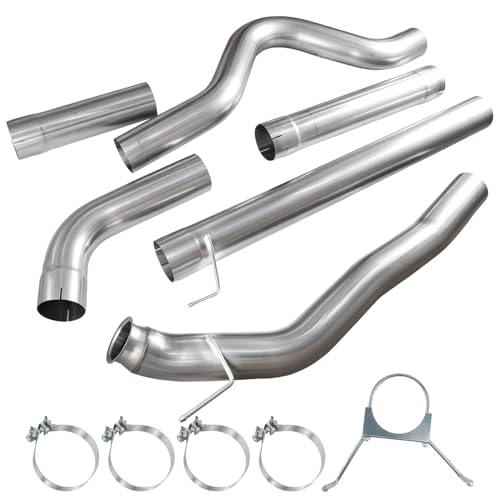

Top pick for a stock or lightly modified daily driver
It fits many setups, keeps sound controlled, and avoids the louder cabin tone that can wear on you in stop-and-go traffic. For a stock 6.7 Cummins, that is often a clean starting point.
Top pick for a towing-first truck
A 4-inch system with a muffler or resonator is often the safer choice for towing. It keeps drone risk lower, supports airflow, and stays more comfortable on long grades where sustained exhaust load matters. Towing buyers should value controlled sound more than an aggressive tone.
Top pick for a mild performance build
A 5-inch system makes sense when the truck has supporting modifications and the owner wants a louder, more aggressive sound. It fits mild performance builds better than stock trucks because the noise and fitment tradeoffs matter less when the rest of the setup is already aimed at higher flow.
Quick picks by use case
- Daily driver: 4-inch stainless, controlled sound, low drone risk, easy fitment.
- Tow rig: 4-inch with a muffler or resonator, quieter cabin, better comfort on long pulls.
- Mild performance build: 5-inch, more aggressive tone, accept higher drone risk if other mods support it.
What is the best exhaust system for a Cummins truck?
The best 6.7 Cummins exhaust depends on the truck’s job. If the truck is stock or lightly modified, a 4-inch system is the practical default. If the truck tows often, keep the sound controlled and the drone low. If the truck has tuning and other supporting modifications, larger diameter can make more sense.
Why there is no single best answer
Material, sound, fitment, and durability matter more than brand name alone. A louder system is not automatically the better one, and a large pipe can be the wrong fit for a daily driver. The right choice depends on whether you care most about commuting comfort, towing stability, or flow for a modified setup.
How stock tune level changes the answer
Exhaust alone delivers modest power gains. Stronger results require a tune or other supporting modifications. That is why a truck on a stock calibration usually benefits more from sound control, fitment, and corrosion resistance than from chasing the largest pipe available.
Cummins exhaust decision table
| Use case | Pipe diameter | Material | Sound level | Drone risk | Install difficulty | Best-fit recommendation | Notes |
|---|---|---|---|---|---|---|---|
| Stock daily driver | 4-inch | 409 stainless or aluminized steel | Controlled | Low to moderate | Bolt-on with common hand tools | Choose a 4-inch system with a muffler if cabin comfort matters. | Stainless pays back if the truck sees salted roads, winter slush, or wet storage. In dry climates, aluminized steel can be a better value. |
| Towing-first truck | 4-inch | T304 stainless steel | Quiet to controlled | Low | Bolt-on to moderate | Pick the setup that keeps drone down and leaves room for sustained exhaust flow. | 304 is worth extra cost when the truck lives in wet or salted climates and stays on the road year-round. |
| Mild performance build | 5-inch | T304 stainless steel | Aggressive | Moderate to high | Moderate to professional-shop project | Use 5-inch only if the truck has supporting mods and the owner accepts more sound. | Stainless matters most on higher-value trucks or in corrosive climates, where early rust would erase the price gap. |
Should you choose 4-inch or 5-inch exhaust?
For most Cummins trucks, 4-inch is the better starting point. It fits most stock or lightly modified trucks, keeps cabin noise more manageable, and still supports airflow. A 5-inch system makes more sense when the truck is modified enough that a louder, freer-flowing setup fits the overall build.
Exhaust pipe diameter
Exhaust pipe diameter affects airflow and sound, but bigger is not always better. A 4-inch system usually gives the most balanced mix of fitment, tone, and practicality. Larger diameter systems can move more exhaust flow, yet they also raise the chance of drone and can create fitment tradeoffs on some trucks.
Fitment tradeoffs
More diameter can mean more packaging headaches around the axle, suspension, and spare tire area. That matters on trucks that still need to tow, haul, or spend long hours on the highway. A system that fits cleanly is worth more than a larger system that rattles, hangs low, or adds needless noise.
When larger diameter starts to make sense
Larger diameter starts to make sense when the truck is tuned, has additional airflow mods, and the owner wants a more aggressive sound profile. That is a different decision from buying a stock-style work truck exhaust. If the truck is still mostly stock, 4-inch remains the practical choice.
Does stainless steel pay off?
Yes, stainless steel pays off when the truck sees corrosion. T304 stainless steel has the strongest corrosion resistance, and stainless steel is particularly valuable in wet or salted climates. If the truck is kept in a dry region, aluminized steel can still be a sensible budget choice.
T304 stainless steel vs aluminized steel
T304 stainless steel is the better long-term material when you want maximum corrosion resistance. Aluminized steel costs less and can work well where road salt and winter moisture are less of a threat. The right choice depends less on brand and more on climate, mileage, and how long you plan to keep the truck.
Wet and salted climate durability
Road salt, slush, and condensation attack exhaust parts from the inside and outside. That is why stainless is easier to justify on a truck that sees winter use. In a dry climate, aluminized steel may last long enough that the savings are more useful than the upgrade.
When stainless is worth the extra cost
Stainless is worth it when you keep trucks for a long time, drive through winter, or want fewer corrosion worries under the cab. It is also easier to justify on a diesel that already has a lot of value tied up in the drivetrain. Short-term ownership in a dry climate is the main case for skipping it.
How much sound is too much?
Too much sound is the point where drone and cabin fatigue start to matter more than exhaust tone. A controlled system is usually better for a daily driver or tow rig. Aggressive sound can feel exciting for a short drive, but it often becomes the wrong choice for long commutes and highway towing.
Drone risk and cabin comfort
Drone is the low-frequency hum that sits in the cab at steady speeds. It is one of the biggest reasons a loud exhaust disappoints owners after the first week. If the truck spends a lot of time at constant speed, drone risk should matter as much as flow.
Aggressive vs controlled sound
Aggressive sound fits performance-minded builds better than work trucks. Controlled sound is the smarter fit when the truck carries family, tools, or a trailer. The quieter setup often feels more polished because it gives the truck a better tone without wearing on the driver.
Tow-rig suitability
Tow rigs should avoid excessive drone. Long pulls and steady throttle make cabin resonance more noticeable, and that can turn a loud system into a daily annoyance. If towing is the main job, choose the exhaust that keeps sound present but restrained.
How much does an exhaust upgrade change performance?
Expect modest gains from exhaust alone. A high-quality exhaust can reduce back pressure and improve exhaust flow, but it will not turn a stock Cummins into a different truck by itself. The biggest gains show up when the exhaust is paired with a tune or other supporting modifications.
Backpressure and airflow
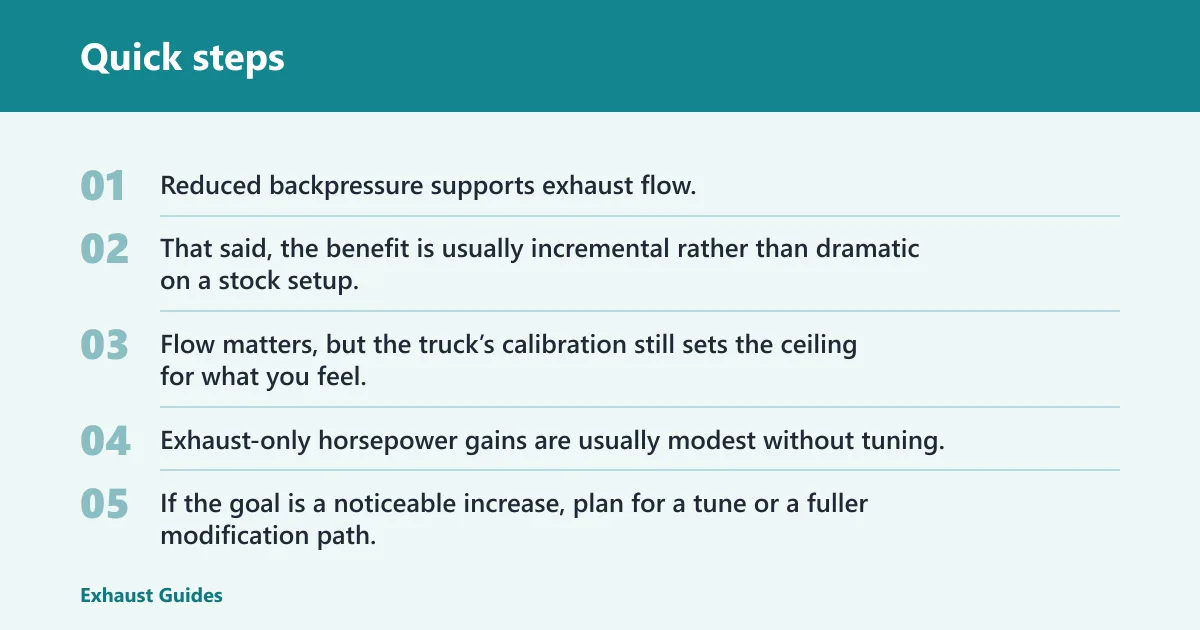
Reduced backpressure supports exhaust flow, which is why high-flow systems can help the engine breathe easier. That said, the benefit is usually incremental rather than dramatic on a stock setup. Flow matters, but the truck’s calibration still sets the ceiling for what you feel.
Horsepower expectations
Exhaust-only horsepower gains are usually modest without tuning. If the goal is a noticeable increase, plan for a tune or a fuller modification path. Exhaust can support the build, but it is rarely the part that delivers the big jump on its own.
EGTs during sustained towing
Lower restriction can help with exhaust gas temperatures during sustained towing, especially when the truck is working hard for long stretches. That does not mean an exhaust alone fixes high EGTs under all conditions. It is one piece of a larger towing setup that includes calibration, gearing, and cooling strategy.
When a tune is still required
If the truck is tuned already, the exhaust can complement the calibration. If the truck is stock and you want meaningful power, the exhaust alone is not enough. A common first-timer mistake is buying the loudest pipe first and expecting the tune-level result later.
Picture a stock 6.7 Cummins that tows a camper on weekends. A 4-inch stainless system with a muffler may keep the cab quiet enough for the highway while still helping airflow under load. Swap that same truck to a 5-inch straight-through setup, and the extra sound may become the thing the owner notices most.
Suppose a tuned truck already has intake and fueling support. In that case, a 5-inch exhaust can fit the build better because the owner has already accepted more noise and more flow. The same part on an otherwise stock truck would be harder to justify.
How hard is installation?
Installation ranges from simple bolt-on to professional-shop project. Many Cummins exhaust kits are designed for common hand tools and basic driveway work. Bigger systems, tighter fitment, and rusted hardware can push the job into shop territory.
Bolt-on install with common hand tools
A straightforward kit can be installed with common hand tools, especially when the truck is newer and the fasteners are not seized. That is one reason 4-inch systems are such a common recommendation. They often balance fitment, function, and install difficulty better than larger options.
When a professional-shop install makes sense
A professional shop is the safer choice when the truck has heavy rust, an awkward aftermarket layout, or a larger system that needs more adjustment. If the owner wants clean tip alignment and minimal hassle, the extra labor can be worth it. That is especially true on trucks that see harsh winters.
Warranty and brand support
Warranty support matters because it tells you how a brand stands behind fitment and material quality. Some manufacturers list lifetime warranty coverage on exhaust components, and that can be a useful filter when two products look similar on paper. Brand support matters, but only after diameter, material, and sound are right.
The editor’s choice often cited for this class is the Diamond Eye K5252A Exhaust Kit, while the MBRP S6290AL is a common pick for buyers who want a dual exit layout. Those examples matter because they show how the market splits by fitment and sound goal, not just by name.
Emissions-equipment compatibility on newer trucks
On newer Cummins trucks, exhaust choice has to respect the factory emissions layout. Some systems are built to work with the existing emissions equipment, while others are aimed at off-road or race use. Before buying, confirm whether the kit is compatible with your truck’s aftertreatment setup and sensor placement.
How to choose
- Start with the truck’s main job: daily driving, towing, or a mild performance build.
- Pick 4-inch if the truck is stock or lightly modified.
- Move to 5-inch only if the truck has supporting mods and you accept more sound.
- Choose T304 stainless if the truck lives in wet or salted conditions.
- Choose aluminized steel if the truck is in a dry climate and value matters more than long-term corrosion resistance.
- Check drone risk if the truck spends long hours on the highway or pulls trailers.
- Confirm emissions-equipment compatibility before ordering for a newer Cummins.
- Use a shop for rusted hardware, larger systems, or fitment-sensitive installs.
Frequently asked questions
Should I get a 4-inch or 5-inch exhaust for my Cummins?
Get 4-inch if the truck is stock, lightly modified, or used as a tow rig. Choose 5-inch only if the truck has supporting modifications and you want a more aggressive tone. For most owners, 4-inch is the better balance of airflow, comfort, and fitment.
What exhaust size is best for towing with a Cummins?
For towing, 4-inch is the better size because it keeps drone lower and cabin comfort higher. Towing buyers should prioritize controlled sound and airflow over loudness. A muffler or resonator is often worth more than a bigger pipe when the truck spends long stretches under load.
Does a stainless steel exhaust last longer on a Cummins truck?
Yes. T304 stainless steel has the strongest corrosion resistance, and stainless is particularly valuable in wet or salted climates. Aluminized steel can still make sense in dry regions or on shorter ownership cycles. The climate and how long you keep the truck matter more than marketing language.
Will an exhaust upgrade increase horsepower on a Cummins?
It can, but the gain is usually modest without tuning. A high-quality exhaust reduces backpressure and supports airflow, which helps the engine breathe better. If you want a stronger increase, plan on a tune or other supporting modifications instead of expecting the exhaust alone to do the job.
Which exhaust style is better for a daily driven Cummins truck?
A controlled 4-inch turbo-back is usually better for a daily driven Cummins truck. It limits drone, keeps the cabin quieter, and still gives the truck a better tone than stock. A loud 5-inch setup can get tiring fast on commutes, especially if the truck sees highway miles every day.