
Could Adult Behavel Problems Resons: Genius Essential Clues
Adult behavioral problems often stem from hidden causes like unresolved childhood experiences, undiagnosed mental health conditions, chronic stress, or even physical health issues. Identifying these essential clues is the first step toward understanding the behavior and finding a path to positive change. These reasons are not excuses, but explanations that empower healing and growth.
Have you ever wondered why you react a certain way? Or maybe you’ve been puzzled by the behavior of a loved one. It can be frustrating and confusing when actions don’t seem to make sense. Many adults struggle with behaviors they wish they could change, from short tempers to procrastination or social anxiety. You are not alone in feeling this way. The good news is that there are almost always reasons behind these behaviors. Understanding these reasons is like finding a map to a better place. In this guide, we will explore the essential clues that can help you uncover the “why” behind adult behavioral problems.
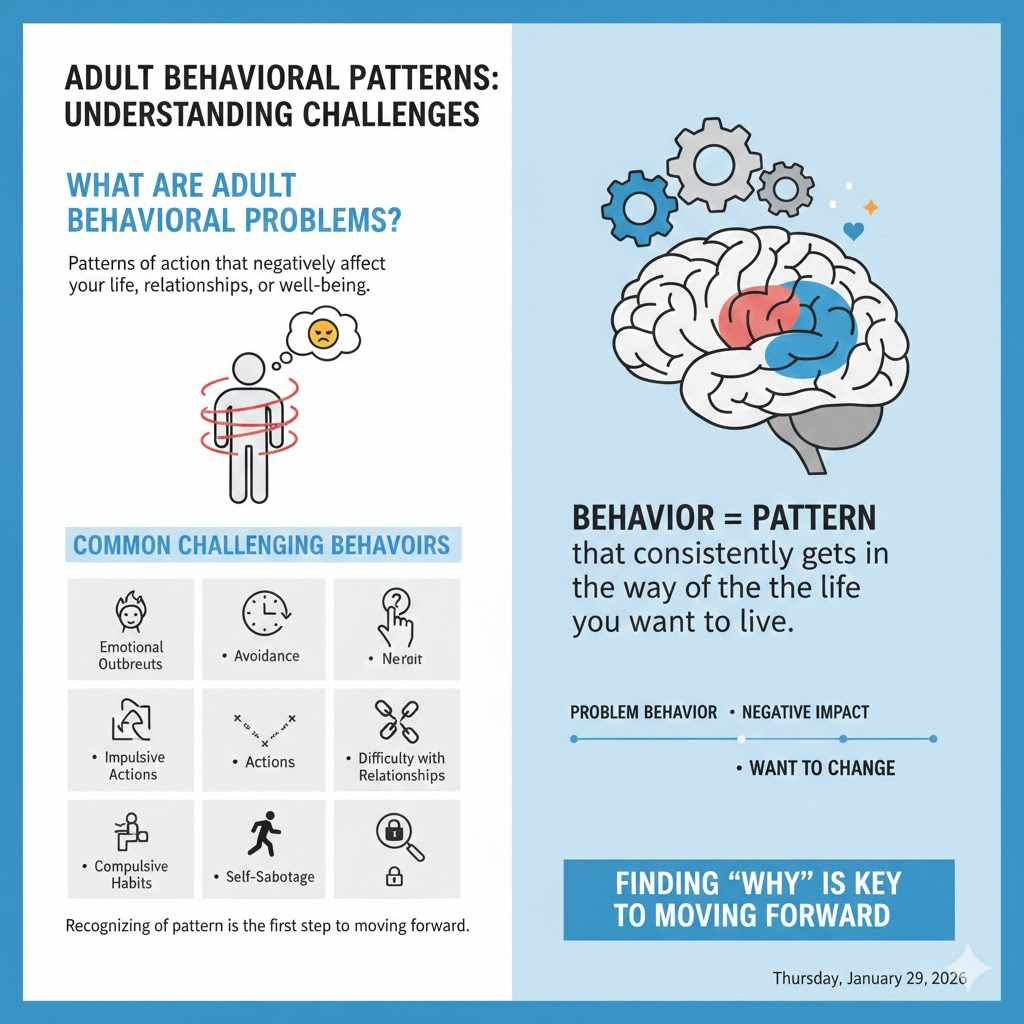
What Exactly Are Adult Behavioral Problems?
Before we dig for clues, let’s get clear on what we mean by “behavioral problems.” This isn’t about being “bad” or “good.” It’s about patterns of action that negatively affect your life, your relationships, or your well-being. These are behaviors that you might want to change but find it incredibly difficult to do so.
Think of it like this: a behavior becomes a “problem” when it consistently gets in the way of the life you want to live. It might be causing friction at work, stress in your family, or making you feel unhappy with yourself.
Common Examples of Challenging Behaviors
These issues can show up in many different ways. Some common examples include:
- Emotional Outbursts: Getting angry or upset very easily, often over small things.
- Avoidance: Procrastinating on important tasks or avoiding social situations you find stressful.
- Impulsive Actions: Making quick decisions without thinking about the consequences, such as with spending or relationships.
- Difficulty with Relationships: Struggling to maintain healthy connections with friends, family, or partners. This could look like starting arguments, being withdrawn, or feeling insecure.
- Self-Sabotage: Undermining your own success or happiness, often without realizing you’re doing it.
- Compulsive Habits: Needing to do certain things repeatedly, like checking locks, excessive cleaning, or overeating.
Recognizing a pattern is the first step. If any of these sound familiar, know that you’re not just “stuck” this way. There are reasons, and finding them is the key to moving forward.
The Hidden Roots: 5 Essential Clues to Understand the “Why”
Behavior doesn’t happen in a vacuum. It’s an outward expression of what’s going on inside. Think of challenging behavior as the tip of an iceberg. What we see on the surface is small compared to the huge mass of ice hidden beneath the water. Let’s dive in and explore those hidden parts.
Clue #1: Unresolved Childhood Experiences
Our early years create the blueprint for how we see the world, ourselves, and others. Difficult experiences from childhood can leave a lasting impact that shows up in our adult behavior, often in surprising ways.
This is often connected to what are called Adverse Childhood Experiences, or ACEs. According to the Centers for Disease Control and Prevention (CDC), ACEs are potentially traumatic events that occur in childhood. They can disrupt healthy brain development and affect how a person responds to stress.
What does this look like in adulthood?
- Fear of Abandonment: If a person experienced neglect or instability as a child, they might become overly clingy or jealous in adult relationships, always fearing their partner will leave.
- Difficulty Trusting Others: A childhood marked by betrayal or broken promises can make it very hard to trust people later in life, leading to isolation or guardedness.
- A Harsh Inner Critic: Growing up with constant criticism can lead to an adult who is incredibly hard on themselves, leading to perfectionism or a fear of failure.
- Trouble Managing Emotions: If a child wasn’t taught how to handle big feelings in a healthy way, they might grow into an adult who either explodes with anger or shuts down completely when overwhelmed.
It’s not about blaming the past. It’s about understanding how it shaped the present so you can build a new future.
Clue #2: Undiagnosed or Untreated Mental Health Conditions
Many behavioral problems are actually symptoms of an underlying mental health condition. Just as a cough can be a symptom of a cold, a behavioral issue can be a symptom of something like anxiety, depression, or ADHD. When the root condition isn’t addressed, the behavior continues because the cause is still there.
Here are a few common connections:
- ADHD (Attention-Deficit/Hyperactivity Disorder): In adults, this doesn’t always look like hyperactivity. It can manifest as chronic procrastination, disorganization, impulsivity, and trouble finishing projects. This isn’t laziness; it’s a difference in brain wiring.
- Anxiety Disorders: A person with social anxiety might constantly cancel plans or seem unfriendly, but the behavior is driven by intense fear, not a lack of interest. Generalized anxiety can lead to irritability, restlessness, and difficulty concentrating.
- Depression: This is more than just sadness. It can cause a loss of interest in hobbies, social withdrawal, fatigue, and irritability. A person might seem apathetic or “lazy,” when in reality they are struggling with a serious medical condition.
- Bipolar Disorder: This condition involves extreme mood swings, from manic highs to depressive lows. During a manic phase, a person might be impulsive, have racing thoughts, and engage in risky behavior. During a depressive phase, they may withdraw completely.
Getting a proper diagnosis can be life-changing. It provides an explanation and opens the door to effective treatments, like therapy or medication, that target the root cause.
Clue #3: Your Physical Health and Brain Chemistry
The mind and body are deeply connected. Sometimes, a behavioral problem has a physical root cause that is easy to overlook. Our brains run on a delicate balance of chemicals, hormones, and nutrients. When that balance is off, our mood and behavior can change dramatically.
Consider these physical factors:
- Hormonal Imbalances: Thyroid issues, low testosterone, or imbalances related to the menstrual cycle or menopause can lead to mood swings, irritability, fatigue, and anxiety.
- Chronic Pain or Illness: Living with constant pain is exhausting and stressful. It can easily lead to a short temper, social withdrawal, and feelings of hopelessness.
- Nutritional Deficiencies: Lacking key nutrients like Vitamin D, B vitamins, or iron can impact energy levels and mood, sometimes contributing to symptoms of depression or anxiety.
- Poor Sleep: Not getting enough quality sleep is a major trigger for behavioral issues. It impairs judgment, shortens your temper, and makes it harder to manage stress.
- Neurological Conditions: In some cases, changes in behavior can be a sign of a more serious issue, like a brain injury or a developing neurological disorder.
If you’ve noticed a sudden or significant change in your behavior, it’s always a good idea to check in with a doctor to rule out any underlying physical causes.
Clue #4: Major Life Stressors and Environment
No one is immune to stress. When we are under intense or prolonged pressure, our ability to cope can become overwhelmed. This can lead us to behave in ways that are out of character. Our environment—our job, our home life, our relationships—plays a huge role in our well-being.
Think about these common stressors:
- Financial Pressure: Worrying about bills, debt, or job security is a heavy burden that can cause constant anxiety and irritability.
- Relationship Conflict: Ongoing arguments with a partner, family member, or friend can leave you feeling drained, angry, and on edge.
- High-Pressure Job: A demanding or toxic work environment can lead to burnout, making you feel cynical, exhausted, and ineffective in all areas of your life.
- Major Life Changes: Even positive changes, like a new baby or a move, are stressful. Negative changes, like a divorce or the loss of a loved one, can be overwhelming.
- Lack of Social Support: Feeling isolated or lonely makes every other problem feel bigger. Humans are social creatures, and we need connection to thrive.
When stress levels are high, our “fight or flight” response can get stuck in the “on” position, making us reactive and short-tempered.
