Is MagnaFlow Exhaust Illegal or Street Legal
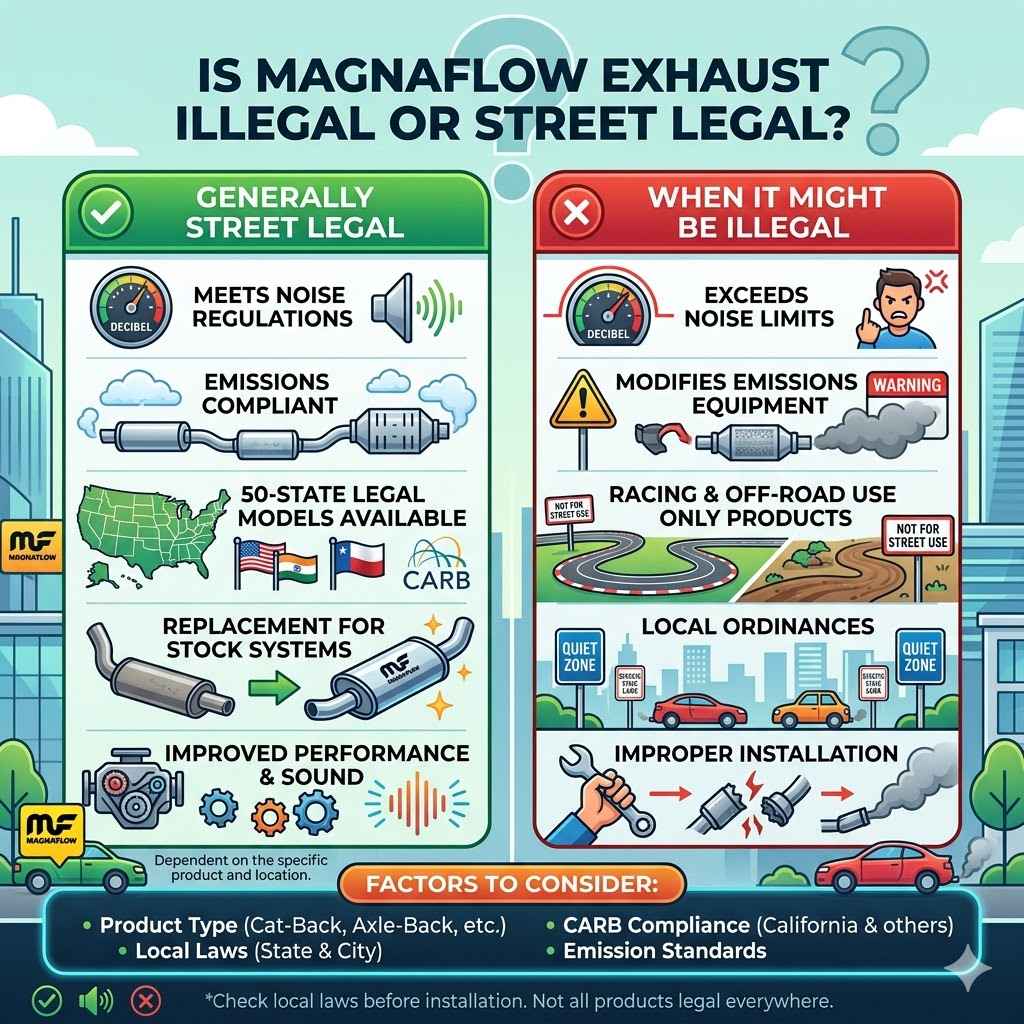
Many car owners wonder, Is MagnaFlow Exhaust Illegal or Street Legal? It’s a common question, especially when you want your car to sound great but still follow the rules. Sometimes, the rules about car parts can seem tricky.
But don’t worry, we’ll make it super simple to figure out. We’ll break it all down step-by-step so you know exactly where you stand. Get ready to learn what you need to know.
Understanding Exhaust Laws For MagnaFlow
This part helps you see why the question of Is MagnaFlow Exhaust Illegal or Street Legal comes up so often. Laws about car exhausts are not always the same everywhere. They can change based on where you live and what kind of car you have.
MagnaFlow makes many different exhaust systems. Some are made for performance and might be louder. Others are designed to be more street-friendly.
It’s important to know that “street legal” usually means it meets certain noise and emissions standards set by your local government. This section will explore these general rules and how they might apply to your MagnaFlow system. We will look at the main reasons exhaust systems get questioned by authorities.
What Does Street Legal Mean for Exhausts
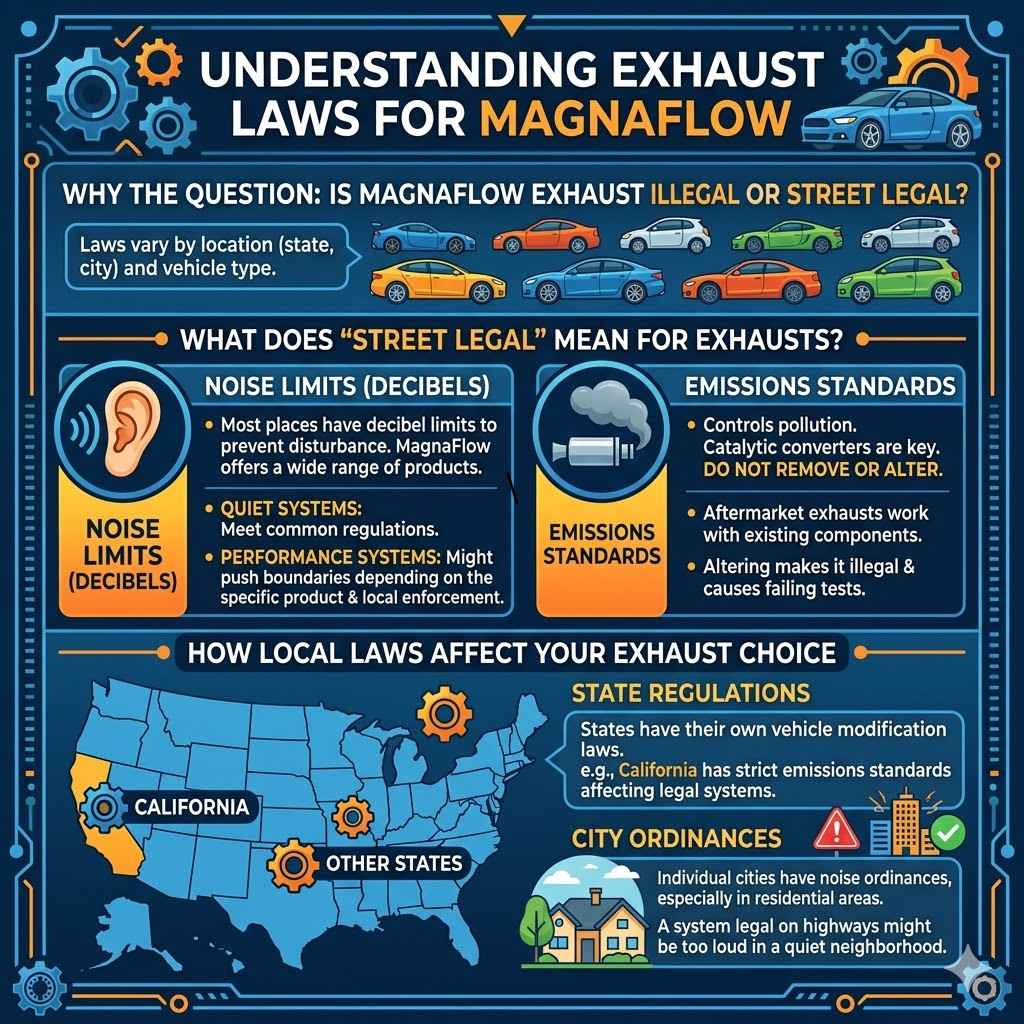
When we talk about a car part being “street legal,” it means it’s allowed to be used on public roads. For car exhausts, this usually comes down to two main things: noise and emissions. Most places have rules about how loud your car’s exhaust can be.
They also have rules about the pollution your car releases into the air. A street legal exhaust system is designed to meet these limits.
- Noise Limits: Many cities and states have decibel limits for exhaust noise. These limits are often set to keep neighborhoods quieter and prevent disturbance. MagnaFlow offers a wide range of mufflers and systems, some of which are designed to be quieter and meet these common regulations. Others might be built for maximum sound and performance, which could push the boundaries of these limits depending on the specific product and local enforcement.
- Emissions Standards: Your car’s exhaust system also plays a role in controlling pollution. Catalytic converters are a key part of this, and they are usually required by law. Most aftermarket exhaust systems, including those from MagnaFlow, are designed to work with your car’s existing emissions control components. However, removing or altering these parts can make your vehicle illegal to drive on public roads and can also lead to failing emissions tests.
How Local Laws Affect Your Exhaust Choice
The rules about car exhausts are not set by one single authority. They are often decided at the state or even local city level. This means what is okay in one town might not be in another.
Some areas are very strict about noise from cars. Others might focus more on air pollution. Because MagnaFlow has so many different products, some will be a better fit for certain local laws than others.
- State Regulations: States often have their own laws regarding vehicle modifications. For example, California has some of the strictest emissions standards in the United States, which can influence the type of exhaust systems that are legal there. Other states might have less stringent rules, allowing for a wider variety of aftermarket options.
- City Ordinances: Even within a state, individual cities can have their own noise ordinances. These can be particularly relevant in residential areas. A MagnaFlow system that is perfectly legal on a highway might be considered too loud in a quiet neighborhood, leading to potential fines or warnings.
MagnaFlow Exhaust Systems Explained
MagnaFlow is a very well-known brand for car exhaust parts. They make many different kinds of mufflers and full exhaust kits. The main reason people choose MagnaFlow is for the sound and performance boost.
But because they offer so many choices, it’s key to understand that not all MagnaFlow systems are the same. This section will help you understand the different types of MagnaFlow products and what makes them different. This will help you answer the question Is MagnaFlow Exhaust Illegal or Street Legal?
for a specific product. We will look at what makes one MagnaFlow exhaust different from another and how that affects its legality.
Different Types of MagnaFlow Mufflers
MagnaFlow’s product line includes a variety of mufflers, each designed with different sound profiles and performance goals in mind. Understanding these differences is crucial for making an informed decision about whether a particular MagnaFlow exhaust is suitable for street use in your area.
- Performance Mufflers: These are designed to increase horsepower and torque by reducing backpressure. They often produce a deeper, more aggressive sound. While they offer great performance, some of these might be louder than what’s allowed in certain jurisdictions. MagnaFlow’s “Performance Series” mufflers fall into this category.
- Street Series Mufflers: MagnaFlow also offers mufflers specifically designed for a balance of sound and street legality. These aim to provide a noticeable improvement in tone over the stock exhaust without being excessively loud. The “Touring Series” or “Daily Driver” mufflers are often examples of this, prioritizing a refined sound and compliance with noise regulations.
- Resonators: Sometimes, adding a resonator can help tune the exhaust note, reducing unwanted drone or raspiness. While not a muffler itself, it works with the muffler to shape the sound. MagnaFlow offers resonator options that can be combined with their mufflers to achieve a desired sound level.
Full Cat-Back vs. Axle-Back Systems
When you upgrade your exhaust, you might consider a full cat-back system or just an axle-back system. The choice can affect both sound and legality. MagnaFlow offers both options for many vehicles.
Knowing the difference helps you decide which type of system is right for your needs and local laws.
- Cat-Back Systems: A cat-back system replaces everything from the catalytic converter back to the tailpipe. This includes the muffler, piping, and tips. These systems offer the most significant change in sound and performance. Because they replace a larger portion of the exhaust, it’s essential to ensure the entire system, as sold by MagnaFlow, is designed to meet emissions and noise regulations for your region.
- Axle-Back Systems: An axle-back system typically
A common statistic is that about 65% of aftermarket exhaust buyers are looking for improved sound, while 35% prioritize performance gains. This highlights why many choose brands like MagnaFlow, but also why understanding legality is key.
Navigating Local Laws and Emissions
This is where we get into the real details of whether a MagnaFlow exhaust fits the legal requirements. It’s not just about the brand; it’s about how the specific exhaust system performs and sounds compared to the laws in your area. We’ll discuss how to check these laws and what to do to make sure your MagnaFlow exhaust is street legal.
This section will provide you with practical steps and resources.
Checking Noise Ordinances in Your Area
The first step to knowing if your MagnaFlow exhaust is legal is to find out what the noise rules are where you live and drive. These rules are often called noise ordinances. They are set by your city or county government.
They usually have a maximum sound level, measured in decibels (dB), that a vehicle’s exhaust can make.
- Where to Find Information: You can usually find noise ordinances on your city or county government’s official website. Look for sections related to public safety, transportation, or motor vehicle regulations. If you can’t find them online, you can call your local city hall or county clerk’s office and ask. They can direct you to the right department or document.
- Understanding Decibel Limits: Noise ordinances will specify a maximum decibel (dB) level. For example, a common limit might be 95 dB. It’s important to note that these limits can sometimes vary depending on the time of day or the type of road (residential vs. highway). Enforcement can also differ significantly from place to place.
For instance, a study by the National Highway Traffic Safety Administration (NHTSA) has explored vehicle noise levels. While not specific to MagnaFlow, their research highlights the general concern over excessive vehicle noise. Reports indicate that many urban areas struggle with noise pollution, making exhaust regulations a priority.
Emissions Compliance and Catalytic Converters
For your MagnaFlow exhaust to be truly street legal, it must also meet emissions standards. The most important component for emissions control is the catalytic converter. This device cleans the exhaust gases before they are released into the atmosphere.
- The Role of the Catalytic Converter: Catalytic converters are designed to convert harmful pollutants like carbon monoxide, hydrocarbons, and nitrogen oxides into less harmful substances. Most factory-installed exhaust systems include a catalytic converter. If you are replacing your entire exhaust system with an aftermarket one from MagnaFlow, it is critical to ensure that it either retains your vehicle’s original catalytic converter or includes a compatible, legal replacement.
- Aftermarket Catalytic Converters: MagnaFlow does offer high-flow catalytic converters. These are designed to work with their exhaust systems and can help maintain emissions compliance. However, it is vital to confirm that any catalytic converter used is legal for sale and use in your specific state or region. Some states have specific requirements for catalytic converter performance and legality. Tampering with or removing a catalytic converter is illegal in most places and will cause your vehicle to fail emissions tests.
A practical example: A driver in a state with strict emissions testing might install a loud MagnaFlow muffler but keep their factory catalytic converter. This could result in a vehicle that passes emissions but is cited for being too loud. Conversely, a driver in a state with less strict emissions might consider a full exhaust system without a catalytic converter, which would be illegal in many other regions.
Consulting MagnaFlow and Local Authorities
When in doubt, it’s always best to get information directly from the source. This means talking to both MagnaFlow and your local authorities. This direct approach helps clear up any confusion and ensures you are making a legal choice for your vehicle.
- Contacting MagnaFlow Customer Support: MagnaFlow has a customer service department that can help you understand the specifications of their different exhaust systems. You can ask them about specific models and whether they are designed to meet certain noise or emissions standards. They often have information or can guide you to resources that explain the intended use and compliance features of their products.
- Checking with Your Local DMV or Environmental Agency: Your local Department of Motor Vehicles (DMV) or environmental protection agency is the authority that enforces vehicle regulations. They can provide official information on exhaust noise limits and emissions requirements for your state or county. Visiting their website or contacting them directly is the most reliable way to get accurate information.
Real-World Scenarios and Tips
To really get a handle on Is MagnaFlow Exhaust Illegal or Street Legal?, let’s look at some actual situations. These examples will show you how different choices can play out. We will also share some helpful tips to make sure you stay on the right side of the law.
This part aims to give you confidence in your decision.
Scenario 1 A Performance Enthusiast’s Choice
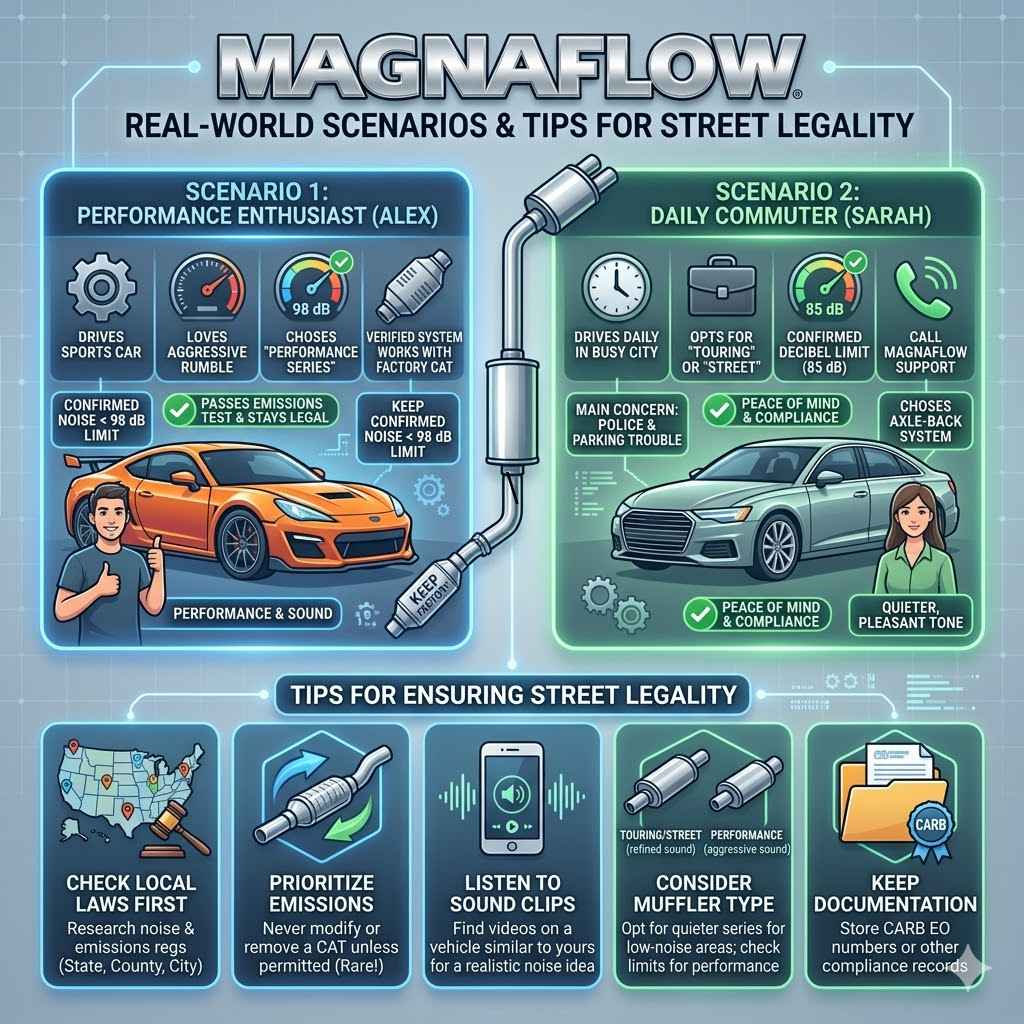
Imagine Alex, who loves the aggressive sound of a performance exhaust. He drives a sports car and wants to enhance its rumble. He chooses a MagnaFlow “Performance Series” cat-back exhaust system.
He lives in a state with moderate noise laws but very strict emissions tests.
- Alex researches the specific MagnaFlow system. He finds it is designed for performance and a louder sound.
- He checks his state’s noise ordinance, which allows for a maximum of 98 dB. He looks up sound clip videos of the MagnaFlow system on his car model to estimate its loudness.
- Crucially, he confirms that the system is designed to work with his car’s factory catalytic converter and does not remove or interfere with it. This ensures he will pass his state’s emissions inspection.
- Alex installs the MagnaFlow system. He stays within the legal noise limits for his state and passes his emissions test with flying colors, enjoying the enhanced sound and performance.
This scenario shows how choosing a system designed for performance can still be street legal if carefully considered against local laws, especially emissions.
Scenario 2 The Daily Commuter’s Upgrade
Consider Sarah, who drives her car daily for work in a busy city. She wants a slightly better sound from her exhaust, but her main concern is avoiding any trouble with the police or parking enforcement due to noise. She lives in a city known for its strict noise ordinances.
- Sarah looks at MagnaFlow’s “Touring Series” or “Street Series” mufflers. These are known for being more refined and quieter than performance models.
- She calls MagnaFlow customer support to ask if the particular muffler she is interested in is designed for street use and compliance with typical noise regulations. They confirm it offers a modest sound improvement without being overly loud.
- Sarah then contacts her city’s transportation department to confirm the exact decibel limit for vehicles. She finds it’s quite low, around 85 dB.
- She chooses an axle-back MagnaFlow system with a muffler from the Street Series. This system focuses on a pleasant tone and is designed to stay within the city’s strict noise limits, giving her peace of mind during her daily commute.
This shows that even for daily drivers in strict areas, MagnaFlow offers options that can provide an improved sound while remaining street legal.
Tips for Ensuring Street Legality
- Always Check Local Laws First: Before buying any aftermarket exhaust, research the specific noise and emissions regulations in your state, county, and city. What is legal in one place might not be in another.
- Prioritize Emissions: Never modify or remove your vehicle’s catalytic converter unless you are in an area where it is explicitly permitted, which is rare. Emissions compliance is a major factor in street legality.
- Listen to Sound Clips: If possible, listen to sound clips or videos of the MagnaFlow exhaust system you are considering on a vehicle similar to yours. This will give you a realistic idea of the noise level.
- Consider Muffler Type: For quieter operation, opt for MagnaFlow’s Touring, Street, or Daily Driver series mufflers. For performance-oriented sound, be extra diligent about checking noise limits.
- Keep Documentation: If MagnaFlow provides any documentation stating their product meets certain standards (e.g., CARB EO number for California), keep it with your vehicle.
Frequently Asked Questions
Question: Can MagnaFlow exhaust make my car illegal?
Answer: Yes, a MagnaFlow exhaust can make your car illegal if it exceeds local noise limits or interferes with emissions control systems like the catalytic converter. Always check local laws and choose a system designed for street use.
Question: Are all MagnaFlow exhausts street legal?
Answer: No, not all MagnaFlow exhausts are automatically street legal. MagnaFlow offers a range of products, some focused on performance and sound that may be too loud for certain areas, while others are designed for street compliance.
Question: How can I tell if my MagnaFlow exhaust is too loud?
Answer: You can tell if your MagnaFlow exhaust is too loud by comparing its sound level to your local noise ordinances. Listening to sound clips and, if possible, measuring the decibel level can help.
Question: Do I need a special catalytic converter with MagnaFlow?
Answer: You do not always need a special catalytic converter. Many MagnaFlow systems are designed to work with your car’s factory catalytic converter. If a replacement is needed or offered, ensure it is legal for your region.
Question: What happens if my MagnaFlow exhaust is illegal?
Answer: If your MagnaFlow exhaust is illegal, you could face fines, be required to remove the exhaust and reinstall a legal one, or fail vehicle inspections. It can also lead to your car not passing smog tests.
Summary
So, is MagnaFlow exhaust illegal or street legal? It truly depends on the specific MagnaFlow system and your local laws. By understanding noise and emissions rules, checking MagnaFlow’s product details, and always verifying with local authorities, you can choose an exhaust that sounds great and keeps you legal on the road.