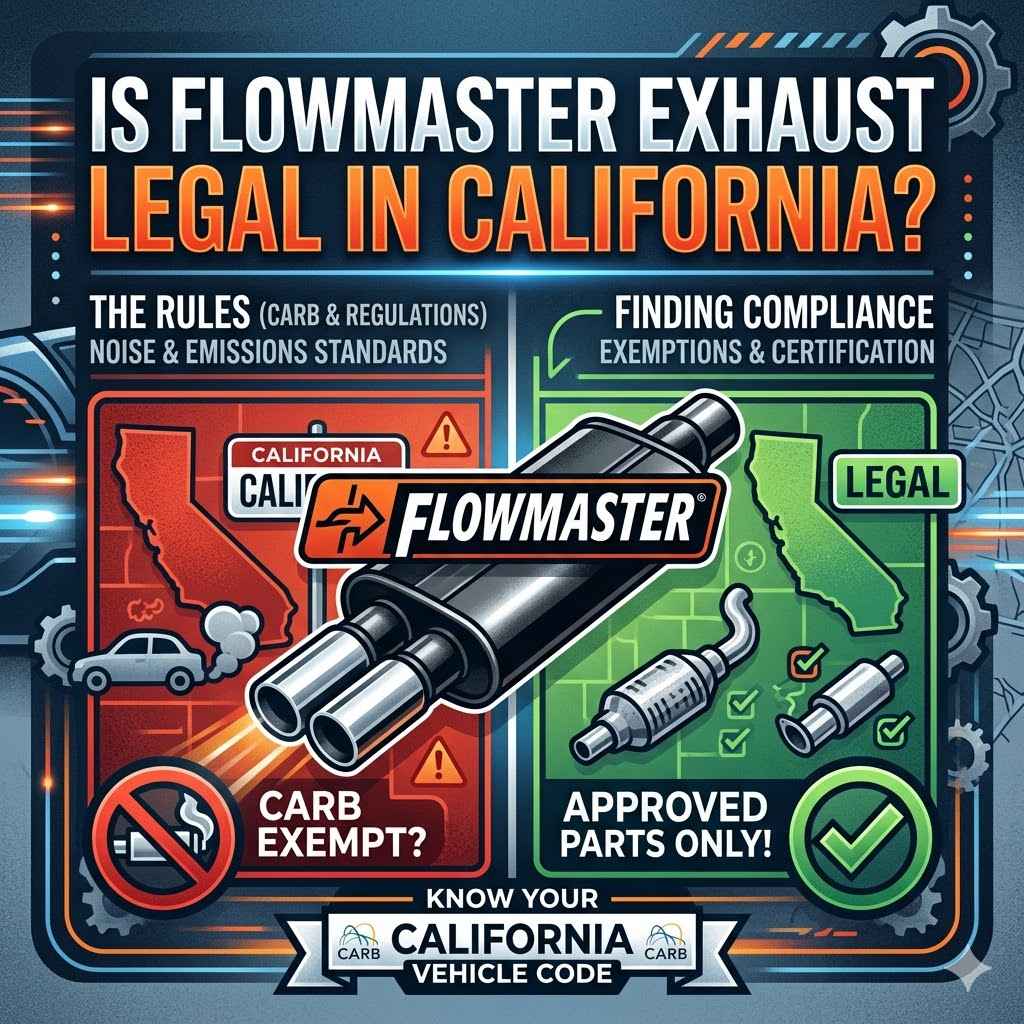
Is Flowmaster Exhaust Legal in California?
Many car owners wonder, Is Flowmaster Exhaust Legal in California? It can be a confusing question because California has strict rules for car parts. For folks new to car modifications, sorting through these rules can feel overwhelming. This guide will break it down simply.
We’ll explain exactly what you need to know so you can make informed choices for your vehicle. Get ready for clear answers and easy steps.
Understanding California Emission Laws for Exhaust Systems
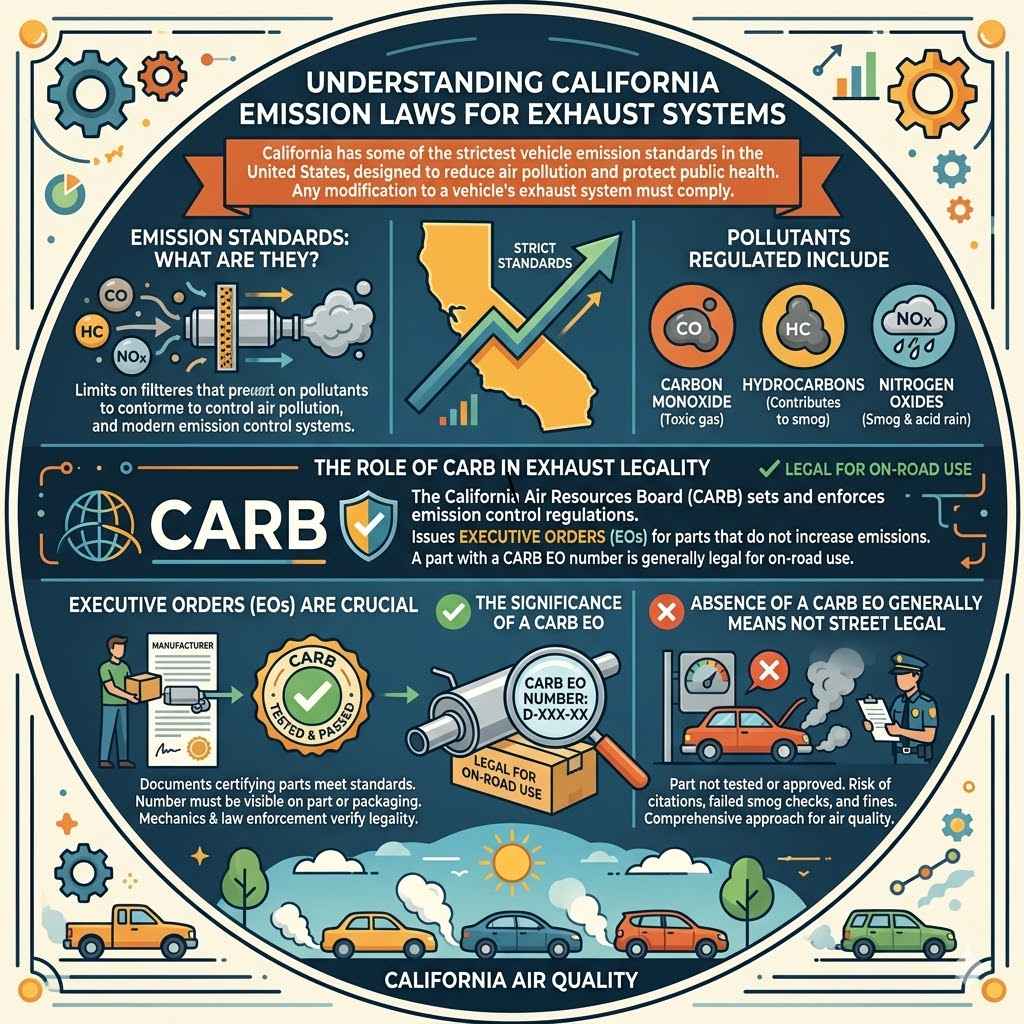
California has some of the strictest vehicle emission standards in the United States. These laws are designed to reduce air pollution and protect public health. For car owners, this means that any modification to a vehicle’s exhaust system must comply with these regulations.
The goal is to ensure that vehicles do not emit excessive amounts of harmful pollutants into the atmosphere. This often involves checking for specific certifications and approvals that aftermarket parts must meet. The California Air Resources Board (CARB) is the primary agency responsible for setting and enforcing these emission standards.
The Role of CARB in Exhaust Legality
The California Air Resources Board, or CARB, plays a central role in determining whether an aftermarket exhaust system is legal to use in the state. CARB develops and enforces emission control regulations for all types of vehicles. For exhaust components, CARB issues Executive Orders (EOs) for parts that have been tested and found to not increase emissions beyond legal limits.
If a Flowmaster exhaust system, or any aftermarket exhaust part, has a CARB EO number, it is considered legal for use in California. Without this certification, the part is generally not legal for on-road use.
- CARB’s primary mission is to protect public health from the harmful effects of air pollution.
This mission directly influences the types of vehicle modifications allowed. CARB’s regulations cover a wide range of vehicle components, with a particular focus on parts that affect emissions, such as exhaust systems. They conduct rigorous testing to ensure that aftermarket parts do not compromise a vehicle’s emission control system or increase the release of pollutants like hydrocarbons, nitrogen oxides, and particulate matter.
The EO system is their way of providing a clear guideline for consumers and manufacturers.
- Executive Orders (EOs) are crucial for aftermarket parts in California.
An EO is a document issued by CARB that certifies that a specific aftermarket part meets California’s stringent emission requirements. When a manufacturer submits an exhaust system to CARB for testing, it undergoes a thorough evaluation. If the system passes, CARB issues an EO number for that specific part.
This number must be clearly marked on the part or its packaging. Mechanics and law enforcement officers can use this EO number to verify the legality of the exhaust system. Therefore, searching for a CARB EO number is the first step for anyone considering an aftermarket exhaust in California.
- The absence of a CARB EO generally means a part is not street legal in California.
If a Flowmaster exhaust system does not have a CARB EO number, it implies that it has not been tested or approved by CARB to meet California’s emission standards. This often means that such systems may either increase emissions or interfere with the vehicle’s original emission control equipment. While some enthusiasts might install these parts for performance or sound, they risk citations, failed smog checks, and potential fines.
The state’s approach is comprehensive, aiming to maintain air quality across the board, and thus, having the EO is a non-negotiable aspect of legality for most modifications.
What Are Emission Standards?
Emission standards are government-mandated limits on the amount of pollutants that a vehicle can release into the atmosphere. These standards are established to control air pollution, which can have serious impacts on human health and the environment. Different regions, especially California, have more stringent standards due to higher population density and a history of air quality issues.
These standards cover various gases, including carbon monoxide (CO), hydrocarbons (HC), and oxides of nitrogen (NOx). Modern vehicles are equipped with complex emission control systems, such as catalytic converters and oxygen sensors, to meet these standards.
- Pollutants regulated include carbon monoxide, hydrocarbons, and nitrogen oxides.
Carbon monoxide is a colorless, odorless gas produced from the incomplete burning of fuel. High levels can be toxic. Hydrocarbons are unburned or partially burned fuel compounds that contribute to smog.
Nitrogen oxides are formed at high engine temperatures and also contribute to smog and acid rain. The aim of emission standards is to reduce the total amount of these harmful substances released by millions of vehicles.
- Standards are set by regulatory bodies like CARB and the EPA.
The Environmental Protection Agency (EPA) sets federal emission standards, while CARB sets its own, often stricter, standards for California. Because California is such a large market, many manufacturers design their vehicles to meet California standards, which are then adopted by other states that follow California’s lead. This dual regulatory framework ensures a high level of environmental protection.
- Meeting standards often requires specific vehicle components and technologies.
Achieving compliance with emission standards involves advanced engine management systems, efficient catalytic converters, and precise fuel injection. Aftermarket parts, like exhaust systems, must work in harmony with these existing technologies or provide an equivalent or better level of emission control to be considered legal.
The Significance of a CARB Executive Order (EO)
A CARB Executive Order (EO) is more than just a piece of paper; it’s a legal certification that a specific aftermarket part meets California’s strict emissions requirements. For car enthusiasts in California, this is the gold standard for legality. Without a CARB EO, an exhaust system, intake, or other engine modification is generally considered illegal for on-road use.
This means it cannot pass a smog inspection, and you could face fines or be ordered to remove the part. The EO number is usually stamped directly onto the part itself or provided on its packaging, making it easily verifiable by Smog Check technicians and law enforcement.
- A CARB EO certifies that a part does not increase vehicle emissions.
This certification is achieved after the part undergoes rigorous testing by CARB. The testing process evaluates the part’s performance and its impact on the vehicle’s overall emissions. If the part maintains or improves upon the original emission levels, it is granted an EO.
This ensures that modifications do not contribute to the state’s air quality problems.
- The EO number must be clearly visible on the part or packaging.
This identifier is crucial for compliance. Mechanics performing Smog Checks, or police officers inspecting vehicles, look for this specific number. If the number is missing, or if the part is not listed on CARB’s approved list, it will be deemed illegal.
This makes it essential for consumers to check for the EO number before purchasing any aftermarket exhaust system.
- Having a CARB EO is essential for passing smog tests and avoiding legal trouble.
California’s Smog Check program is designed to ensure that all vehicles on the road meet emission standards. If a vehicle has an uncertified aftermarket part, it will likely fail the smog test. Beyond failing inspections, possessing and using illegal parts can lead to citations and penalties, making the EO a vital document for any car owner who wishes to modify their vehicle legally.
Flowmaster Exhaust Systems and California Legality
Now let’s talk specifically about Flowmaster exhaust systems and how they fit into California’s regulations. Flowmaster is a popular brand known for its distinctive sound and performance enhancements. However, not all Flowmaster products are legal for use in California.
The key differentiator is whether a specific Flowmaster exhaust system has obtained a CARB Executive Order (EO). Many of Flowmaster’s performance-oriented systems, designed for maximum sound and power, may not have gone through the rigorous CARB certification process. This means that while they might be legal in other states, they could be problematic for California drivers.
Are All Flowmaster Exhausts Illegal in California?
No, not all Flowmaster exhaust systems are automatically illegal in California. However, a significant number of their performance-oriented systems, particularly those known for aggressive sound profiles, may not have the necessary CARB certification. Flowmaster, like many aftermarket exhaust manufacturers, must comply with California’s stringent emissions laws.
This compliance is demonstrated through the issuance of a CARB Executive Order (EO) for a specific part number. If a Flowmaster exhaust system has a valid CARB EO number associated with it, then it is legal to install and use on a vehicle in California.
- Many performance-focused Flowmaster systems may not have CARB approval.
Flowmaster offers a wide range of exhaust kits designed for different levels of sound and performance. Some of these kits are engineered to maximize exhaust flow and sound output, which can sometimes come at the expense of emission control. Manufacturers prioritize which products to submit for CARB certification based on market demand and cost, and not every product makes the cut.
- Legality depends entirely on whether a specific Flowmaster part has a CARB EO.
The absence of a CARB EO means that the system has not been verified by the California Air Resources Board as meeting emission standards. Without this certification, the part is considered non-compliant and therefore illegal for use on public roads in California. It’s crucial to research each specific Flowmaster product before purchasing.
- Always check for a CARB EO number before buying a Flowmaster exhaust for California.
This is the most critical step. Flowmaster’s website, product packaging, or customer service can provide information on whether a particular exhaust system has a CARB EO. If a Flowmaster system lacks this certification, it’s advisable to look for an alternative that does, or to consider using it only for off-road applications where emissions regulations may not apply.
How to Find CARB-Approved Flowmaster Systems
Finding a Flowmaster exhaust system that is legal in California requires a specific approach. The most reliable method is to check Flowmaster’s official product listings or their customer support. Manufacturers are usually upfront about which of their products have CARB EOs.
You can often find a specific section on their website detailing California-legal parts. Another excellent resource is the CARB website itself, which maintains a searchable database of all Executive Orders issued for aftermarket parts. By entering the part number of a Flowmaster exhaust system into the CARB database, you can quickly determine if it has been certified.
- Visit Flowmaster’s official website and look for a “California Legal” or “CARB EO” section.
Manufacturers typically highlight their compliant products prominently. This section will list the specific part numbers that have received CARB approval, along with their corresponding EO numbers. This is usually the easiest and fastest way to identify compliant systems.
- Search the CARB EO database using the specific Flowmaster part number.
The California Air Resources Board provides an online database where you can search for Executive Orders. If you have a specific Flowmaster system in mind, find its part number and enter it into the CARB search tool. If an EO is found, the system is legal.
If no record exists, it is not CARB-approved.
- Contact Flowmaster customer support directly for confirmation.
If you are still unsure after checking the website and the CARB database, reaching out to Flowmaster’s customer service is a good idea. They can provide definitive information about the legal status of any of their exhaust systems for California residents.
The Impact of an Illegal Exhaust on Smog Checks
Installing a Flowmaster exhaust system that does not have a CARB Executive Order (EO) can have serious repercussions for your vehicle’s ability to pass the California Smog Check. The Smog Check program is designed to identify vehicles that are not meeting emission standards, and an uncertified aftermarket exhaust is a common reason for failure. Smog technicians are trained to look for modifications that could affect emissions, and they will check for the presence of a valid CARB EO.
If the exhaust system is deemed illegal, your vehicle will not pass the inspection, and you will be required to either remove the illegal part or
- An illegal exhaust will cause your vehicle to fail the mandatory Smog Check.
The Smog Check is a crucial part of vehicle registration in California. If your Flowmaster exhaust does not have a CARB EO, it is considered a modified emissions control component. This modification will be flagged during the inspection, resulting in a failed test.
You cannot legally operate your vehicle on public roads without a current smog certificate.
- You will need to remove the illegal exhaust or
To pass the Smog Check, you must rectify the situation. This typically involves either removing the non-compliant Flowmaster exhaust and reinstalling the original factory exhaust system or purchasing and installing a Flowmaster system that carries a CARB EO. The cost and effort of correcting this can be significant.
- Failure to comply can result in fines and registration holds.
Beyond failing the Smog Check, using uncertified aftermarket parts can lead to citations from law enforcement. California authorities take emission laws seriously, and knowingly operating a vehicle with illegal modifications can result in fines. Furthermore, you will be unable to renew your vehicle registration until the issue is resolved, effectively preventing you from legally driving your car.
Alternatives and Considerations for California Drivers
For drivers in California, choosing an aftermarket exhaust requires careful consideration. If a specific Flowmaster system doesn’t have a CARB EO, there are still options available to achieve a more aggressive sound or improved performance while staying within the law. Many other reputable manufacturers produce exhaust systems that are specifically designed and certified for California.
These systems aim to balance sound, performance, and environmental compliance. It’s also worth noting that some Flowmaster systems might be legal, so thorough research is always the first step. If legal options are limited, some drivers opt for the original factory exhaust system, which is always compliant.
Finding CARB-Compliant Exhaust Systems
When looking for exhaust systems that are legal in California, the primary focus should be on identifying parts with a CARB Executive Order (EO). Many manufacturers understand the demand for legal performance parts in California and offer specific product lines designed to meet these standards. Websites of exhaust manufacturers usually have a dedicated section or filter for California-legal parts.
You can also use the CARB’s online EO database to verify any system you are considering. This database allows you to search by manufacturer and part number to confirm if an EO has been issued. Reading reviews and forums from other California residents can also provide insights into which systems are known to be compliant and well-regarded.
- Prioritize brands and models explicitly stating CARB compliance.
Some brands specialize in producing exhaust systems that meet California’s strict emission regulations. When browsing, look for clear indications of CARB EO approval. This ensures that the product has undergone the necessary testing and certification.
- Utilize the CARB EO database for verification.
The California Air Resources Board provides a comprehensive online database. By entering the manufacturer and part number, you can confirm if a specific exhaust system has been granted an Executive Order, making it legal for use in California.
- Consider exhaust systems designed for sound enhancement without compromising emissions.
It’s possible to achieve a desirable exhaust note without violating emission laws. Many CARB-approved systems offer improved sound quality and performance while remaining compliant with environmental regulations.
The Benefits of Staying Legal
Staying compliant with California’s exhaust laws offers significant advantages beyond simply avoiding fines. The most immediate benefit is the ability to pass the mandatory Smog Check, which is essential for vehicle registration. This eliminates the stress and expense of having to reverse modifications or face legal consequences.
Furthermore, driving a vehicle with a CARB-approved exhaust system ensures that you are contributing to better air quality in California, a state that has long battled smog and pollution. This responsible approach benefits the entire community and demonstrates a commitment to environmental stewardship. It also allows you to enjoy your vehicle modifications with peace of mind, knowing that you are operating legally and responsibly.
- Easier and stress-free Smog Check passes.
When your exhaust system has a CARB EO, you can be confident that it will pass the emissions inspection. This saves you time, money, and the frustration of dealing with failed tests and potential repair bills.
- Contribution to California’s air quality improvement efforts.
By using CARB-approved parts, you are actively participating in the state’s initiatives to reduce air pollution. This has a positive impact on public health and the environment for everyone.
- Peace of mind and avoidance of legal penalties.
Knowing that your vehicle modifications are legal provides immense peace of mind. You can enjoy your car without the worry of being cited by law enforcement or facing costly fines for non-compliance.
What About Off-Road Use?
If you own a vehicle that is primarily used for off-road purposes, such as on private property or in designated off-road areas, the regulations regarding exhaust systems can differ. California’s strict emissions laws, including the requirement for CARB EOs, generally apply to vehicles intended for use on public roads and highways. For dedicated off-road vehicles, there might be more flexibility, as they are not subject to the same emissions testing requirements.
However, it is important to understand that using a non-CARB-legal exhaust on a vehicle that is also driven on public roads, even occasionally, can still lead to violations and penalties. Always verify the specific rules and restrictions for off-road use in your area and for your type of vehicle.
- Emissions regulations typically apply to on-road vehicles.
The California Air Resources Board (CARB) focuses its regulations on vehicles that operate on public streets and highways. These laws are in place to control air pollution that affects the general population.
- Dedicated off-road vehicles may have fewer restrictions.
Vehicles used exclusively in controlled environments, like race tracks or private land, might not be subject to the same stringent emissions standards. This can provide more freedom in choosing exhaust systems for performance and sound.
- Using an illegal exhaust on a street-driven vehicle is still a violation.
Even if a vehicle is used off-road part-time, if it is also driven on public roads, it must comply with all applicable emissions laws. This means ensuring any modifications are CARB-approved if they affect emissions.
Legal Examples and Scenarios
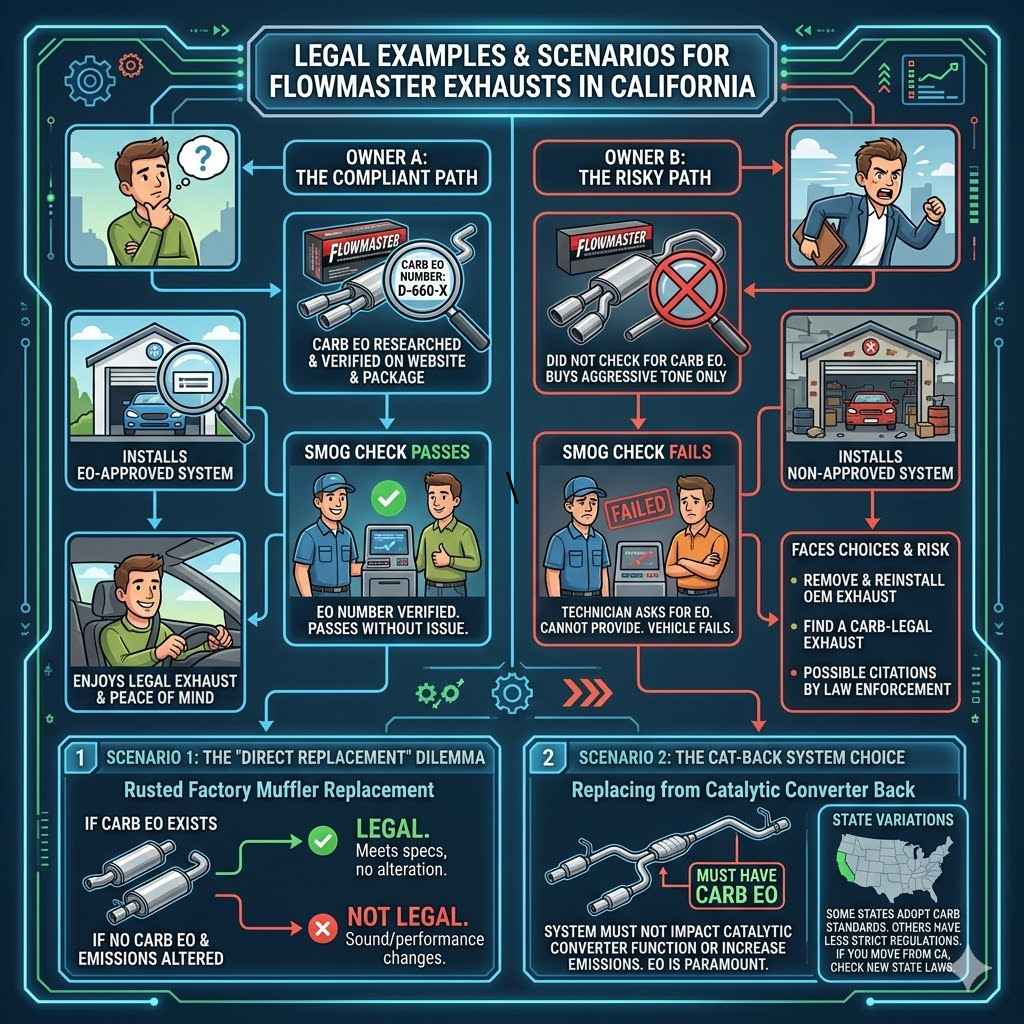
Let’s look at some real-world examples to clarify the legality of Flowmaster exhausts in California. Imagine two car owners, both with similar vehicles and a desire for a more powerful exhaust sound. Owner A researches Flowmaster exhaust systems and finds a specific model with a CARB EO number clearly listed on Flowmaster’s website and the product packaging.
Owner A purchases and installs this system. When they go for their Smog Check, the technician verifies the EO number, and the vehicle passes without issue. Owner A enjoys their new exhaust sound legally and without worry.
Now consider Owner B. Owner B purchases a Flowmaster system known for its aggressive tone but does not check for a CARB EO. They install it on their car and head for their Smog Check.
The technician notices the aftermarket exhaust and asks for proof of CARB approval. Owner B cannot provide an EO number. The vehicle fails the Smog Check.
Owner B is now faced with the choice of removing the Flowmaster exhaust and reinstalling the original, or finding a different, CARB-legal exhaust system. They might also face citations if they are pulled over by law enforcement before resolving the issue.
Here are some scenarios to illustrate common situations:
Scenario 1: The “Direct Replacement” Dilemma
A car owner wants to replace a rusted factory muffler. They find a Flowmaster direct-replacement muffler. The key question is whether this specific replacement muffler has a CARB EO.
If it does, it’s legal. If it doesn’t, and it changes the emissions characteristics, it’s not. Most direct replacements for original parts that don’t alter performance or emissions are usually compliant or don’t require specific EOs if they are identical to OEM specs.
However, any performance enhancement or sound modification requires scrutiny for a CARB EO.
Scenario 2: The Cat-Back System Choice
A “cat-back” exhaust system replaces the exhaust components from the catalytic converter back to the tailpipe. These systems are common for improving sound and flow. For a cat-back Flowmaster system to be legal in California, it absolutely must have a CARB EO number.
The catalytic converter itself is a critical emissions control device, and while a cat-back system doesn’t replace it, the rest of the system must not negatively impact its function or increase overall emissions. This is where the EO is paramount.
It’s also important to note that some states have adopted CARB’s emissions standards, while others have not. If you plan to move from California to a state with less strict regulations, an exhaust system that is illegal in California might be permissible elsewhere. However, always confirm the specific laws of your new state of residence.
Frequently Asked Questions
Question: Is any Flowmaster exhaust legal in California?
Answer: Not all Flowmaster exhaust systems are legal in California. Legality depends on whether a specific Flowmaster part has been certified by the California Air Resources Board (CARB) and has a CARB Executive Order (EO). Always check for a CARB EO number before purchasing.
Question: How do I know if a Flowmaster exhaust is CARB approved?
Answer: You can check Flowmaster’s official website for a list of California-legal parts, look for a CARB EO number stamped on the product or packaging, or search the CARB Executive Order database using the part number.
Question: What happens if I get caught with an illegal Flowmaster exhaust in California?
Answer: You could fail your Smog Check, be required to remove the illegal exhaust, receive citations from law enforcement, and face fines. Your vehicle registration may also be put on hold.
Question: Can I use an off-road only Flowmaster exhaust on my daily driver in California?
Answer: No, even if an exhaust is designated for off-road use, it cannot be legally installed on a vehicle driven on public roads in California if it does not have a CARB EO. The emissions laws apply to all vehicles operating on public highways.
Question: Are there Flowmaster systems that sound good and are still legal in California?
Answer: Yes, Flowmaster and other manufacturers offer systems that are CARB-approved and provide an improved sound and performance. You need to specifically look for models that have a CARB Executive Order (EO).
Summary
So, is Flowmaster exhaust legal in California? It depends on the specific part. The key is to find a Flowmaster exhaust system that has a CARB Executive Order (EO).
Without this certification, it’s not street legal. Always check for the EO number before buying. Staying legal means passing smog tests and avoiding fines.
Many great-sounding, legal options exist.