How to Quiet a Gibson Exhaust System
Many truck and car owners love the sound of a Gibson exhaust, but sometimes it can be a bit too loud for daily driving or neighborhood respect. Figuring out How to Quiet a Gibson Exhaust System can seem tricky, especially if you’re new to car modifications. Don’t worry, though.
We’ve got a straightforward plan to help you turn down the volume without losing all the great benefits of your Gibson system. Let’s get your exhaust sounding just right.
Quieting Your Gibson Exhaust System
This section will guide you through the primary methods for reducing the noise output of your Gibson exhaust system. We’ll cover the most effective techniques and explain why they work. Our goal is to provide you with clear, actionable steps that make a real difference in sound levels.
You’ll learn about common accessories and modifications that can be applied directly to your existing setup.
Understanding Gibson Exhaust Noise
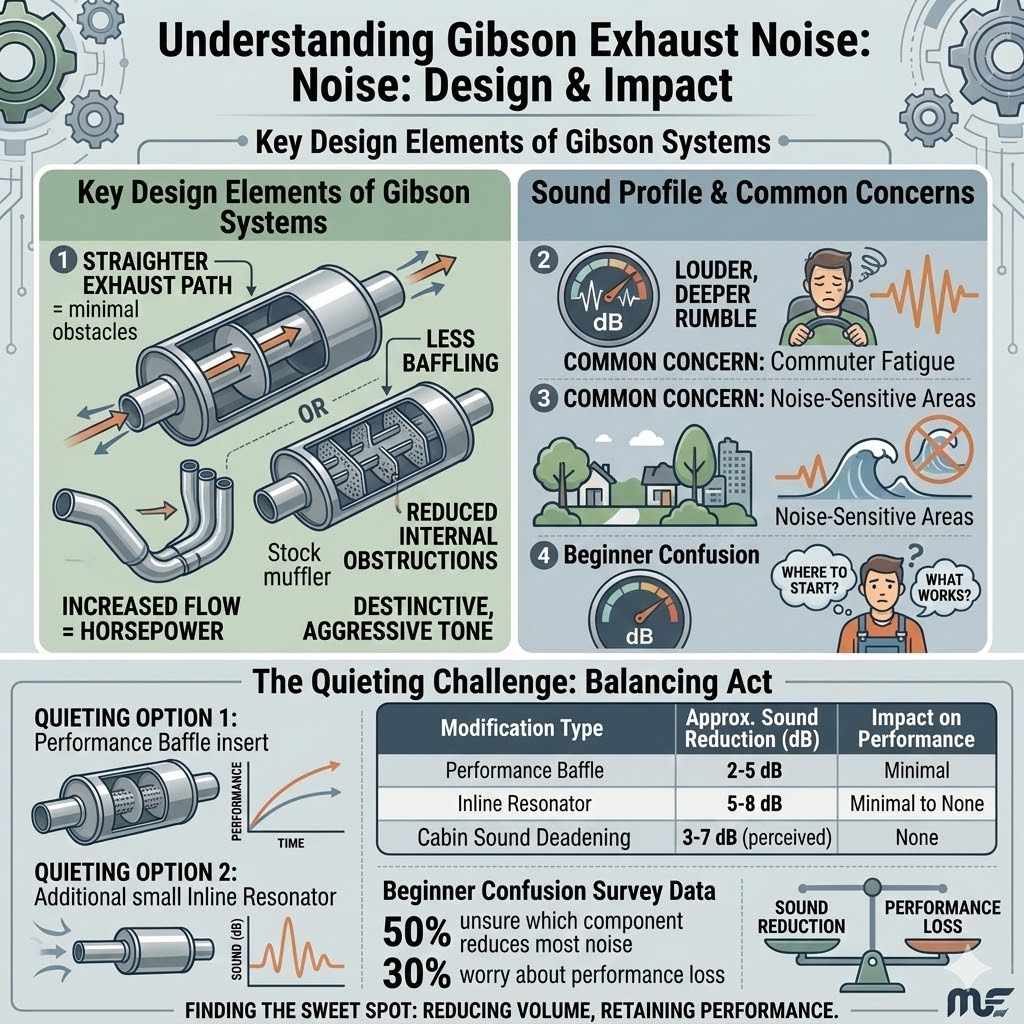
Gibson exhaust systems are known for their distinctive, often aggressive tone. This sound is achieved through their design, which typically includes less baffling and a straighter exhaust path compared to stock systems. This design allows exhaust gases to flow more freely, which contributes to increased horsepower and a louder, deeper rumble.
For some owners, this is exactly what they want. However, for others, especially those using their vehicle for daily commuting or living in noise-sensitive areas, the volume can become an issue. The challenge in quieting a Gibson exhaust lies in reducing this sound without significantly hindering performance or airflow, which could negate the benefits of the upgrade.
Beginners often find this balancing act confusing, unsure where to start or what components will have the most impact.
Adding Mufflers and Resonators
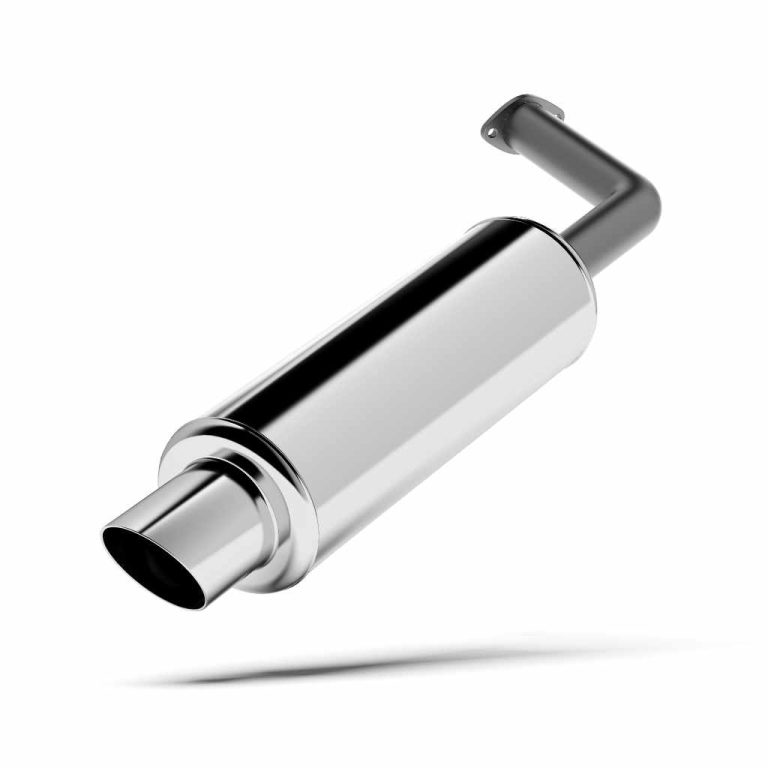
One of the most direct ways to quiet down an exhaust is by adding or upgrading mufflers and resonators. A muffler’s job is to absorb sound waves, acting much like a silencer on a gun. It uses chambers, baffles, and packing material to break up and dampen the noise.
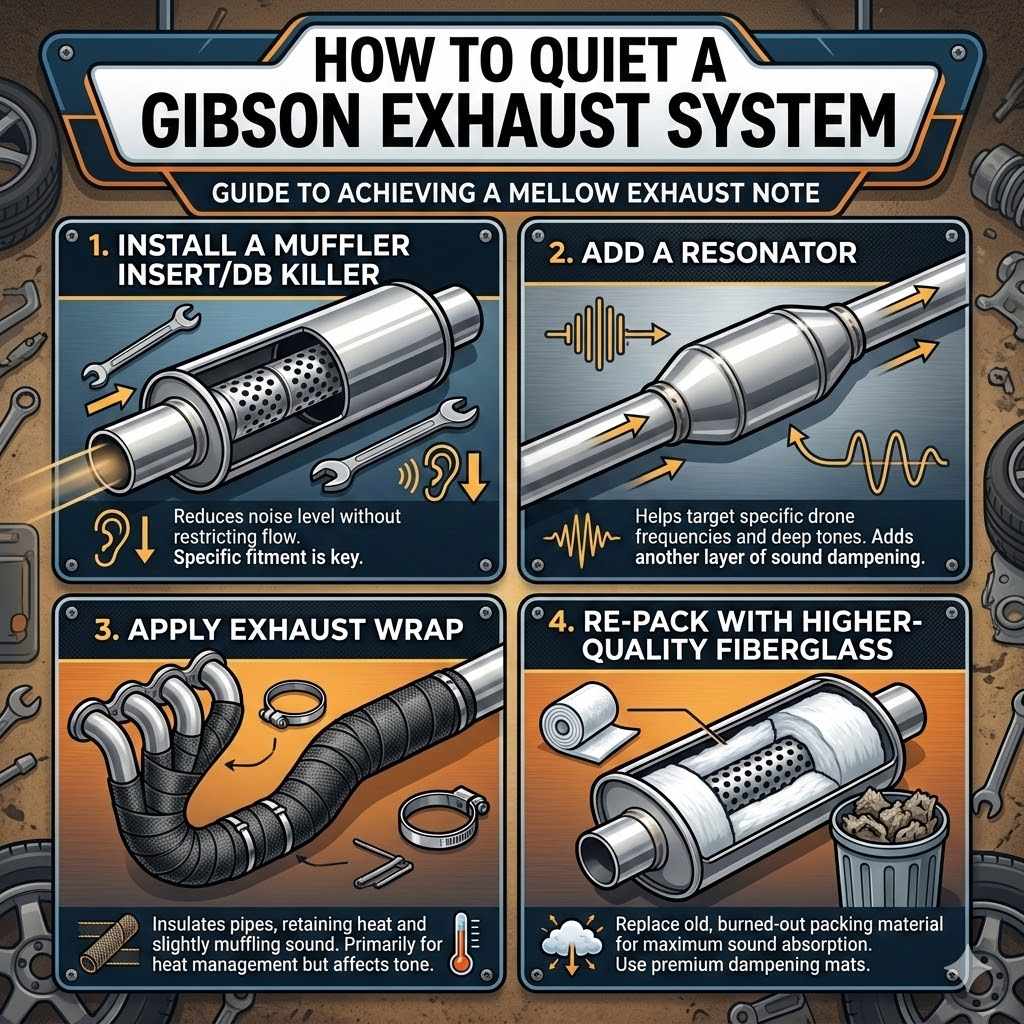
Resonators, on the other hand, work by canceling out specific sound frequencies. They create a counter-sound wave that opposes the loud, unwanted exhaust notes, particularly drones. Many aftermarket exhaust systems, including some Gibson models, might have a straight-through design for maximum flow, which means they have minimal sound-deadening components.
Adding a high-quality muffler designed for sound reduction, or a resonator in conjunction with your existing muffler, can significantly lower the overall decibel level. When choosing these parts, it’s important to consider the material and internal design. Stainless steel construction often offers better durability and sound dampening properties.
Look for mufflers that advertise sound reduction or drone control.
Types of Mufflers for Sound Reduction
There are several types of mufflers that can help quiet your Gibson exhaust, each working in a slightly different way. Chambered mufflers use a series of perforated tubes and baffles inside a metal casing to create internal reflections that break up sound waves. This design can create a deep, throaty sound while still offering significant noise reduction.
Straight-through mufflers, often called glasspack mufflers or flow-through mufflers, use a perforated core surrounded by sound-absorbing material like fiberglass or steel wool. While they allow for excellent airflow, the sound reduction depends heavily on the quality and density of the packing material. S-shaped or offset mufflers are also common, offering a balance between airflow and sound suppression.
The key is selecting a muffler that has a larger internal volume or more effective sound-dampening media.
- Chambered Mufflers These mufflers use internal chambers and baffles to redirect exhaust gases. This process forces the sound waves to bounce around, losing energy and becoming quieter. They are effective at reducing overall volume and can produce a deep, muscular tone. Some chambered mufflers are designed with specific acoustic properties to eliminate drone.
- Glasspack Mufflers Also known as straight-through mufflers, these have a perforated tube running through the center, wrapped in sound-absorbing material. Exhaust gases pass through the perforations and are met by the packing, which absorbs the sound energy. They are generally less restrictive than chambered mufflers but can sometimes allow more high-frequency noise.
- Turbo Mufflers These are a hybrid design, often featuring a center perforated tube with baffles that create chambers. They aim to provide a balance of performance and sound reduction, offering a less aggressive tone than straight-through designs without significant airflow restriction.
The Role of Resonators
Resonators are often overlooked but play a crucial role in fine-tuning exhaust sound. While mufflers focus on reducing overall volume, resonators target specific sound frequencies, especially the irritating drone that can occur at certain RPMs. A resonator is essentially a small, tuned chamber or a specific type of muffler designed to create a sound wave that is out of phase with the unwanted exhaust noise.
When these opposing sound waves meet, they cancel each other out. This is particularly effective for eliminating the highway drone that can make long drives unpleasant. Adding a well-placed resonator can make a significant difference in the subjective loudness and comfort of your exhaust.
For a Gibson system, which is often designed for a bold sound, a resonator can help smooth out the tone and remove harshness.
Installing Sound Deadening Materials
Beyond modifying the exhaust components themselves, you can also add sound-deadening materials to your vehicle. This approach focuses on preventing the sound that does escape the exhaust from reaching the cabin. This is achieved by lining the underside of your vehicle, especially the floor pans and exhaust tunnel, with specialized sound-deadening mats and coatings.
These materials absorb vibrations and dampen sound waves. While this won’t change the external noise of your Gibson exhaust, it can make a big difference in how loud it seems from inside the vehicle, improving the overall driving experience.
Types of Sound Deadening Materials
Several types of materials are available to help insulate your vehicle from exhaust noise. Sound deadening mats, often made from butyl rubber with an aluminum top layer, are applied directly to metal surfaces. These mats work by decoupling vibrating panels and adding mass, which reduces resonance.
They are excellent for floor pans, the firewall, and the trunk. Next, there are sound-absorbing foams and spray-on coatings. Foams can be used in cavities or layered on top of mats to further absorb airborne sound.
Spray-on coatings can be applied to the undercarriage and wheel wells, providing a durable barrier against road and exhaust noise. Some products combine both sound dampening (mass loading) and sound absorption properties.
- Butyl Rubber Sound Deadening Mats These mats are self-adhesive and are applied to sheet metal surfaces. They reduce vibration by adding mass and damping the metal. This prevents the metal from resonating and amplifying sound. Installation usually involves cleaning the surface, cutting the mat to size, and pressing it firmly into place.
- Closed-Cell Foam (CCF) CCF is a dense foam that is resistant to moisture and temperature changes. It is often used as a decoupler between sound deadening mats and carpet, or in cavities to absorb airborne sound. It works by trapping sound waves within its structure.
- Mass Loaded Vinyl (MLV) MLV is a heavy, flexible material that acts as a barrier to airborne sound. It is often installed over sound deadening mats and foam, creating a multi-layer system that is highly effective at blocking noise. It’s a great choice for areas where sound intrusion is a major concern.
- Spray-On Sound Deadening Coatings These coatings are applied with a spray gun and dry to a tough, protective finish. They help to dampen vibrations and reduce road noise. Some formulations also offer thermal insulation properties. They are particularly useful for covering large areas or irregular surfaces.
Installation Considerations
When installing sound-deadening materials, proper surface preparation is key. The metal surfaces should be clean, dry, and free of rust or grease for the adhesive to bond effectively. For underbody coatings, ensuring the vehicle is lifted safely and that you have adequate ventilation is important.
Many materials are cut with scissors or a utility knife, making them relatively easy to work with. For mats, using a roller tool ensures good adhesion and removes air bubbles. Pay close attention to areas around the exhaust tunnel, the floor, and the firewall, as these are the primary pathways for exhaust noise to enter the cabin.
Modifying the Gibson Exhaust Itself
Sometimes, the most effective solution involves making direct modifications to your existing Gibson exhaust system. This can include adding a baffle to the muffler tip, replacing the muffler with a quieter aftermarket one, or even adding a secondary muffler. These changes are more involved than simply adding accessories but can offer the most substantial reduction in noise.
It’s important to approach these modifications thoughtfully, as altering the exhaust can impact performance and emissions. Consulting with a professional exhaust shop can be very beneficial here.
Adding a Baffle or Insert
A simple and often effective way to reduce exhaust noise is by adding a baffle or insert to the exhaust tip. These are typically metal cones or perforated plates that are installed inside the exhaust pipe or tip. They restrict the flow of exhaust gases slightly, which slows them down and breaks up the sound waves.
This can noticeably quiet the exhaust, especially at idle and lower RPMs. Many inserts are designed to be removable, allowing you to revert to the louder sound when desired. They are relatively inexpensive and easy to install, often requiring only a clamp or bolt.
However, they can sometimes create backpressure, which might slightly affect engine performance.
- Exhaust Tip Baffles These are specifically designed inserts that fit inside your exhaust tip. They are typically made of metal and feature a perforated or cone-shaped design to disrupt exhaust flow and dampen sound. Installation is usually straightforward, often involving a clamp.
- Muffler Inserts These are similar to tip baffles but are installed further up the exhaust system, directly into the muffler outlet. They offer more significant sound reduction than tip baffles but can also have a larger impact on backpressure.
- Performance Baffles Some baffles are designed to offer a compromise, reducing noise while trying to maintain as much performance as possible. These often have carefully calculated airflow designs.
Replacing the Muffler
If adding a baffle isn’t enough, the next step is to consider replacing the muffler entirely. Many Gibson systems come with a specific muffler that is part of their performance package. If you’re looking for a quieter ride, you can swap this for a muffler designed for sound reduction.
This involves cutting out the old muffler and welding in a new one. Look for mufflers from reputable brands that emphasize quiet operation and drone reduction. Some manufacturers offer “touring” or “quiet flow” models.
It’s a good idea to research specific muffler models and read reviews from other vehicle owners to gauge their effectiveness.
Case Study: Taming a Loud Gibson Exhaust
Consider the owner of a 2018 Ford F-150 who recently installed a Gibson cat-back exhaust system. While the aggressive rumble was initially appealing, the constant drone at highway speeds became unbearable. The owner decided to tackle the issue by first adding a quality resonator from a reputable aftermarket brand in line with the existing Gibson muffler.
This significantly reduced the highway drone. However, the exhaust was still a bit too loud for early morning departures. The next step was to add a removable exhaust tip baffle.
With the baffle installed, the truck was quiet enough for neighborhood peace, and the baffle could be removed for weekend trips where a louder sound was preferred. This two-step approach provided a flexible solution.
Another example involves a Jeep Wrangler owner who found their Gibson exhaust too boisterous for off-roading with family. They opted for a more direct modification: replacing the Gibson muffler with a specialized quiet-flow muffler designed for Wranglers, while keeping the Gibson intermediate pipes for flow. This resulted in a much more subdued tone that was acceptable for everyday driving and comfortable on the trails, without sacrificing the off-road character entirely.
The key was finding a muffler that complemented the existing pipework and offered the desired sound reduction.
Performance vs. Sound Reduction
It’s important to acknowledge the trade-off between exhaust sound and performance. Systems designed for maximum horsepower often prioritize free-flowing exhaust paths, which typically means more noise. Quieting an exhaust, especially by adding baffles or mufflers, can introduce some level of restriction.
This restriction can lead to a slight decrease in horsepower and torque, particularly at higher RPMs. However, for most daily driving scenarios, the performance difference is often negligible and unnoticeable to the average driver. The goal is to find a balance that satisfies your need for a quieter ride without significantly compromising the performance gains you might have sought with the Gibson system in the first place.
Modern exhaust components are engineered to minimize this performance loss.
Legal and Practical Considerations
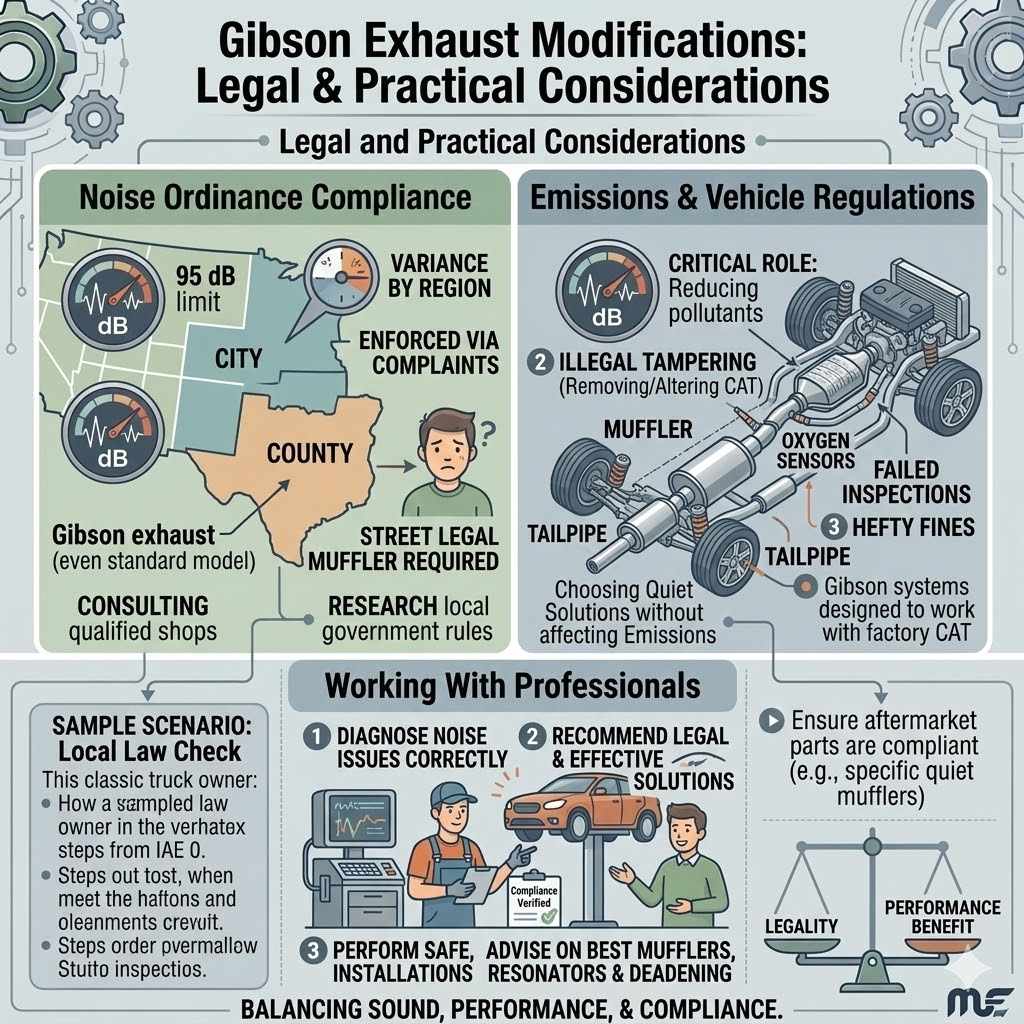
Before making any modifications to your Gibson exhaust system, it’s wise to consider local noise ordinances and vehicle regulations. Many areas have limits on the maximum decibel level an exhaust system can produce. Tampering with emissions control equipment, such as catalytic converters, is also illegal in most places and can lead to failed inspections and hefty fines.
When choosing aftermarket parts or making modifications, ensure they comply with local laws. For instance, if you’re adding a muffler, verify that it’s street-legal and won’t affect your vehicle’s emissions. If you’re unsure, consulting with a qualified exhaust specialist or your local Department of Motor Vehicles can provide clarity.
Understanding Noise Ordinances
Noise ordinances vary significantly by city and county. Some may have specific decibel limits for vehicles, while others have more general rules against excessive noise. These laws are often enforced when complaints are made by residents.
A very loud exhaust system, even if it’s a popular aftermarket brand like Gibson, can attract unwanted attention from law enforcement or neighbors. It’s always a good practice to be aware of the regulations in your area. Many exhaust modification shops are well-versed in local laws and can help you select options that are compliant.
Emissions Compliance
Vehicle emissions are strictly regulated in many regions. Modifying your exhaust system, particularly if it involves removing or altering the catalytic converter, can result in your vehicle failing emissions tests. The catalytic converter is essential for reducing harmful pollutants in exhaust gases.
Gibson systems are typically designed to work with your vehicle’s factory catalytic converter. When quieting the system, ensure any additions or
Sample Scenario: Checking Local Laws
- The owner of a classic truck with a Gibson exhaust wants to make it quieter for their town.
- They first visit their local government website to search for “noise ordinances” or “vehicle noise regulations.”
- They find that their town has a maximum allowable exhaust noise level of 95 decibels measured at 25 feet.
- They then research aftermarket mufflers and baffles, looking for products that are specifically advertised as street-legal and provide sound reduction figures. They might even measure their current exhaust’s decibel level with a sound meter (though professional measurement is more accurate).
- Based on this information, they choose a quiet-flow muffler that promises to keep them well within the legal limit.
Working with Professionals
For those less comfortable with mechanical work or unsure about the technical aspects of exhaust modification, working with a professional exhaust shop is highly recommended. These shops have the expertise and equipment to diagnose noise issues, recommend appropriate solutions, and perform installations correctly. They can advise on the best types of mufflers, resonators, or sound-deadening materials for your specific vehicle and desired noise level.
They also ensure that modifications are compliant with legal requirements. A professional installation guarantees that your Gibson exhaust is quieter and that the work is done safely and effectively.
Frequently Asked Questions
Question: Can I just add a quieter muffler to my Gibson exhaust
Answer: Yes, you can often
Question: Will quieting my Gibson exhaust hurt performance
Answer: While some noise reduction methods can create slight restrictions, modern components aim to minimize performance loss. For daily driving, any impact is usually unnoticeable.
Question: How much does it cost to quiet a Gibson exhaust
Answer: Costs vary widely depending on the method. Adding a simple baffle might cost under $100, while replacing a muffler or adding extensive sound deadening could range from $300 to over $1000.
Question: Can I make my Gibson exhaust completely silent
Answer: It’s very difficult to make an aftermarket performance exhaust completely silent without severely impacting performance. The goal is usually to reduce noise to a comfortable, acceptable level.
Question: Are Gibson exhaust systems legal everywhere
Answer: Gibson systems themselves are generally legal as sold. However, any modifications you make, or the loudness of the system in your specific location, must comply with local noise ordinances and emissions regulations.
Final Thoughts
Quieting your Gibson exhaust system is achievable through several practical methods. By understanding how mufflers and resonators work, and by considering sound-deadening materials or direct modifications, you can find the right balance of sound and comfort. Whether you choose a simple baffle or a more involved muffler replacement, the goal is to enjoy your vehicle without excessive noise.