
Do I Need Top Exhaust Fans? Essential Guide
Do I need Top Exhaust Fans? For most homes, especially those with bathrooms, kitchens, or laundry rooms, yes, you absolutely need exhaust fans. They are crucial for removing moisture, odors, and pollutants, keeping your home healthy and comfortable. This guide will break down why and what you need to know.

Broan-NuTone
Broan-NuTone Bathroom Exhaust Fan, 50 CFM Modern…
- 50 CFM BATHROOM EXHAUST FAN: 50 CFM is sufficient ventilation to remove, moisture, odor and pollutants from your smaller powder ro…
- EFFICIENT BATHROOM EXHAUST FAN: Energy Star Certified, operates at 2.0 Sones for peaceful and effective ventilation.
- EASY INSTALLATION: 10 minute installation. Compact housing with foldable mounting brackets for NO CUT and versatile installation w…
As an Amazon Associate I earn from qualifying purchases.
Having a comfortable and healthy home often comes down to managing the air we breathe indoors. Sometimes, our homes can trap moisture, smells, and even tiny particles that build up over time. This can lead to stuffy air, unpleasant odors, and even damage to your home. Exhaust fans are simple yet powerful tools that help clear out this stale air. If you’ve ever wondered if these little fans are really necessary, you’re in the right place. We’re going to explore exactly why they are so important for your living space.
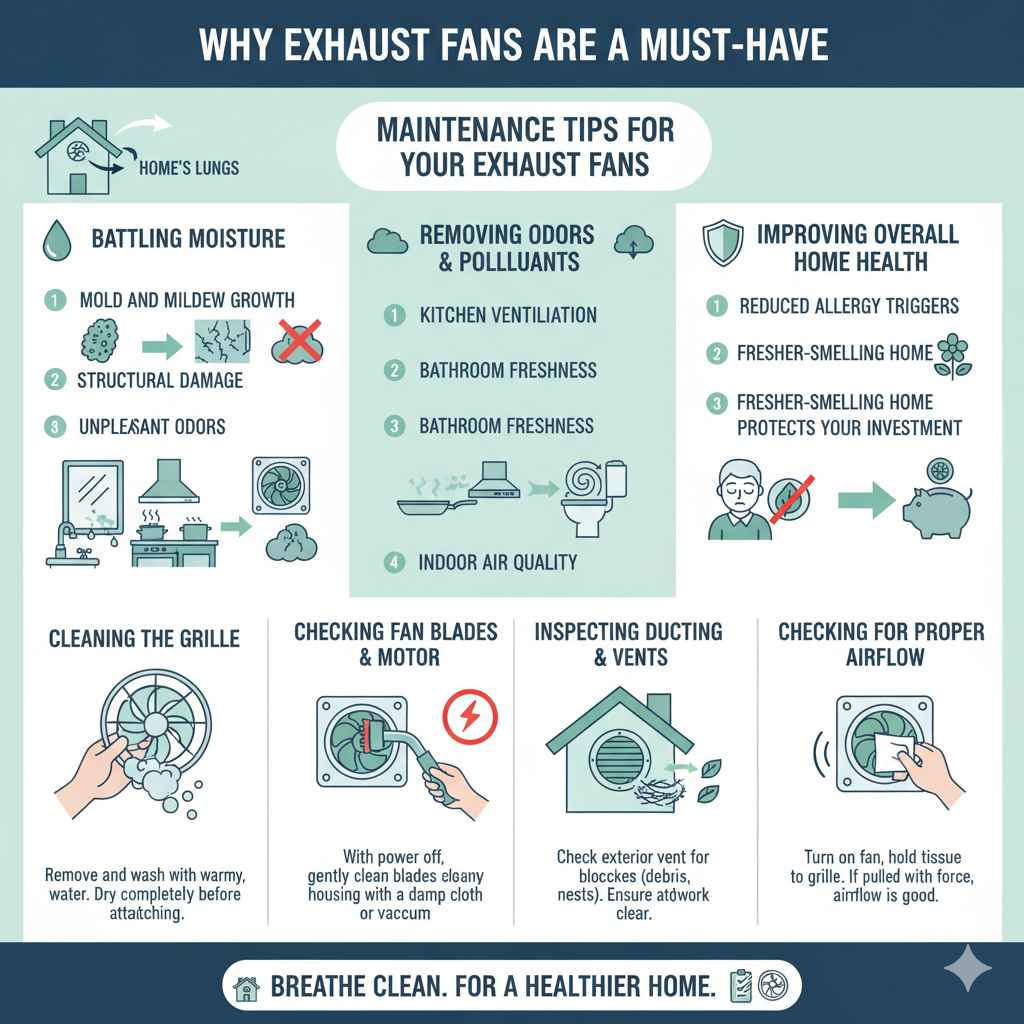
Why Exhaust Fans Are a Must-Have
Think of exhaust fans as your home’s lungs, breathing out the stale air and bringing in fresh air. Without them, moisture can build up, leading to bigger problems.
Battling Moisture
Moisture is a silent enemy in many homes. Showers, cooking, and even drying clothes release a lot of water vapor into the air. If this moisture isn’t removed, it can cling to surfaces like walls and ceilings.
- Mold and Mildew Growth: Over time, persistent dampness creates the perfect breeding ground for mold and mildew. These fuzzy growths aren’t just unsightly; they can trigger allergies and respiratory issues.
- Structural Damage: Excessive moisture can also weaken building materials like wood and drywall, leading to costly repairs down the line.
- Unpleasant Odors: Damp environments can also harbor musty smells that are hard to get rid of.
Removing Odors and Pollutants
Your kitchen and bathroom are often the sources of lingering smells. Cooking fumes, bathroom odors, and chemical smells from cleaning products can make your home feel less inviting. Exhaust fans quickly vent these odors directly outside.
- Kitchen Ventilation: Grease, smoke, and food smells from cooking can fill your kitchen. A kitchen exhaust fan, often built into a range hood, removes these airborne particles and odors as you cook.
- Bathroom Freshness: Say goodbye to lingering bathroom smells after use. Exhaust fans ensure privacy and a more pleasant atmosphere.
- Indoor Air Quality: Beyond just smells, exhaust fans help remove airborne grease, steam, and even volatile organic compounds (VOCs) released from household products. This contributes to better overall indoor air quality.
Improving Overall Home Health
By controlling moisture and removing pollutants, exhaust fans play a direct role in maintaining a healthier living environment for everyone in your home.
- Reduced Allergy Triggers: Less mold and mildew mean fewer triggers for people with allergies and asthma.
- Fresher-Smelling Home: A home that smells clean and fresh is simply more enjoyable.
- Protects Your Investment: Preventing mold and structural damage helps keep your home in good condition, protecting its value.
Where Are Exhaust Fans Most Needed?
Certain areas of your home benefit the most from an exhaust fan due to higher levels of moisture and potential for odor buildup.
Bathrooms
This is perhaps the most critical place for an exhaust fan. Showers and baths release a significant amount of steam into the air. Without ventilation, this moisture condenses on cooler surfaces, especially mirrors, tiles, and grout.
- Fights Steam: Quickly clears out steam, preventing foggy mirrors and reducing the chances of mold growth in the shower or on the ceiling.
- Eliminates Odors: Essential for maintaining a fresh and pleasant bathroom environment.
Kitchens
Cooking can create a lot of airborne grease, steam, and strong odors. A range hood or a ceiling-mounted exhaust fan is vital here.
- Removes Cooking Odors: Venting out smells from frying, baking, and boiling keeps your kitchen and adjacent living areas smelling fresh.
- Vents Grease and Smoke: Captures and removes airborne grease particles and smoke, which can settle on cabinets and surfaces and be difficult to clean. Improved ventilation is also a fire safety measure.
Laundry Rooms
Washing machines and dryers, especially in enclosed spaces, can generate substantial moisture.
- Dries Out Moisture: Helps to dry out the humid air produced by washing and drying clothes, preventing musty smells and potential water damage to walls or flooring.
Basements and Crawl Spaces
These areas are often prone to dampness and can develop musty odors if not properly ventilated.
- Prevents Stagnant Air: Circulating air helps to prevent the buildup of moisture and the associated odors.
How Exhaust Fans Work, Simply
Exhaust fans are designed to pull air from one space and push it outside your home. It sounds simple, but the science behind it is effective.
An exhaust fan consists of a motor, a fan blade, and a grille. When you turn it on, the motor spins the fan blade. This fan blade creates a low-pressure area inside the fan housing. Air from the room is then drawn into the fan housing to fill this low-pressure area. The fan blade then pushes this air through a duct or vent and expels it outside your house. This process effectively removes stagnant, moist, or odor-filled air from your home.
Types of Exhaust Fans
There are a few common types you’ll see, each suited for different needs:
- Ceiling-Mounted Fans: These are very common in bathrooms and are often integrated with lighting. They vent directly through the ceiling and into the attic space, then out through a roof vent.
- Range Hoods: Found above your stovetop, these are designed specifically for kitchens. They pull in smoke, grease, and odors from cooking. Some recirculate air through filters, while others vent it outside.
- Wall-Mounted Fans: Less common in homes but sometimes used in specific applications, these are installed directly into an exterior wall.
- In-Line Exhaust Fans: These fans are located remotely, often in an attic or crawl space, and connect to a duct that leads to a grille in the room needing ventilation. They are often more powerful and quieter.
Key Features to Look For
When choosing an exhaust fan, consider these important features to ensure you get the right one for your needs.
Airflow Capacity (CFM)
CFM stands for Cubic Feet per Minute. This measures how much air the fan can move. For bathrooms, a good rule of thumb from the ENERGY STAR program is to have at least 1 CFM for every square foot of bathroom floor space. For kitchens, it’s often recommended to have a much higher CFM, depending on the size of your kitchen and cooking habits. You can calculate this using:
Formula: Room Square Footage x 0.5 = Minimum CFM
For example, a 100 sq ft bathroom would ideally have a 100 CFM fan.
Sound Level (Sones)
Sones measure how much noise a fan makes. A lower sone rating means a quieter fan. For bathrooms, aim for fans with 1.0 sone or less, especially if it’s located near living areas. Quieter fans are generally more pleasant to use.
Energy Efficiency
Look for ENERGY STAR certified fans. These use less electricity without sacrificing performance, saving you money on your energy bills and helping the environment.
Features and Controls
Many fans come with extra features:
- Built-in Lights: Combine ventilation with a light fixture.
- Heaters: Provide warmth in bathrooms during colder months.
- Humidity Sensors: Automatically turn on when humidity levels rise and off when they drop.
- Timers: Allow the fan to run for a set period after you leave the room.
Ducting
Proper ducting is crucial for effective ventilation. The duct should be the correct size for your fan, smooth inside (not corrugated if possible), and run directly to an exterior vent. Avoid long, winding runs, which reduce airflow and can collect moisture.
Installation Basics and Considerations
Installing an exhaust fan might seem daunting, but understanding the basics can help. While it’s often a job for a qualified electrician or contractor, knowing the steps involved is beneficial.
Step-by-Step Installation Overview
Here’s a general idea of what’s involved:
- Choose the Location: Decide where to mount the fan. For bathrooms, it’s usually centered over the shower or tub area to capture steam most effectively.
- Cut the Opening: Carefully cut a hole in the ceiling for the fan housing. This might involve working in the attic to find joists and plan the path of the duct.
- Run the Ductwork: Connect insulated ducting from the fan housing to an exterior vent cap on your roof or wall. Ensure the duct slopes slightly downhill towards the exterior to prevent condensation buildup.
- Wire the Fan: Connect the fan to your home’s electrical system. This includes connecting to the power source and any switches (for light, fan, heater). This step should always be performed by a qualified electrician if you are not experienced.
- Mount the Fan Housing: Secure the fan housing in the ceiling opening.
- Install the Grille/Cover: Attach the decorative grille or cover to the fan housing.
- Test the Fan: Turn on the power and test the fan to ensure it’s drawing air and operating correctly.
Tools You Might Need
A successful installation typically requires several standard tools:
- Drill and drill bits
- Screwdrivers
- Drywall saw or utility knife
- Pliers and wire strippers
- Measuring tape
- Safety glasses and gloves
- Step ladder
- Stud finder
- Caulking gun (for sealing exterior vents)
Professional vs. DIY
While some homeowners might tackle a simple replacement of an existing fan, installing a new fan that requires running new ductwork and electrical wiring is often best left to a professional. Electrical work can be dangerous, and improper ducting can lead to moisture problems or reduced fan efficiency. A professional ensures the job is done safely and correctly.
Importance of Proper Ducting and Venting
This cannot be stressed enough. If the ductwork is leaky, crushed, or not properly sealed, the fan won’t exhaust air effectively. Moisture can then backdraft into your attic or walls, causing damage. Always ensure the duct vents to the outside of the house, not into the attic space. You can find excellent resources on proper venting on sites like that of the Occupational Safety and Health Administration (OSHA) regarding workplace ventilation, which highlights the principles of effective air movement.
Maintenance Tips for Your Exhaust Fans
Keeping your exhaust fans in good working order ensures they continue to perform effectively. Most maintenance is simple and can be done a few times a year.
Cleaning the Grille
The grille is the most visible part of your fan and catches dust and debris. Periodically remove the grille (refer to your fan’s manual for how) and wash it with warm, soapy water. Let it dry completely before reattaching.
Checking the Fan Blades and Motor Housing
With the power off at the breaker panel, you can gently clean the fan blades and the inside of the fan housing with a damp cloth or a vacuum cleaner brush attachment. Be careful not to damage the motor.
Inspecting Ducting and Vents
At least once a year, check the exterior vent cap to ensure it’s not blocked by debris, snow, or animal nests. If the fan seems to be struggling, there might be a blockage or kink in the ductwork. Consider having the ducting professionally inspected and cleaned if you suspect issues.
Checking for Proper Airflow
To test if your fan is working effectively, turn it on and hold a piece of tissue paper up to the grille. If the tissue is pulled towards the fan with some force, it’s a good sign it’s moving air correctly. If it just sort of wiggles, the fan might need cleaning or the ducting might be compromised.
When to Upgrade or Consider New Fans
You might need to replace or upgrade your exhaust fans if you notice any of the following issues:
- Increased Noise: If your fan has become unusually loud, it could indicate a worn-out motor or unbalanced blades.
- Reduced Airflow: If you no longer feel a strong pull of air, or if moisture and odors linger longer, the fan may be failing.
- Signs of Mold Growth: If you see mold around the fan or vent, it’s a clear sign that ventilation isn’t sufficient or the fan isn’t working properly.
- Outdated Model: Older fans are often less energy-efficient and much noisier than newer models. Upgrading to an ENERGY STAR certified fan can save money and improve comfort.
- Home Renovations: It’s a good time to upgrade fans when renovating bathrooms or kitchens to ensure modern ventilation standards are met.

Are Exhaust Fans Always Necessary in Every Room?
No, not every room in your house strictly needs an exhaust fan. Rooms like living rooms, bedrooms, and hallways typically don’t generate high levels of moisture or concentrated odors. Their primary need is general air circulation, which can often be achieved through open windows, ceiling fans, or your home’s central HVAC system. The main concern areas are those where moisture and smells are produced:
- Bathrooms
- Kitchens
- Laundry rooms
- Enclosed workshops or hobby rooms
- Potentially finished basements that lack good air circulation
For these specific areas, the benefits of an exhaust fan far outweigh any perceived cost or complexity. They are a proactive measure to prevent damage and maintain a healthy living environment.
FAQ About Exhaust Fans
Q: How often should I run my bathroom exhaust fan?
A: For best results, run your bathroom exhaust fan during and for at least 15-20 minutes after showers or baths. If your fan has a humidity sensor, it will do this automatically. If not, setting a timer is a great habit.
Q: Do I need a vent for my kitchen range hood?
A: Yes, for the most effective removal of grease, smoke, and odors, a range hood that vents outside is highly recommended. Recirculating range hoods with filters clean the air partially but don’t remove moisture or all pollutants from the home.
Q: Can an exhaust fan help with a musty smell in my house?
A: Yes, if the musty smell is due to moisture in specific areas like bathrooms, laundry rooms, or basements, an exhaust fan can significantly help by removing the damp air. For whole-house mustiness,
Related pick: Check today's price on Amazon


