How a Twin Turbo Single Exhaust System Functions: Essential Guide for Beginners
A twin turbo single exhaust system uses two turbochargers to boost engine power while routing exhaust gases through one main pipe for a cleaner, simpler setup. This configuration delivers quick response, strong performance, and reliable efficiency in many modern vehicles.
Have you ever wondered why some powerful cars feel so responsive without a loud, dual-pipe roar out back? A twin turbo setup with a single exhaust is a smart engineering choice that many car owners love. It combines the benefits of forced induction for more power with a streamlined exhaust design that’s easier to maintain.
Many everyday drivers and enthusiasts get confused about how twin turbos work, especially when paired with just one exhaust outlet. It can seem complicated at first, but it’s actually a straightforward way to get better acceleration and fuel efficiency. Don’t worry – you’re not alone if this feels overwhelming.
In this guide, I’ll walk you through everything step by step. We’ll cover the basics, how it all functions together, the pros and cons, and tips to keep it running smoothly. By the end, you’ll feel confident understanding your vehicle’s setup and why it performs the way it does.
What Is a Twin Turbo System?
A twin turbo system uses two turbochargers instead of one to force extra air into your engine. This allows more fuel to burn, creating more power without needing a bigger engine.
Turbochargers work by using exhaust gases to spin a turbine. That turbine drives a compressor that packs air into the cylinders. With two turbos, the job is shared for better results.
There are a few main types of twin turbo setups:
- Parallel twin turbo: Two identical turbos work at the same time, often one for each bank of cylinders in a V-shaped engine.
- Sequential twin turbo: A smaller turbo kicks in at low speeds for quick response, then a larger one joins at higher speeds for more power.
- Staged or compound: Turbos work in series, with one feeding the other for massive boost in high-performance applications.
Most road cars use parallel setups because they’re reliable and balanced.
How Does the Exhaust System Fit In?
The exhaust system carries hot gases away from the engine. In a turbo setup, those gases first spin the turbochargers before exiting through the tailpipe.
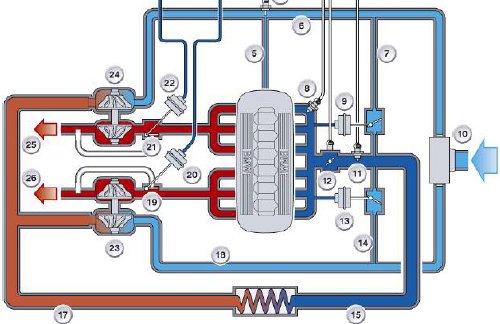
In a standard single turbo, all exhaust flows through one turbo. With twin turbos, exhaust is usually split – often from separate manifolds on V engines – to feed each turbo independently.
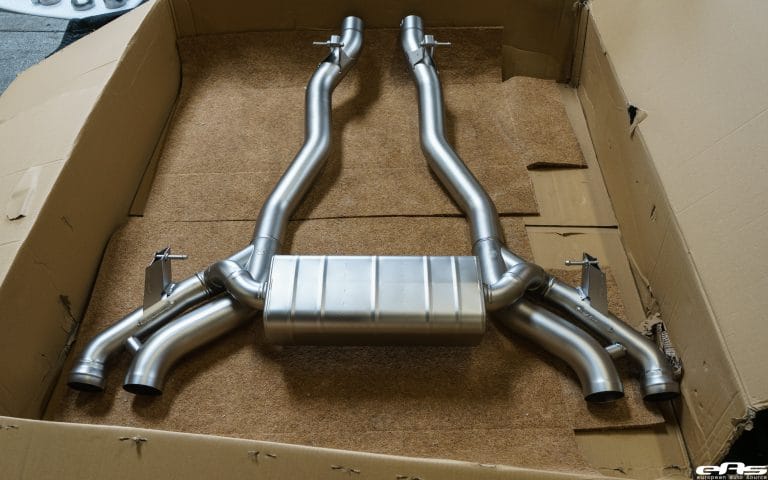
After the turbos, the exhaust from both can merge into a single downpipe. This leads to one main exhaust system, muffler, and tailpipe. That’s what makes it a “single exhaust” setup.
Why merge into one pipe? It simplifies the design, reduces weight, saves space under the car, and can meet emissions rules more easily. Many factory cars, like some BMWs and Fords, use this for a clean look and balanced sound.
Step-by-Step: How a Twin Turbo Single Exhaust System Functions
Let’s break it down simply:
- Engine cylinders burn fuel and air, creating power and hot exhaust gases.
- Exhaust flows through manifolds to the turbochargers’ turbine sides.
- Gases spin the turbines fast – up to 200,000 RPM!
- Each turbine is connected by a shaft to a compressor wheel.
- Compressors pull in fresh air, compress it, and force it into the intake manifold.
- More air means more fuel can burn, boosting horsepower and torque.
- After spinning the turbines, exhaust merges into a single downpipe.
- It flows through catalytic converters (for cleaner emissions), muffler (for quieter operation), and out one tailpipe.
This process happens continuously, giving smooth power across RPM ranges.
Key Components in the System
Here are the main parts you’ll find:
- Turbochargers (2): Each has a turbine and compressor.
- Wastegates: Control boost by bypassing excess exhaust.
- Intercooler: Cools compressed air for denser charge and more power.
- Exhaust manifolds: Collect gases and direct to turbos.
- Downpipe: Merges exhaust after turbos.
- Catalytic converter: Reduces harmful emissions – learn more from the EPA’s guide on vehicle emissions.
- Muffler and resonator: Quiet the exhaust note.
Modern systems also include sensors and electronic controls for safety and efficiency.
Pros and Cons of Twin Turbo with Single Exhaust
Every setup has trade-offs. Here’s a clear comparison:
| Pros | Cons |
|---|---|
| Quicker spool and less lag than a single large turbo | More complex and potentially higher repair costs |
| Better power delivery across RPMs | Possible heat buildup if not designed well |
| Cleaner under-car look with one tailpipe | May restrict ultimate top-end flow compared to true dual exhaust |
| Often better fuel efficiency | Requires premium maintenance |
| Balanced performance for daily driving | Some setups need specific tuning |
For most car owners, the benefits far outweigh the drawbacks – that’s why factories love this design.
Comparison: Twin Turbo Single Exhaust vs. Other Setups
| Setup | Best For | Power Delivery | Complexity |
|---|---|---|---|
| Twin Turbo Single Exhaust | Daily drivers, balanced performance | Smooth, quick response | Medium |
| Single Turbo Dual Exhaust | High-power custom builds | Strong top-end | Low |
| Twin Turbo Dual Exhaust | Racing, maximum flow | Aggressive | High |
| Naturally Aspirated | Simple reliability | Linear, no lag | Very Low |
As you can see, twin turbo single exhaust strikes a great balance for real-world use.
Common Vehicles Using This Setup
Many popular cars feature twin turbos merging into a single exhaust:
- BMW inline-6 models (like the N54/N55 engines)
- Ford EcoBoost V6 in trucks and SUVs
- Some Audi and Mercedes performance cars
- Infiniti Q50/Q60 with VR30DDTT engine
These deliver exciting power while keeping a subtle, factory appearance.
Tips for Maintenance and Troubleshooting
Keep your system healthy with these easy steps:
- Change oil regularly – turbos hate dirty oil.
- Let the engine idle briefly after hard driving to cool turbos.
- Listen for unusual noises like whining or rattling.
- Check for boost leaks or error codes.
- Use high-quality fuel to prevent carbon buildup.
Safety first: Always work on a cool engine and use proper tools.
FAQ
Is a twin turbo single exhaust better than dual exhaust?
It depends on your goals. Single exhaust is simpler and often quieter, with great street performance. Dual can flow more for racing but adds complexity.
Does single exhaust restrict power in twin turbo cars?
Not usually in factory setups. The downpipe and piping are sized properly to handle the flow without major restrictions.
How much more power does twin turbo add?
It can add 50-100% more horsepower, depending on the engine and boost levels. Always tune safely!
Why do some twin turbo cars have only one tailpipe?
For aesthetics, weight savings, cost, and emissions compliance. It doesn’t mean less power.
Can I convert to dual exhaust?
Yes, many aftermarket kits exist, but check local laws and consider if it’s worth the expense.
Are twin turbos reliable?
Very much so in modern cars, with proper maintenance. They often last 150,000+ miles.
What’s the difference between twin turbo and twin scroll?
Twin turbo means two separate turbos. Twin scroll is one turbo with a divided housing for better pulse efficiency.
Conclusion
Understanding how a twin turbo single exhaust system functions can make you a more confident car owner. This clever design delivers impressive power, quick response, and everyday practicality in one package.
Whether you’re enjoying the smooth boost in your daily driver or thinking about upgrades, remember that good maintenance keeps everything running strong. Treat your exhaust system well – regular checks and gentle driving habits go a long way.
You’re now equipped with the knowledge to appreciate this smart engineering. Drive safely, enjoy the performance, and feel free to explore more about your vehicle’s setup. Safe motoring!