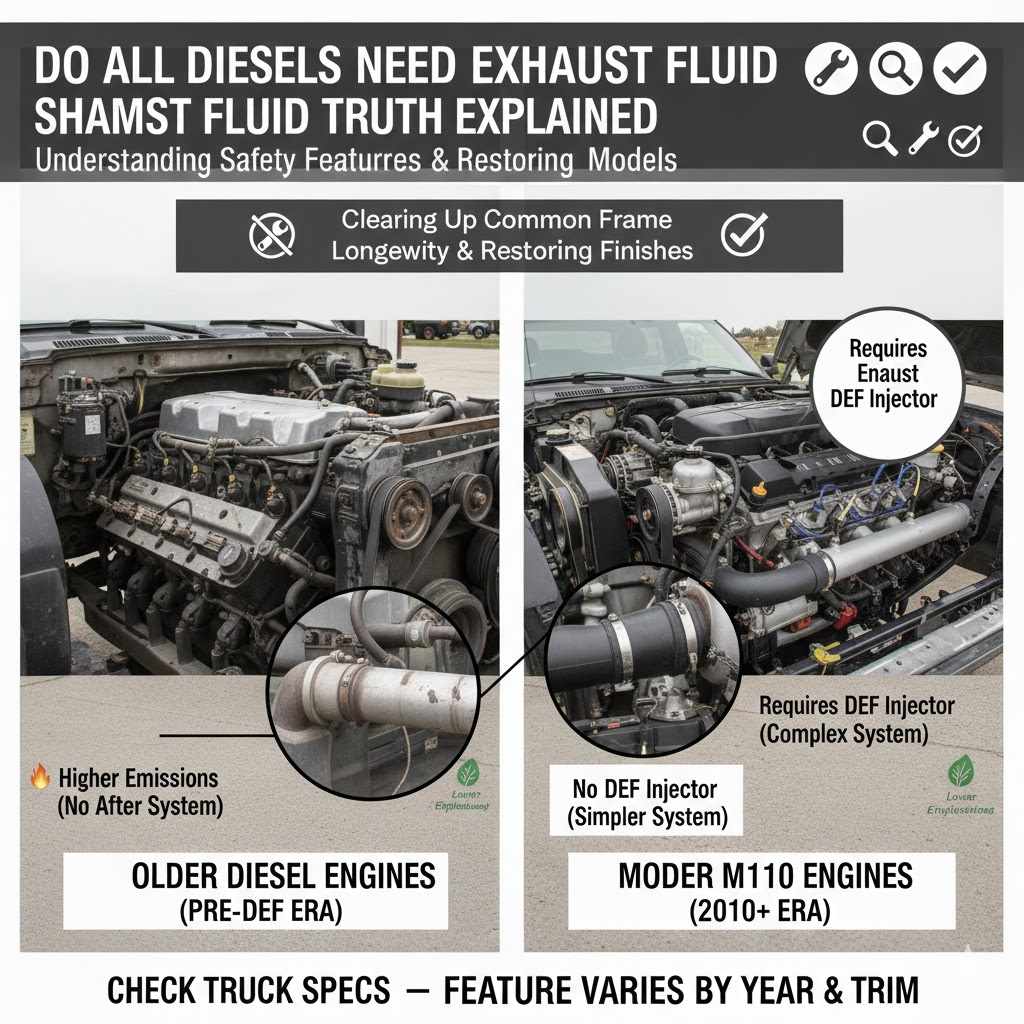
Do All Cars Have an Exhaust System?
Many people wonder, Do All Cars Have an Exhaust System? This question might seem tricky if you’re new to cars. You see cars driving by and they all seem to work the same. But what’s happening under the hood and underneath the vehicle?
We’re going to break this down simply. You’ll learn exactly what an exhaust system is for and why it’s essential. Get ready for a clear, easy guide that explains everything step by step.
We’ll show you how it all works together.
Understanding Car Exhaust Systems
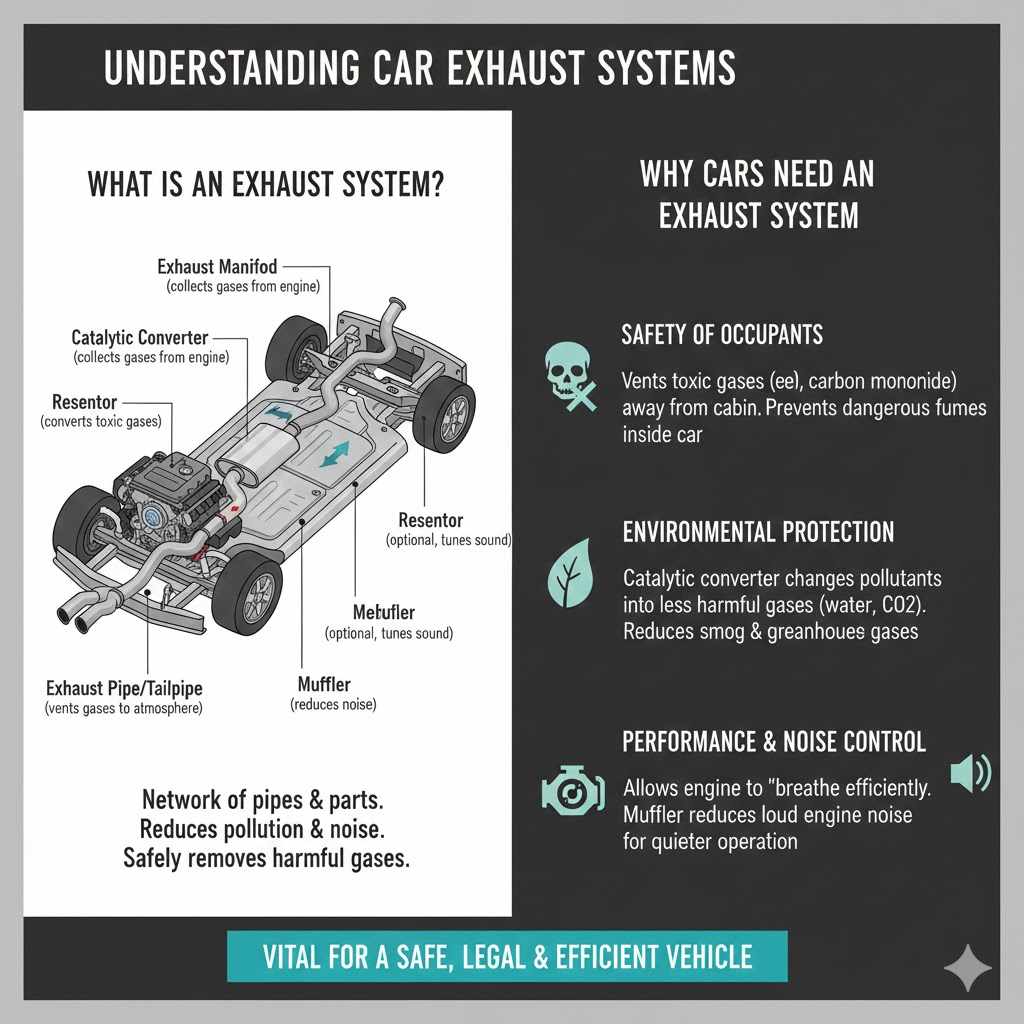
This section explains what a car’s exhaust system does. It’s a network of pipes and parts that helps your engine run smoothly and quietly. It also cleans up the fumes the engine makes.
Think of it like a car’s respiratory system, taking out the bad stuff and letting out the good air. It’s a vital part of any gasoline or diesel-powered vehicle. Without it, your car wouldn’t be safe or legal to drive.
What Is An Exhaust System
An exhaust system is a series of connected pipes that carry exhaust gases from an engine’s combustion chambers to the atmosphere. These gases are the byproducts of burning fuel. The system is designed to reduce pollution and noise.
It starts right after the engine and goes all the way to the back of the car. Each part plays a special role in managing the engine’s waste.
The main goal of an exhaust system is to safely remove harmful gases. These gases include carbon monoxide, nitrogen oxides, and unburned hydrocarbons. These are all bad for people and the environment.
The system also turns down the loud noises your engine makes. It’s like a muffler for the sound. This makes your car much quieter when it’s running.
Several key components make up an exhaust system. These include the exhaust manifold, catalytic converter, muffler, and exhaust pipes. Each piece works with the others.
They form a complete path for the exhaust gases. This path cleans and quiets the gases before they leave the car. It’s a smart design that has been refined over many years of car making.
Why Cars Need An Exhaust System
Cars need an exhaust system for several very important reasons. First, it’s about safety. The exhaust gases produced by an engine are poisonous.
Carbon monoxide, for example, is odorless and can be deadly if it builds up in an enclosed space. The exhaust system safely directs these gases away from the car’s cabin and the people inside. This prevents dangerous fumes from entering the passenger area.
Second, it’s about protecting the environment. The catalytic converter is a key part of this. It uses special metals to change harmful pollutants into less harmful gases.
This process significantly reduces the amount of smog-forming chemicals and greenhouse gases released into the air. This helps keep our air cleaner and fights climate change.
Third, it’s about performance and noise control. The exhaust system helps your engine breathe better. By allowing exhaust gases to flow out efficiently, the engine can perform at its best.
It also contains a muffler. The muffler uses baffles and chambers to break up sound waves, greatly reducing the loud noise the engine makes. Without a muffler, a car would be extremely loud.
Here are some key reasons why cars must have an exhaust system:
- Safety of Occupants
- The exhaust system’s primary safety role is to vent toxic gases away from the vehicle’s interior. Without this, drivers and passengers could inhale dangerous fumes like carbon monoxide. This gas can cause dizziness, confusion, and even death.
- The system ensures a clean air supply inside the car.
- Environmental Protection
- Modern exhaust systems contain a catalytic converter. This device is crucial for reducing air pollution. It converts harmful emissions such as hydrocarbons, carbon monoxide, and nitrogen oxides into less harmful substances like water vapor and carbon dioxide.
- This technology has made a huge difference in air quality in cities.
- Noise Reduction
- Engines produce a lot of noise during operation. The muffler, a part of the exhaust system, is specifically designed to quiet this noise. It works by using chambers and sound-absorbing materials to reduce the intensity of the sound waves.
This makes cars quieter and more pleasant for everyone.
Components of a Typical Exhaust System
A car’s exhaust system is made of several interconnected parts, each with a specific job. Understanding these components helps us see how the whole system works. From the engine’s cylinders to the very end of the car, these parts work together.
They manage hot gases, clean them, and reduce noise. It’s a fascinating piece of engineering that keeps cars running well.
Exhaust Manifold
The exhaust manifold is the first part of the exhaust system. It is attached directly to the engine’s cylinder head. Its job is to collect the exhaust gases from each cylinder as they are pushed out after combustion.
Imagine it as a funnel that gathers all the smoke from multiple sources and directs it into one main pipe.
Each cylinder in the engine has exhaust ports. The manifold has runners that connect to each of these ports. These runners then merge into a single pipe.
This design helps to ensure that the exhaust gases flow smoothly out of the engine. It also helps to keep the engine running efficiently. A well-designed manifold can improve engine performance by reducing back pressure.
The manifold is usually made of cast iron or stainless steel. This is because it has to withstand very high temperatures and pressures. It’s a tough component that experiences extreme conditions every time the engine runs.
Over time, it can develop cracks or leaks, which can cause exhaust gases to escape early. This can lead to performance issues and a louder car.
Catalytic Converter
The catalytic converter is a critical emission control device. It’s often located after the exhaust manifold. Its primary function is to convert harmful pollutants in the exhaust gases into less harmful substances.
It does this through a chemical reaction, hence the name “catalytic.”
Inside the converter, there is a honeycomb-like structure. This structure is coated with precious metals like platinum, palladium, and rhodium. When the hot exhaust gases pass over these metals, a chemical reaction occurs.
These metals act as catalysts, speeding up the reaction without being consumed themselves. It’s like a tiny chemical factory on your car.
For example, carbon monoxide (CO) is converted to carbon dioxide (CO2). Unburned hydrocarbons (HC) are turned into carbon dioxide and water (H2O). Nitrogen oxides (NOx) are broken down into nitrogen (N2) and oxygen (O2).
These new substances are much less harmful to the environment and human health. Many countries have laws requiring cars to have functioning catalytic converters to reduce pollution.
Muffler
The muffler is perhaps the most well-known part of the exhaust system, responsible for quieting the engine’s noise. As the exhaust gases exit the engine at high speed and pressure, they create a lot of sound. The muffler’s job is to reduce this noise to an acceptable level.
It works by using a series of chambers and baffles. These internal structures redirect the sound waves and cause them to cancel each other out. Think of it like putting a silencer on a firearm.
The sound waves bounce around inside the muffler’s chambers, getting weaker and weaker until they are much quieter. Some mufflers also use sound-absorbing materials.
A damaged or missing muffler will make a car incredibly loud. This is not only annoying but also illegal in many places. The loudness is a direct indicator of the raw, uncontrolled sound energy being released.
The muffler is essential for making a car a comfortable and socially acceptable machine to operate.
Exhaust Pipes and Resonator
The exhaust pipes connect all the components of the exhaust system together. They are essentially tubes that carry the gases from one part to the next, and finally to the rear of the vehicle. These pipes are typically made of durable steel to withstand heat and corrosion.
Some exhaust systems also include a resonator. A resonator is another chamber, similar to a muffler, but its primary purpose is to target specific sound frequencies. While a muffler reduces overall noise, a resonator can eliminate annoying humming or booming sounds that might occur at certain engine speeds.
It fine-tunes the exhaust sound.
The exhaust pipe system is designed to be as efficient as possible. It needs to allow gases to flow freely without creating too much resistance. Too much resistance, known as back pressure, can reduce engine power and fuel efficiency.
The pipes are carefully routed to fit under the car and away from passengers.
Do All Cars Actually Have Exhaust Systems?
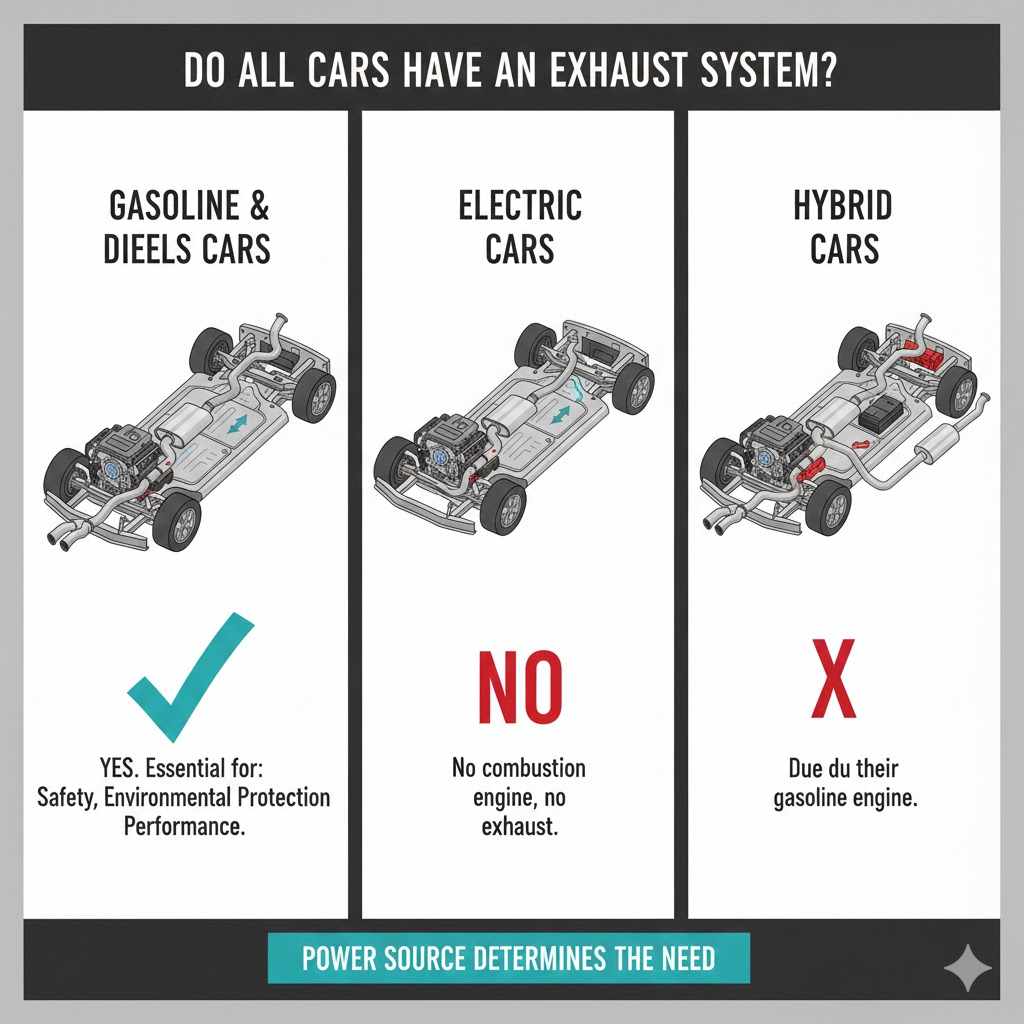
Now, let’s get to the heart of the question: Do All Cars Have an Exhaust System? The simple answer is yes, if they are conventional gasoline or diesel-powered vehicles. Every car designed to burn fuel to move itself will have an exhaust system. This is a fundamental requirement for its operation and for meeting environmental standards.
Gasoline and Diesel Cars
Cars that run on gasoline or diesel fuel produce exhaust gases as a result of internal combustion. This is the process where fuel and air are mixed and ignited inside the engine’s cylinders. The burning of this mixture creates hot gases that need to be expelled.
Thus, an exhaust system is absolutely necessary for these types of vehicles.
These systems are designed to manage the byproducts of combustion. They handle heat, pressure, and emissions. Without them, the engine would quickly become damaged, and the released gases would be extremely harmful and loud.
From the smallest compact car to the largest truck, if it burns fossil fuels, it has an exhaust system.
The fundamental process of burning fuel creates waste products. These waste products must be safely removed. The exhaust system is the dedicated pathway for this removal.
This has been true since the invention of the automobile and continues to be true today for all internal combustion engines.
Electric Vehicles (EVs)
This is where the answer becomes different. Electric vehicles, or EVs, do not have internal combustion engines. They use electric motors powered by batteries.
Because there is no burning of fuel, there are no exhaust gases to expel. Therefore, electric cars do not have traditional exhaust systems, including mufflers or catalytic converters.
This lack of an exhaust system is one of the benefits of EVs. It means they produce zero tailpipe emissions, making them environmentally friendly in that regard. It also means they are generally much quieter than gasoline-powered cars.
The only sounds you might hear from an EV are the whirring of the motor and tire noise.
So, to be precise, not all cars have exhaust systems. Only those with internal combustion engines do. Electric cars are a major exception to this rule.
As more people switch to EVs, the number of vehicles without exhaust systems will continue to grow.
Hybrid Vehicles
Hybrid vehicles are a bit of a mix. They have both an internal combustion engine (usually gasoline) and an electric motor. Because they have a gasoline engine, they also have an exhaust system.
This system functions just like the exhaust system in a regular gasoline car.
The gasoline engine produces exhaust gases when it’s running. The exhaust system handles these gases. However, a hybrid car might switch to electric power at times.
When it’s running purely on electricity, the gasoline engine is off, and thus the exhaust system is not actively expelling gases. But the system is still there and necessary for when the gasoline engine operates.
So, hybrids have exhaust systems, but they might not use them all the time. The engine and exhaust system are still a crucial part of their design, especially for longer trips or when more power is needed. The environmental and noise benefits of EVs are not fully realized with hybrids, but the exhaust system is still present.
Potential Issues and Maintenance
Like any part of a car, exhaust systems can develop problems. These issues can affect how your car runs, how safe it is, and how much pollution it creates. Regular checks and maintenance are key to keeping your exhaust system in good shape and your car running smoothly.
Common Problems
Several common issues can affect car exhaust systems. One of the most frequent is exhaust leaks. These can happen due to rust, corrosion, or damage to the pipes or connections.
Leaks can cause a loud noise, a “roaring” sound, and can allow dangerous exhaust fumes to enter the cabin.
Another issue is a clogged catalytic converter. If the engine is not burning fuel correctly, soot and carbon can build up inside the converter, blocking the flow of gases. This can lead to a significant loss of engine power and poor fuel economy.
A failing catalytic converter is also a major source of pollution.
Mufflers can also rust through or get damaged from road debris. When a muffler rusts out, it will become much louder. Sometimes, internal baffles can break loose, causing rattling sounds.
Pipes can also sag or break off if they are not properly supported.
Here are some signs that your exhaust system might have a problem:
- Loud noises
- A sudden increase in noise, especially a loud roaring or rattling sound, is often the first sign of an exhaust leak or a damaged muffler. This is because the sound is no longer being properly contained or quieted.
- Smell of exhaust fumes
- If you can smell exhaust fumes inside the car, it’s a serious safety issue. This indicates a leak that is allowing toxic gases to enter the passenger cabin. You should get this checked immediately.
- Reduced engine performance
- A blocked or damaged exhaust system can restrict the flow of gases, making the engine work harder. You might notice a loss of power, slower acceleration, or decreased fuel efficiency.
- Check Engine Light
- Modern cars have sensors that monitor the exhaust system. If a problem is detected, the “Check Engine” light on your dashboard will illuminate. This can be an early warning of issues like a failing catalytic converter or oxygen sensor problems.
Maintenance and Inspection
Regular inspection of your exhaust system is important. Many mechanics will check it during routine oil changes or other service appointments. They will look for signs of rust, damage, or leaks.
They will also listen for unusual noises.
One key maintenance item involves the oxygen sensors. These sensors measure the amount of oxygen in the exhaust gases and send this information to the car’s computer. This helps the engine control unit adjust the fuel mixture for optimal performance and emissions.
If these sensors fail, the car’s computer cannot properly manage the engine.
Replacing worn-out parts is also a form of maintenance. If a section of the exhaust pipe is rusted through, it needs to be replaced to prevent further damage and leaks. Similarly, if a muffler is too far gone, it will need to be replaced.
Keeping the exhaust system in good working order ensures your car remains safe, legal, and environmentally friendly.
A proactive approach to exhaust system maintenance can prevent more costly repairs down the road. Addressing small leaks early, for instance, can stop them from spreading and causing more significant damage to the entire system.
Do All Cars Have an Exhaust System? The Final Answer
To wrap it up, the question of whether all cars have an exhaust system has a clear answer. If a car burns gasoline or diesel fuel, it absolutely needs an exhaust system. It’s essential for safety, the environment, and how the car works.
Electric cars, however, don’t have them at all. Hybrids have them because of their gasoline engine. So, it depends on the car’s power source.
Keep your car’s exhaust system in good shape for a better, safer drive.
Frequently Asked Questions
Question: What happens if my car’s exhaust system leaks?
Answer: If your car’s exhaust system has a leak, you might hear a loud noise, like a roaring or hissing sound. You could also smell exhaust fumes inside the car, which is dangerous. Leaks can also make your car less efficient.
It’s important to get leaks fixed right away for safety and performance.
Question: How often should I get my exhaust system checked?
Answer: It’s a good idea to have your exhaust system checked at least once a year during your car’s regular service appointment. Also, pay attention to any new noises or smells. Early checks can catch small problems before they become big, expensive ones.
Question: Can a car run without a muffler?
Answer: A car can technically run without a muffler, but it will be extremely loud. This is usually illegal in most places because of noise pollution. The muffler is designed to quiet the engine’s sound significantly.
Question: Are exhaust systems on all cars the same?
Answer: No, exhaust systems are not all the same. While they have similar core components like pipes and mufflers, their design and size can vary greatly depending on the car’s make, model, engine size, and performance goals. Electric cars are the biggest difference as they have no exhaust system.
Question: How much does it typically cost to repair an exhaust system?
Answer: The cost to repair an exhaust system can vary a lot. Simple repairs like fixing a small leak might be a few hundred dollars. Replacing a whole system, including the catalytic converter, could cost over a thousand dollars.
It really depends on what needs to be replaced and the parts used.
Summary
In conclusion, if a car uses an internal combustion engine, it has an exhaust system. This system safely removes harmful fumes, reduces noise, and helps the engine run well. Electric cars are the exception, as they don’t burn fuel.
Regular checks ensure your exhaust system is working correctly, keeping you and others safe.