How To Make MagnaFlow Exhaust Louder
Many car owners love the deep rumble of a powerful exhaust, and MagnaFlow systems are popular for their quality. But sometimes, even a great exhaust might not be as loud as you want it to be. If you’re wondering How to Make MagnaFlow Exhaust Louder, you’re not alone.
It might seem tricky, but we’ll walk you through it step by step in simple terms. We’ll cover easy ways to get that louder sound you’re looking for, without any confusing jargon.
Making MagnaFlow Exhaust Louder Explained
This section focuses on the core concepts of modifying your MagnaFlow exhaust to achieve a louder sound. We’ll explore why certain modifications work and the basic principles behind exhaust acoustics. Understanding these fundamentals will help you make informed decisions about the best approach for your vehicle.
Understanding Exhaust Sound Principles
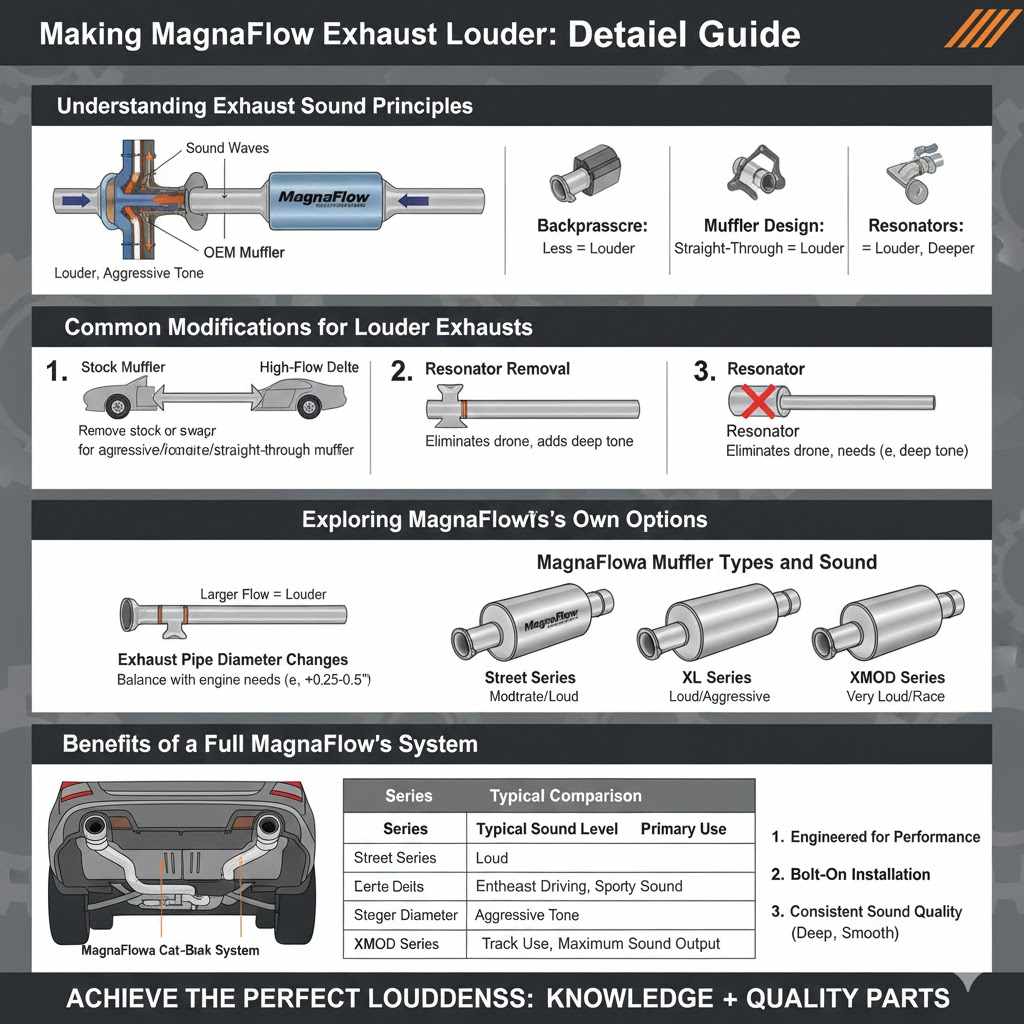
Exhaust sound is all about how sound waves travel and are reflected within your car’s exhaust system. The muffler is the main component designed to reduce noise. By altering or bypassing parts of the exhaust, you change how these sound waves are managed.
This can result in a more aggressive and louder tone.
The key factors influencing exhaust volume include backpressure, muffler design, pipe diameter, and the presence of resonators. Backpressure is the resistance to exhaust gas flow. Less backpressure generally means a louder exhaust, but it’s a delicate balance.
Too little backpressure can negatively impact engine performance.
Resonators are smaller chambers in the exhaust that cancel out specific sound frequencies, effectively making the exhaust quieter or shaping its tone. Removing or altering resonators is a common way to increase loudness. The type of muffler also plays a huge role.
Straight-through mufflers allow sound to pass with less restriction than chambered mufflers, making them naturally louder.
Common Modifications for Louder Exhausts
Several common modifications can increase the volume of your MagnaFlow exhaust. These range from simple changes to more involved alterations. We will discuss each in detail.
- Muffler Deletion or Replacement
- One of the most direct ways to make your exhaust louder is to remove the muffler altogether or
- Alternatively, you can swap your current MagnaFlow muffler for a muffler designed for higher volume. Many aftermarket companies offer “performance” mufflers that are essentially straight-through designs. These have a perforated core that lets exhaust gases pass with minimal obstruction, creating a louder exhaust note.
- It’s important to research specific muffler models to find one that matches your desired sound profile.
- Resonator Removal
- Resonators are tubes or chambers that work like mufflers but target specific sound frequencies. They are often used to eliminate drone or high-pitched noises. Removing resonators can significantly increase the overall volume and often adds a deeper tone to the exhaust.
- This modification is less aggressive than a full muffler delete and can offer a good balance for many enthusiasts.
- The effectiveness of resonator removal depends on the original exhaust system design. Some systems have multiple resonators, while others have just one or none. Removing a resonator is usually a straightforward welding job for an exhaust shop.
- It’s a popular choice for those who want a noticeable increase in loudness without making their car excessively noisy.
- Exhaust Pipe Diameter Changes
- The diameter of your exhaust pipes affects backpressure and the speed at which exhaust gases flow. Larger diameter pipes can reduce backpressure, allowing exhaust gases to flow more freely. This increased flow can contribute to a louder exhaust sound.
- However, pipes that are too large can decrease low-end torque and negatively affect performance.
- Matching pipe diameter to your engine’s needs is crucial. For most naturally aspirated cars, increasing pipe diameter by a small amount (e.g., 0.25 to 0.5 inches) might provide a modest increase in volume and potentially a slight performance gain. For turbocharged engines, larger pipes are often more beneficial for flow and sound.
- Consulting with an exhaust specialist can help determine the optimal pipe size for your specific vehicle.
Exploring MagnaFlow’s Own Options
While this guide discusses general modifications, MagnaFlow itself offers different product lines that can achieve varying sound levels. Understanding their catalog can help you choose a solution that fits your needs without extensive custom work.
MagnaFlow Muffler Types and Sound
MagnaFlow offers a range of mufflers, each designed with a specific sound profile in mind. Their mufflers typically use a straight-through, perforated core design, which is inherently less restrictive than chambered mufflers. This design aims to produce a deep, smooth tone.
However, there are differences in packing material and internal baffling that affect overall volume.
For example, MagnaFlow’s “Street” series mufflers are generally designed to be louder than stock but still civil for daily driving. Their “Race” or “XMOD” series mufflers are engineered for maximum flow and sound, offering a much more aggressive tone. Choosing the right MagnaFlow muffler is a direct way to adjust your exhaust’s loudness.
MagnaFlow Series Comparison
| MagnaFlow Series | Typical Sound Level | Primary Use |
|---|---|---|
| Street Series | Moderate to Loud | Daily Driving, Sporty Sound |
| XL Series | Loud | Enthusiast Driving, Aggressive Tone |
| XMOD Series | Very Loud | Track Use, Maximum Sound Output |
This table illustrates that MagnaFlow’s own product lines offer varying degrees of loudness. If you have a MagnaFlow system already, you might be able to swap out the muffler for a louder model within their own range. This avoids the need for potentially irreversible modifications like muffler deletion.
Performance Exhaust Systems
MagnaFlow also offers complete cat-back or axle-back exhaust systems. These systems are designed as a package, with each component optimized to work together. A performance system often includes a less restrictive muffler, straight pipes where resonators would be, and larger diameter piping.
These are designed to provide a noticeable increase in volume and a sportier exhaust note.
Choosing a full MagnaFlow performance system is often the easiest way to achieve a louder exhaust. These systems are engineered to fit specific vehicle models, ensuring proper installation and optimal performance. They also come with the assurance of MagnaFlow’s quality and sound tuning.
Many enthusiasts prefer this route for a consistent and predictable outcome.
Benefits of a Full MagnaFlow System
- Engineered for Performance
- Complete systems are designed by MagnaFlow engineers to work harmoniously with your specific vehicle. This means each part, from the muffler to the tips, is chosen to complement the others. This integrated approach often results in better performance gains and a more refined sound than piecemeal modifications.
- Bolt-On Installation
- Many MagnaFlow performance systems are designed for direct bolt-on installation, meaning they
- Consistent Sound Quality
MagnaFlow is known for producing a deep, smooth exhaust tone. When you purchase a complete system, you get a predictable and consistent sound that they have carefully tuned. This avoids the risk of an overly raspy or obnoxious sound that can sometimes result from cutting and deleting factory components.
How to Make MagnaFlow Exhaust Louder Safely
Making your exhaust louder can be exciting, but it’s essential to do it in a way that is safe and legal. This section explores practical steps and considerations to ensure you get the sound you want without issues.
Legal and Environmental Considerations
Noise regulations vary by state and local jurisdiction. Many areas have limits on how loud a vehicle’s exhaust can be, especially during certain hours or in residential areas. Exceeding these limits can result in fines or tickets.
It’s important to be aware of the laws in your area before making modifications.
Catalytic converters are pollution control devices that reduce harmful emissions. Tampering with or removing catalytic converters is illegal and environmentally harmful. Always ensure your catalytic converter remains in place and functional when modifying your exhaust system.
Many modifications that increase volume do not require removing the catalytic converter.
Understanding Noise Ordinances
Local Laws are Key
The first step is to check your local city and county ordinances regarding vehicle noise. Many municipalities have specific decibel limits or “noise nuisance” laws that apply to exhaust systems. These laws are often enforced based on complaints.
State Regulations
Beyond local rules, your state may also have regulations about exhaust noise. These can be general guidelines or specific requirements for aftermarket exhaust systems. Some states require aftermarket exhaust systems to carry an EPA certification.
Researching your state’s Department of Motor Vehicles (DMV) or equivalent agency website is a good starting point.
Visual Inspection and Tickets
In some cases, law enforcement can issue citations for exhaust systems that appear to be illegally modified or excessively loud, even without a decibel meter. Modifying your exhaust in a way that looks obviously altered or has holes in the piping can draw unwanted attention.
Ensuring Engine Performance
While the goal is a louder exhaust, it’s also important not to negatively impact your engine’s performance. Exhaust systems are carefully engineered to manage backpressure, which is critical for optimal engine function. Modifying the exhaust incorrectly can lead to reduced horsepower, torque, and fuel efficiency.
For example, a common misconception is that removing all backpressure is always best. However, naturally aspirated engines often require a certain amount of backpressure for efficient operation at lower RPMs. Too little can cause a loss of low-end power.
For turbocharged engines, however, reducing backpressure can improve turbo spooling and overall power.
Backpressure and Its Impact
What is Backpressure?
Backpressure is the resistance that the exhaust system offers to the flow of exhaust gases exiting the engine. Think of it like trying to blow air through a narrow straw versus a wide one. The narrow straw offers more resistance.
Performance Effects
In a naturally aspirated engine, a controlled amount of backpressure helps to create a scavenging effect. This means that as one exhaust pulse leaves the cylinder, it can help pull the next pulse out, improving efficiency and power. Too much backpressure can choke the engine, leading to reduced power and increased heat.
Too little can reduce low-end torque and affect the engine’s ability to scavenge effectively.
Finding the Balance
The key is to find the right balance for your specific engine. Performance exhaust systems, like those from MagnaFlow, are designed to reduce backpressure compared to stock systems but do so in a way that enhances power across the RPM range. This usually involves larger diameter piping and free-flowing mufflers and resonators.
Professional Installation Advice
If you are not experienced with automotive exhaust systems, it is highly recommended to seek professional installation. Exhaust work can involve working with hot components, rusted bolts, and precise measurements for proper fitment. A professional shop has the tools, expertise, and experience to perform the modifications safely and correctly.
A qualified installer can also provide advice on the best options for your vehicle, ensuring that the modifications meet legal requirements and do not compromise your car’s performance or drivability. They can help you select the right parts and ensure they are installed without leaks, which can affect sound and performance.
When to Choose a Professional
Lack of Tools and Experience
Working on exhausts often requires specialized tools like exhaust hangers, pipe cutters, and potentially welding equipment. If you don’t have these or are uncomfortable using them, a professional shop is the best choice. They have the proper gear to do the job right.
Complex Systems
Some vehicles have integrated exhaust systems where components are tightly packed or require extensive removal of underbody panels. These situations can be time-consuming and frustrating for a DIYer. Professionals are equipped to handle these challenges efficiently.
Warranty Considerations
If your vehicle is still under warranty, improper modifications can void certain aspects of the warranty, particularly those related to the powertrain. Having a reputable shop perform the work can sometimes offer peace of mind regarding warranty coverage, especially if they use quality parts.
Step-By-Step Guide to Louder MagnaFlow Exhaust
This section provides a practical, step-by-step approach to increasing the loudness of your MagnaFlow exhaust. We’ll assume you have a MagnaFlow system and want to make it even louder.
Step 1 Assess Your Current System
Before making any changes, take a moment to understand your current MagnaFlow exhaust setup. What specific muffler model do you have? Are there any resonators in the system?
Knowing this will help you decide on the best modification path.
You can usually find model numbers on the muffler itself. If not, check your purchase history or the MagnaFlow website for their product catalog. Identifying resonators is generally easy; they are typically smaller, cylindrical chambers located along the exhaust piping, often before the muffler.
Step 2 Choose Your Modification Method
Based on your assessment and desired loudness, choose the most appropriate method. Here are the common choices, ordered from least to most aggressive in terms of modification:
Upgrade to a Louder MagnaFlow Muffler
If you have a less aggressive MagnaFlow muffler (like a Street Series) and want more volume, the simplest solution is to upgrade to a louder MagnaFlow model (like an XL or XMOD Series). This is a direct replacement and maintains the quality of the MagnaFlow brand.
Remove Resonators
If your system has resonators and you want a noticeable increase in volume without removing the muffler, this is a good option. It’s a moderately invasive modification that can be done by an exhaust shop.
Muffler Deletion (Use with Caution)
Removing the muffler entirely will result in the loudest possible sound from your current piping. However, this can be excessively loud, may produce unwanted drone, and could be illegal in your area. This is generally not recommended for street use without careful consideration.
Full Cat-Back System Upgrade
If you’re looking for a significant change and a complete system upgrade, consider a MagnaFlow cat-back system designed for maximum sound. This replaces most of your factory exhaust behind the catalytic converter.
Step 3 Prepare for Modification
Gather any necessary tools if you plan a DIY approach, or book an appointment with a reputable exhaust shop. If purchasing a new muffler, ensure it’s compatible with your existing piping diameter and mounting points.
For DIY, you’ll need jack stands, safety glasses, gloves, and potentially tools for cutting or unbolting pipes. For professional installation, your main task is simply scheduling the service and discussing your goals.
Step 4 Perform the Modification
If Doing It Yourself (e.g., Muffler Swap or Resonator Removal):
- Safely lift your vehicle using jack stands on a level surface.
- Locate the component you are modifying (muffler or resonator).
- If replacing a muffler, unbolt the old one and bolt in the new one.
- If removing a resonator, you may need to cut the pipe on either side of the resonator and weld in a straight pipe section.
- Ensure all connections are secure and leak-free.
- Lower the vehicle.
If Using a Professional Shop:
- Bring your vehicle to the shop.
- Clearly explain your desired outcome (e.g., “I want my MagnaFlow to be louder, similar to their XL series”).
- The shop will assess your current system and recommend the best approach.
- They will perform the modification using professional tools and techniques.
- They will test for leaks and ensure proper fitment before you drive away.
Step 5 Test and Adjust
After the modification, start your engine and listen carefully. Drive the vehicle to experience the new sound. Pay attention to the volume at idle, under acceleration, and at cruising speeds.
Check for any unwanted vibrations or drone.
If the sound is not to your liking, or if you notice performance issues, consult with your installer or an exhaust specialist. Sometimes, small adjustments or adding an aftermarket exhaust tip can subtly alter the tone.
Common Issues and Solutions
While aiming for a louder exhaust is exciting, some common problems can arise. This section addresses these potential challenges and offers solutions to ensure a satisfying outcome.
Exhaust Drone
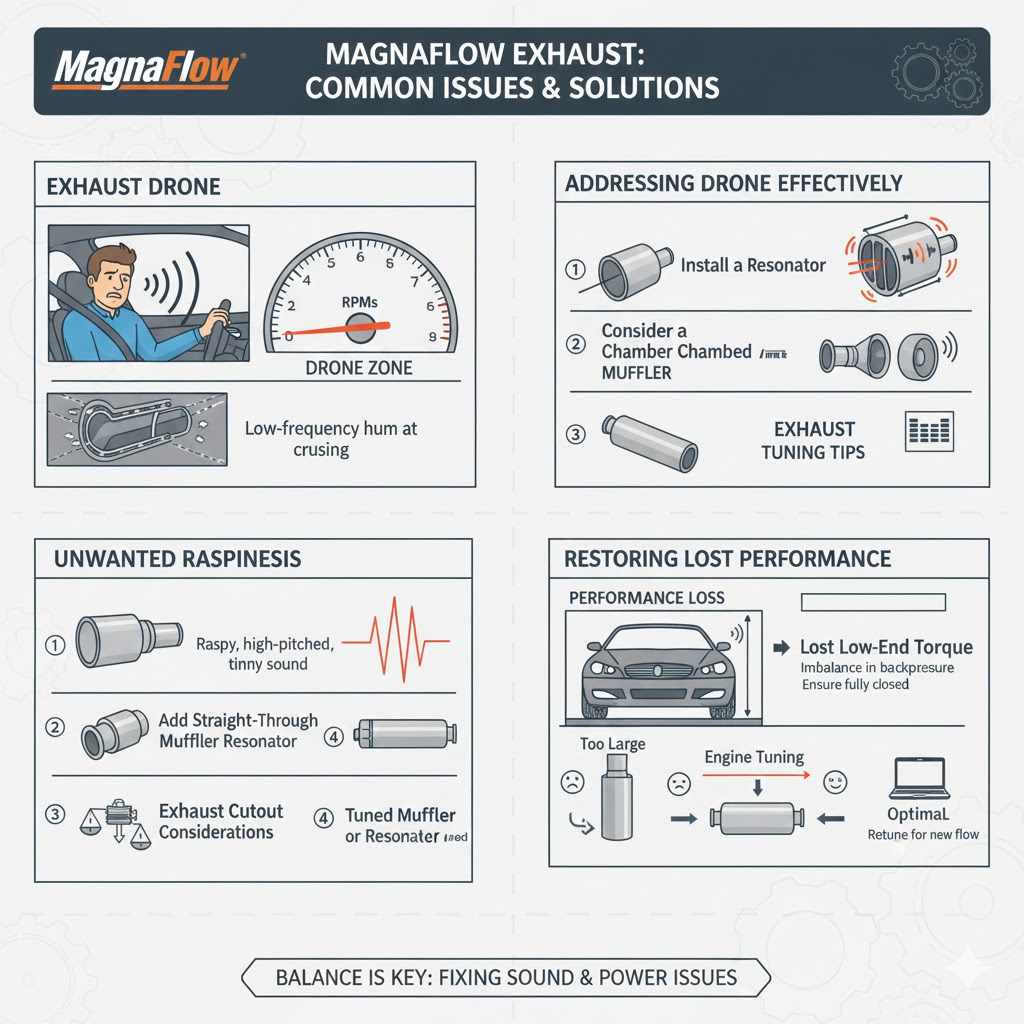
Exhaust drone is a persistent, low-frequency humming or buzzing sound that can occur inside the cabin at certain engine speeds, especially during highway cruising. It’s often a byproduct of aggressive exhaust modifications.
The solution for drone typically involves adding or reintroducing a resonator. A Helmholtz resonator or a specific type of chambered muffler can effectively cancel out the frequencies that cause drone. Sometimes, simply re-installing the factory resonators or adding an aftermarket drone-killer can solve the problem.
Another approach is to adjust the length or diameter of the exhaust tips, as these can influence resonance.
Addressing Drone Effectively
Install a Resonator
The most common fix for drone is to add a resonator. These devices are tuned to cancel out specific sound frequencies. Even a small, well-placed resonator can make a significant difference.
MagnaFlow offers various resonators, or you can opt for universal ones from other brands.
Consider a Chambered Muffler
If you removed your muffler, replacing it with a chambered muffler (instead of a straight-through design) can reduce drone. Chambered mufflers use internal baffles to redirect exhaust gases, which dampens sound more effectively and can target drone frequencies.
Sometimes, the length and diameter of your exhaust tips can influence drone. Experimenting with different tips might help reduce or change the droning sound. This is a less common solution but can be effective in some cases.
Unwanted Raspiness or Tinny Sound
Some modifications, particularly muffler deletes, can lead to a raspy or high-pitched, tinny sound that many find unpleasant. This is often due to the raw, unfiltered exhaust gases exiting the system without any sound-dampening components.
To fix a raspy sound, you typically need to reintroduce some form of muffling or sound tuning. This could involve adding a performance muffler that is designed to produce a deep tone, even if it’s loud. Alternatively, you might consider adding a “glasspack” muffler or a small resonator specifically designed to smooth out the exhaust note.
Achieving a Smoother Sound
Install a Performance Muffler
If you deleted your muffler, installing a high-flow, performance muffler from MagnaFlow or another reputable brand is the best way to eliminate rasp. These are designed to offer a louder sound while maintaining a deep, smooth tone.
Add a Straight-Through Resonator
A straight-through resonator can help to smooth out the exhaust note by breaking up sharp frequencies. While it adds some backpressure, it can be effective in reducing rasp without sacrificing too much volume.
Exhaust Cutout Considerations
If you have an exhaust cutout, ensure it is fully closed when not in use. Partially open cutouts can sometimes create a raspy sound that is not desirable for street driving.
Performance Loss
As mentioned earlier, incorrect modifications can lead to a loss of engine performance, particularly at lower RPMs. This is often due to an imbalance in backpressure.
The solution is to re-evaluate your exhaust setup to ensure it’s appropriate for your engine’s needs. If you’ve gone too far with larger pipes or excessive muffler deletion, you might need to consult with an exhaust specialist. They can help you size the piping correctly or suggest modifications that restore lost low-end torque, such as adding a specific type of muffler or a custom-tuned resonator.
Restoring Lost Performance
Correct Pipe Sizing
Ensure your exhaust piping diameter is suitable for your engine. For most naturally aspirated cars, excessively large piping can hurt low-end torque. Consulting with an exhaust expert can help determine the ideal size for your vehicle.
Tuned Muffler or Resonator
Sometimes, a loss in performance can be corrected by adding a specific type of muffler or resonator. These components can help restore the necessary backpressure for low-end power while still allowing for increased flow at higher RPMs.
Engine Tuning
In some cases, especially after significant exhaust modifications, the engine’s computer may need to be retuned to optimize for the new exhaust flow. This is a more advanced solution but can ensure your engine is running at its peak efficiency and power output.
Frequently Asked Questions
Question: Will making my MagnaFlow exhaust louder affect my car’s warranty
Answer: Yes, modifying your exhaust system beyond what the manufacturer intended can potentially void your vehicle’s warranty, especially for powertrain components. It is advisable to check your warranty terms or consult with your dealership.
Question: Can I make my MagnaFlow exhaust louder without cutting anything
Answer: Yes, often you can make your MagnaFlow exhaust louder by simply upgrading to a louder MagnaFlow muffler model. This usually involves unbolting the old muffler and bolting on the new one, requiring no cutting.
Question: How much does it typically cost to make an exhaust louder
Answer: Costs can vary widely. A simple muffler upgrade might cost a few hundred dollars. Resonator removal at an exhaust shop could range from $100 to $300.
A full cat-back system can cost $500 to $1500 or more, plus installation fees.
Question: Is it legal to remove the catalytic converter to make my exhaust louder
Answer: No, it is illegal in most places to remove or tamper with your catalytic converter. This device is crucial for reducing harmful emissions, and its removal can lead to significant fines and environmental damage.
Question: How can I tell if my exhaust is too loud for public roads
Answer: Check your local and state noise ordinances for specific decibel limits. If your exhaust is significantly louder than stock and draws negative attention or complaints, it is likely too loud for legal street use.
Final Thoughts
Making your MagnaFlow exhaust louder is achievable by understanding your system and choosing the right modifications. Whether you opt for a louder muffler, resonator removal, or a full performance system, focus on safe and legal changes. Aim for a sound that enhances your driving experience without causing issues.