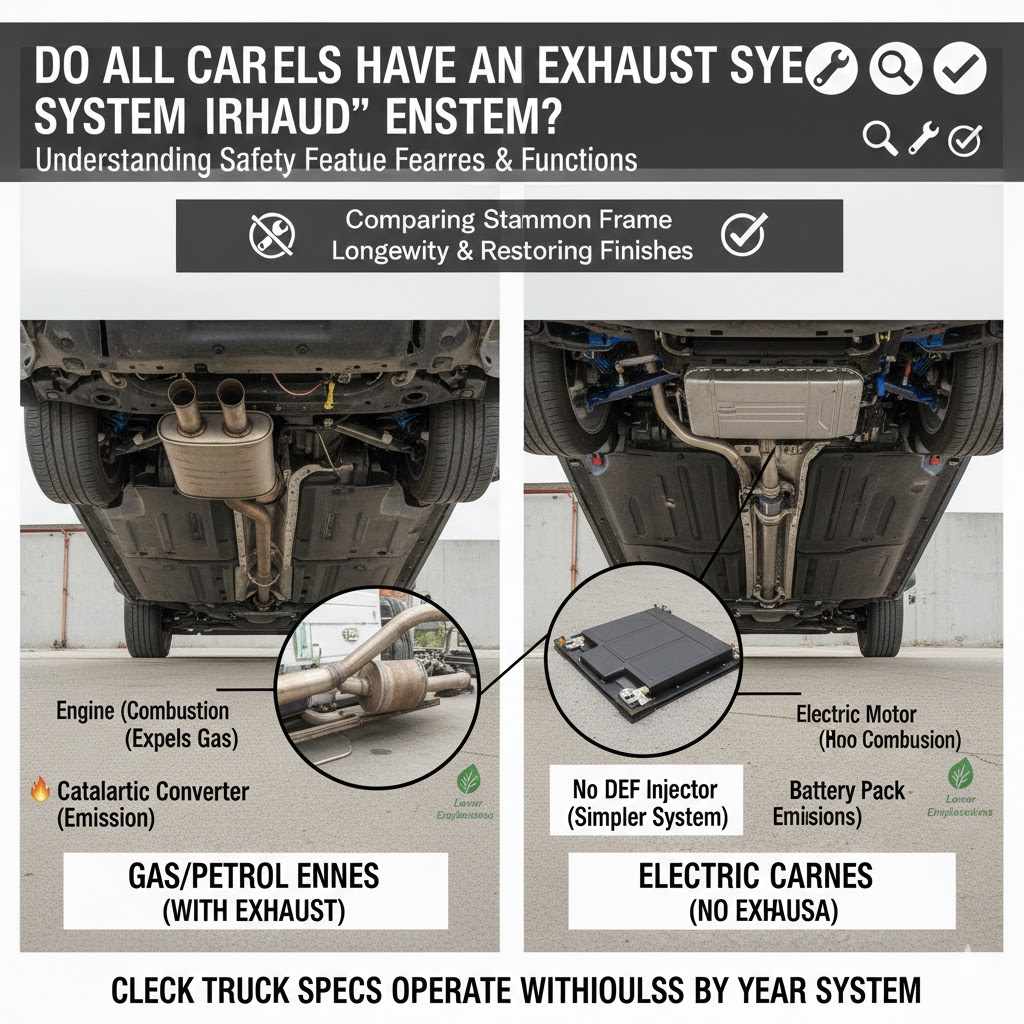
Do All Diesels Need Exhaust Fluid Truth Explained
Have you ever wondered if your diesel truck or car needs that special fluid called DEF? It’s a common question, and finding a clear answer can sometimes feel tricky, especially if you’re new to diesel engines. Many people are confused because not all diesels use it.
This guide will make it super simple. We’ll break down exactly why some diesels need it and others don’t. Get ready for an easy-to-follow explanation that will clear everything up.
Let’s get started and uncover the truth about Do All Diesels Need Exhaust Fluid? Truth Explained.
Understanding Diesel Exhaust Fluid Basics
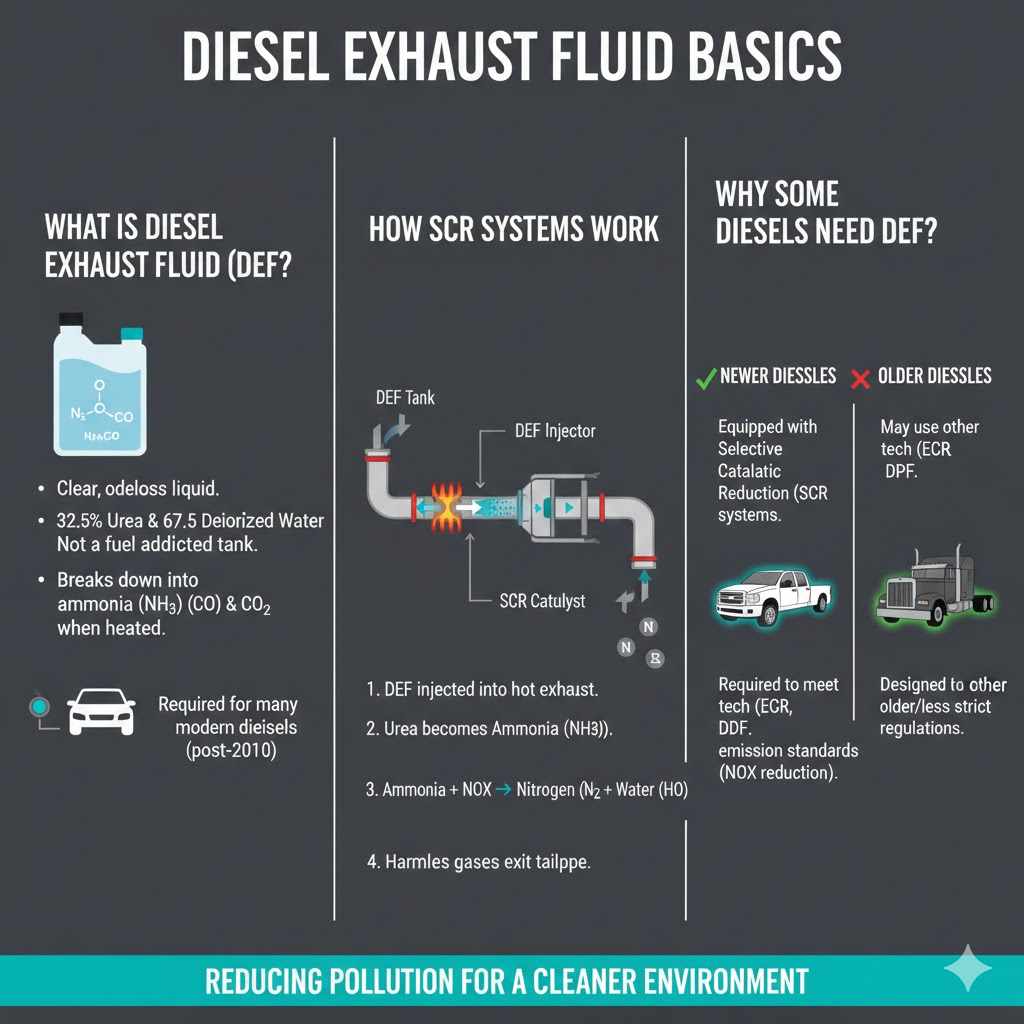
Diesel Exhaust Fluid, or DEF, is a liquid used to reduce pollution from diesel engines. It’s a mixture of urea and deionized water. When injected into the exhaust stream, it reacts with nitrogen oxides (NOx), turning them into harmless nitrogen and water vapor.
This process is a key part of modern emissions control systems designed to meet strict environmental standards.
The use of DEF is primarily driven by government regulations aimed at reducing harmful emissions from diesel vehicles. These regulations vary by region and have become progressively stricter over the years. As a result, many newer diesel vehicles are equipped with selective catalytic reduction (SCR) systems that require DEF to operate effectively and legally.
DEF is stored in a separate tank on the vehicle, similar to how gasoline or diesel fuel is stored. When the engine is running, a small amount of DEF is automatically injected into the exhaust system. The amount injected depends on engine operating conditions and the amount of NOx detected.
The vehicle’s computer monitors the DEF level and will often alert the driver when it’s running low.
What is Diesel Exhaust Fluid DEF
Diesel Exhaust Fluid (DEF) is a clear, odorless liquid. It is composed of 32.5% urea and 67.5% deionized water. This specific ratio is critical for its function in the selective catalytic reduction (SCR) system.
The urea in DEF, when heated, breaks down into ammonia. This ammonia then reacts with nitrogen oxides (NOx) in the exhaust gases.
The SCR system uses a catalyst to convert the NOx and ammonia into nitrogen gas and water vapor. These are naturally present in the air and are harmless. Without DEF, the NOx levels would be too high for the vehicle to meet emissions standards.
Think of DEF as a special additive that cleans up the exhaust before it leaves the tailpipe.
DEF is not a fuel additive. You should never put DEF directly into your diesel fuel tank. It is stored in its own dedicated tank.
The system is designed to inject the correct amount of DEF at the right time. Many modern diesel vehicles, especially those manufactured after 2010, are equipped with SCR systems and therefore require DEF.
How SCR Systems Work
Selective Catalytic Reduction (SCR) is a technology used in diesel engines to reduce harmful nitrogen oxide (NOx) emissions. It works by injecting Diesel Exhaust Fluid (DEF) into the exhaust stream just before a special catalytic converter. This SCR catalyst is designed to facilitate a chemical reaction.
When DEF is injected into the hot exhaust, the urea in the DEF breaks down into ammonia (NH3) and carbon dioxide (CO2). The ammonia then reacts with the NOx in the exhaust gases. This reaction transforms the harmful NOx into harmless nitrogen gas (N2) and water vapor (H2O).
These are naturally occurring substances that the environment can easily handle.
The SCR system includes several components: a DEF tank, a DEF pump, an injector, and the SCR catalyst. The vehicle’s engine control unit (ECU) manages the entire process. It monitors exhaust gas composition and determines precisely how much DEF to inject to achieve the required emission reductions.
This system is crucial for diesel vehicles to comply with emission regulations.
Why Some Diesels Need DEF and Others Don’t
The main reason some diesel engines require Diesel Exhaust Fluid (DEF) and others do not is the emission control technology they employ. Newer diesel vehicles, especially those manufactured after 2010 in many regions like the United States and Europe, are equipped with Selective Catalytic Reduction (SCR) systems. These SCR systems rely on DEF to reduce nitrogen oxide (NOx) emissions to meet strict environmental standards.
Older diesel vehicles, or those designed for markets with less stringent emission regulations, may not have SCR systems. They might use other methods to control emissions, such as exhaust gas recirculation (EGR) or Diesel Particulate Filters (DPF). While DPFs capture soot, they don’t directly address NOx in the same way SCR systems do.
So, if you have a modern diesel pickup truck, a commercial truck, or a diesel car made in the last decade or so, chances are it needs DEF. Older models or some specialized industrial diesel engines might not have this requirement. Always check your vehicle’s owner’s manual or look for the DEF filler cap near your diesel fuel cap to be sure.
Identifying If Your Diesel Needs DEF
Determining if your diesel vehicle requires Diesel Exhaust Fluid (DEF) is a straightforward process. The most reliable way is to consult your vehicle’s owner’s manual. It will explicitly state whether your vehicle is equipped with an SCR system and uses DEF.
The manual often provides details on where to find the DEF filler cap and how to refill it.
Another visual cue is the presence of a separate filler cap specifically for DEF. This cap is usually blue and is often located near the diesel fuel filler neck. Sometimes, it might be under the hood or in the trunk.
If you see a blue cap labeled “DEF” or “Diesel Exhaust Fluid,” your vehicle definitely needs it.
Additionally, many modern diesel vehicles will have a DEF level indicator on their dashboard display or through their infotainment system. This will show you how much DEF is in the tank and alert you when it’s time to refuel. If your vehicle has warning lights or messages related to DEF, it’s a clear sign that DEF is a necessary component for its operation.
Checking Your Owner’s Manual
The owner’s manual is your best friend when it comes to understanding your vehicle’s specific needs. For questions about Diesel Exhaust Fluid (DEF), it will provide precise information. Look for sections on “Maintenance,” “Emissions Systems,” or “Diesel Exhaust Fluid.” The manual will clearly state if your vehicle is equipped with an SCR system and requires DEF.
It will also detail where to locate the DEF tank and filler cap. This is important because mistakenly adding DEF to your diesel fuel tank can cause significant damage. The manual often includes important tips on handling DEF, such as proper storage and avoiding contamination.
It’s a comprehensive guide designed to keep your vehicle running smoothly and within emissions regulations.
If you’ve misplaced your physical owner’s manual, most manufacturers offer digital versions on their websites. You can usually download a PDF version by entering your vehicle’s make, model, and year. This makes it easy to access all the information you need, including details about DEF usage.
Looking for the DEF Filler Cap
The presence of a dedicated DEF filler cap is the most common and easiest way to identify if your diesel vehicle needs DEF. This cap is typically blue and will be clearly labeled with “DEF” or “Diesel Exhaust Fluid.” It’s usually found close to where you fill up your diesel fuel, often on the same side of the vehicle.
In some passenger cars or SUVs, the DEF filler might be located inside the trunk or under the hood, near the engine. For larger trucks, it’s often on the exterior, easily accessible. The color blue is a universal identifier for DEF, helping to prevent accidental misfuelling.
If you see this blue cap, your vehicle is equipped with an SCR system and requires DEF.
It’s crucial to differentiate the DEF filler from the diesel fuel filler. The diesel filler is typically black and unlabelled or labeled with “Diesel.” Never attempt to put diesel fuel into the DEF tank or DEF into the diesel fuel tank. Doing so can lead to serious and costly engine damage.
Always double-check before filling.
Dashboard Indicators and Warning Lights
Modern diesel vehicles are equipped with sophisticated onboard diagnostic systems that communicate crucial information to the driver through the dashboard. If your vehicle uses Diesel Exhaust Fluid (DEF), you will likely see specific indicators related to its level and system status. These are designed to alert you well in advance of any issues.
Common indicators include a DEF level gauge, similar to a fuel gauge, which shows how much DEF is remaining in the tank. You might also see a message on the instrument cluster or infotainment screen that says “DEF Level Low” or “Refill DEF.” These messages typically appear when the DEF level drops below a certain threshold, giving you ample time to refill.
More serious warnings might include “DEF System Malfunction” or a message indicating that the engine will not start or will run at reduced power if DEF is not refilled. These are usually accompanied by a check engine light or a specific DEF-related warning light. Heeding these warnings promptly is essential to avoid operational issues and comply with emission regulations.
The Role of DEF in Emissions Control
Diesel Exhaust Fluid (DEF) plays a vital role in controlling the harmful emissions produced by diesel engines, particularly nitrogen oxides (NOx). NOx gases are major contributors to air pollution, smog formation, and acid rain. By enabling Selective Catalytic Reduction (SCR) systems, DEF allows diesel vehicles to significantly reduce these pollutants, making them cleaner and more environmentally friendly.
The process is quite ingenious. When DEF is injected into the hot exhaust gases, it chemically breaks down into ammonia. This ammonia then acts as a reducing agent within the SCR catalyst.
It reacts with NOx, converting it into diatomic nitrogen (N2) and water vapor (H2O). Both nitrogen and water are harmless substances that are naturally abundant in the atmosphere.
Without DEF, modern diesel engines would struggle to meet the increasingly stringent emissions standards set by regulatory bodies worldwide. The implementation of SCR technology, powered by DEF, has been instrumental in making diesel engines a more sustainable option, reducing their environmental impact while maintaining their inherent efficiency and power benefits.
Reducing Nitrogen Oxide NOx Emissions
Nitrogen oxides (NOx) are a group of highly reactive gases that are a significant byproduct of combustion in diesel engines. When the high temperatures and pressures inside a diesel engine cause oxygen and nitrogen from the air to react, NOx is formed. These gases are a major concern for air quality because they contribute to several environmental problems.
NOx gases are primary components of smog. They react with volatile organic compounds in the presence of sunlight to form ground-level ozone, which is harmful to human health and can damage vegetation. Furthermore, NOx emissions contribute to acid rain, which can harm forests, lakes, and buildings.
They also play a role in the formation of particulate matter, another harmful air pollutant.
Diesel Exhaust Fluid (DEF) is a critical element in reducing NOx emissions. The SCR system uses DEF to chemically convert NOx into harmless nitrogen gas and water. This process is so effective that it allows diesel engines to meet very strict NOx emission limits.
For instance, the US EPA’s Tier 4 Final standards for non-road diesel engines drastically reduced allowed NOx levels, making SCR technology with DEF essential for compliance.
How DEF Facilitates the SCR Process
The Selective Catalytic Reduction (SCR) process relies entirely on Diesel Exhaust Fluid (DEF) to function. Think of DEF as the active ingredient that makes the entire emission reduction system work. When the diesel engine produces exhaust gases containing NOx, the vehicle’s computer system senses this.
It then triggers the DEF injector.
The DEF injector sprays a precise amount of DEF into the hot exhaust stream, upstream of the SCR catalyst. The heat of the exhaust causes the DEF, a solution of urea and water, to decompose. This decomposition yields ammonia (NH3) and carbon dioxide (CO2).
The ammonia is the key chemical agent for reducing NOx.
As the exhaust gases and the newly formed ammonia flow through the SCR catalyst, a chemical reaction occurs. The ammonia reacts with the nitrogen oxides (NOx). This reaction transforms the harmful NOx into inert nitrogen gas (N2) and water vapor (H2O).
The SCR catalyst itself is specially designed to promote this chemical conversion efficiently. Without DEF, there would be no ammonia, and the SCR system would be unable to reduce NOx emissions.
Meeting Environmental Regulations
The primary driver behind the widespread adoption of DEF and SCR technology in diesel vehicles is the need to meet increasingly stringent environmental regulations. Governments around the world have set strict limits on the amount of pollutants, especially NOx and particulate matter, that diesel engines can emit. These regulations are designed to improve air quality and protect public health.
For example, in the United States, the Environmental Protection Agency (EPA) introduced regulations known as Tier 4 standards for off-road diesel engines and similar standards for on-road vehicles. These standards mandated significant reductions in NOx and particulate matter emissions. Similarly, the Euro VI standards in Europe impose rigorous emission limits on diesel vehicles.
SCR systems using DEF have proven to be one of the most effective ways to achieve these reductions. By converting up to 90% of NOx emissions into harmless nitrogen and water, DEF allows diesel engines to comply with these tough regulations. This ensures that diesel technology can continue to offer its benefits in terms of fuel efficiency and durability while minimizing its environmental footprint.
Failure to meet these standards can result in hefty fines for manufacturers and operational restrictions for vehicles.
Common Misconceptions About Diesel Exhaust Fluid
There are several common misunderstandings about Diesel Exhaust Fluid (DEF) that can lead to confusion or incorrect practices. One of the most frequent misconceptions is that DEF is a fuel additive and should be mixed with the diesel fuel. This is absolutely incorrect and can lead to severe damage to the fuel system and engine.
Another common belief is that all diesel vehicles require DEF. As we’ve discussed, this is not true. Only diesel vehicles equipped with Selective Catalytic Reduction (SCR) systems use DEF.
Older diesel engines or those using different emission control technologies do not need it. It’s important to understand your specific vehicle’s requirements.
Some people also believe that DEF is a hazardous chemical that requires special handling beyond basic precautions. While it’s important to avoid contact with skin and eyes, and not to ingest it, DEF is generally non-toxic and biodegradable. Proper storage and handling are important for maintaining its effectiveness, but it doesn’t pose the same risks as many other automotive fluids.
DEF is Not a Fuel Additive
A critical point of confusion is the belief that Diesel Exhaust Fluid (DEF) is a type of fuel additive that you pour into your diesel fuel tank. This is fundamentally wrong. DEF is a separate fluid that works in conjunction with the vehicle’s exhaust system, not the fuel system.
Adding DEF to your diesel fuel tank can cause significant damage to the fuel injectors, pumps, and other fuel system components.
DEF is specifically designed to be injected into the exhaust stream. Once there, it reacts with nitrogen oxides (NOx) in the presence of a catalyst to produce harmless nitrogen and water. The urea within DEF helps to break down NOx.
If DEF were mixed with diesel fuel, it would not perform this function. Instead, it could clog filters, damage seals, and lead to expensive repairs.
Always remember that DEF is stored in its own dedicated tank, separate from the diesel fuel tank. The filler cap for DEF is typically blue and clearly labeled. Make sure to always use the correct filler for each fluid to prevent costly mistakes.
Not All Diesels Use DEF
It’s a common mistake to assume that every diesel vehicle on the road needs Diesel Exhaust Fluid (DEF). This is far from the truth. As we’ve highlighted, DEF is specifically required for diesel engines equipped with Selective Catalytic Reduction (SCR) systems.
These systems are a relatively newer technology implemented to meet stricter emission regulations.
Older diesel vehicles, or those manufactured before the widespread adoption of SCR technology (generally pre-2010 in many markets), may not have an SCR system and therefore do not require DEF. These vehicles might rely on other emission control methods, such as Exhaust Gas Recirculation (EGR) or Diesel Particulate Filters (DPF), to reduce pollutants.
Furthermore, even within newer vehicles, not all diesel models are equipped with SCR. Some manufacturers might choose different emission control strategies for certain engine sizes or vehicle types. Therefore, it’s essential to verify your specific vehicle’s requirements.
The simplest way is to check for the distinct blue DEF filler cap or consult your owner’s manual.
Is DEF Hazardous to Handle
Diesel Exhaust Fluid (DEF) is generally considered a non-hazardous material. It is a solution of urea and deionized water. While it is not classified as toxic, it’s still a good practice to handle it with care.
It can cause mild irritation to the eyes, skin, and respiratory tract if directly exposed, especially in higher concentrations or prolonged contact.
If you get DEF on your skin, simply wash the area with soap and water. If it gets into your eyes, rinse them thoroughly with plenty of water. It’s also advisable not to ingest DEF.
However, accidental ingestion in small amounts is unlikely to cause serious harm, though medical attention should be sought if significant amounts are consumed.
The primary concern with handling DEF is maintaining its purity. Contamination with dirt, oil, or other substances can degrade DEF and reduce its effectiveness in the SCR system. This can lead to engine performance issues or emission system failures.
Therefore, it’s important to use clean containers and funnels when refilling the DEF tank.
Refilling Your Diesel Exhaust Fluid
Refilling the Diesel Exhaust Fluid (DEF) tank on your diesel vehicle is a simple process, much like refilling windshield washer fluid. It’s designed to be user-friendly so that drivers can easily maintain their vehicle’s emission system. The key is to identify the correct filler cap and use a clean method for refilling.
When your DEF level is low, your vehicle’s dashboard will typically display a warning. You can purchase DEF at most auto parts stores, truck stops, and even some gas stations. It’s available in various sizes, from small jugs to larger refillable containers.
Ensuring you purchase DEF specifically designed for automotive use is important.
The process usually involves opening the blue DEF filler cap, inserting the spout from your DEF container, and pouring the fluid into the tank. It’s important to avoid spilling any DEF on painted surfaces, as it can potentially damage the finish over time. If spills occur, wipe them up promptly with a clean cloth and water.
Where to Buy DEF
Diesel Exhaust Fluid (DEF) is readily available in many locations, making it convenient for diesel vehicle owners. You can find it at most major auto parts retailers, such as AutoZone, Advance Auto Parts, O’Reilly Auto Parts, and NAPA. These stores typically carry DEF in various container sizes, from small jugs to larger, more economical containers.
Truck stops are another prime location for purchasing DEF, as many commercial trucks rely heavily on it. These locations often have DEF available at the pump, similar to diesel fuel, which is very convenient for long-haul truckers. Major truck stop chains are a reliable source.
You can also find DEF at larger supermarket chains or big-box retailers that have an automotive section, like Walmart or Target. Some gas stations, especially those that cater to diesel vehicles or are located near major highways, also stock DEF. When purchasing, always ensure you are buying automotive-grade DEF and that the container is sealed and undamaged.
How to Refill the DEF Tank
Refilling your Diesel Exhaust Fluid (DEF) tank is a straightforward procedure. First, locate the DEF filler cap. As mentioned, it is typically blue and clearly marked with “DEF.” It’s usually found near the diesel fuel filler cap, but can sometimes be in other locations such as under the hood or in the trunk.
Always consult your owner’s manual if you are unsure.
Once you’ve located the cap, unscrew it. Take your container of DEF and carefully insert its spout into the DEF filler neck. Pour the DEF into the tank.
Most modern vehicles have a system that will detect when the DEF tank is full and prevent overfilling. Avoid spilling DEF onto your vehicle’s paintwork or other surfaces. If a spill occurs, wipe it up immediately with a clean cloth and rinse with water.
After refilling, securely screw the blue DEF filler cap back on. Some vehicles may require the engine to be turned off and on a few times, or driven for a short distance, for the DEF level sensor to register the refill correctly. Always follow any specific instructions provided in your owner’s manual.
DEF Tank Capacity and Refill Frequency
The capacity of a Diesel Exhaust Fluid (DEF) tank varies significantly depending on the make, model, and class of the diesel vehicle. Smaller passenger cars or SUVs equipped with DEF systems might have tanks holding around 3 to 5 gallons (about 11 to 19 liters). Larger pickup trucks and commercial trucks will have considerably larger tanks, ranging from 5 to over 20 gallons (about 19 to 75 liters) or even more for heavy-duty applications.
The frequency of refilling DEF depends on several factors, including the tank size, the vehicle’s fuel consumption, and driving habits. Generally, drivers are alerted when the DEF level is low, typically when it’s around 10% capacity remaining. For a typical passenger car or light-duty truck, you might need to refill DEF every few thousand miles, similar to how often you might top up your windshield washer fluid.
Commercial trucks with larger DEF tanks might only need to refill DEF every few thousand miles, or even tens of thousands of miles for very large tanks. The vehicle’s onboard computer will provide ample warning before the tank runs completely empty. It’s important to heed these warnings to avoid operational disruptions.
Real-Life Examples and Scenarios
Understanding how DEF works in practice can make its importance clear. Consider a long-haul truck driver whose rig is equipped with an SCR system. This system is vital for meeting emission standards and avoiding penalties on routes that enforce them.
The driver must regularly monitor their DEF level and refill it during their stops.
Imagine a scenario where a driver ignores the low DEF warning light. Their truck’s engine performance might be reduced, or it could even be prevented from starting after a certain point. This would lead to costly delays, missed delivery schedules, and potential fines.
This highlights the direct impact of DEF on vehicle operation and compliance.
Another example is a diesel car owner who purchased a newer model. They might have been unfamiliar with DEF requirements. Upon seeing the blue filler cap and dashboard warnings, they learn about DEF and its purpose.
They then purchase DEF from a local auto parts store and successfully refill their tank, ensuring their car continues to run cleanly and efficiently, meeting all emission standards.
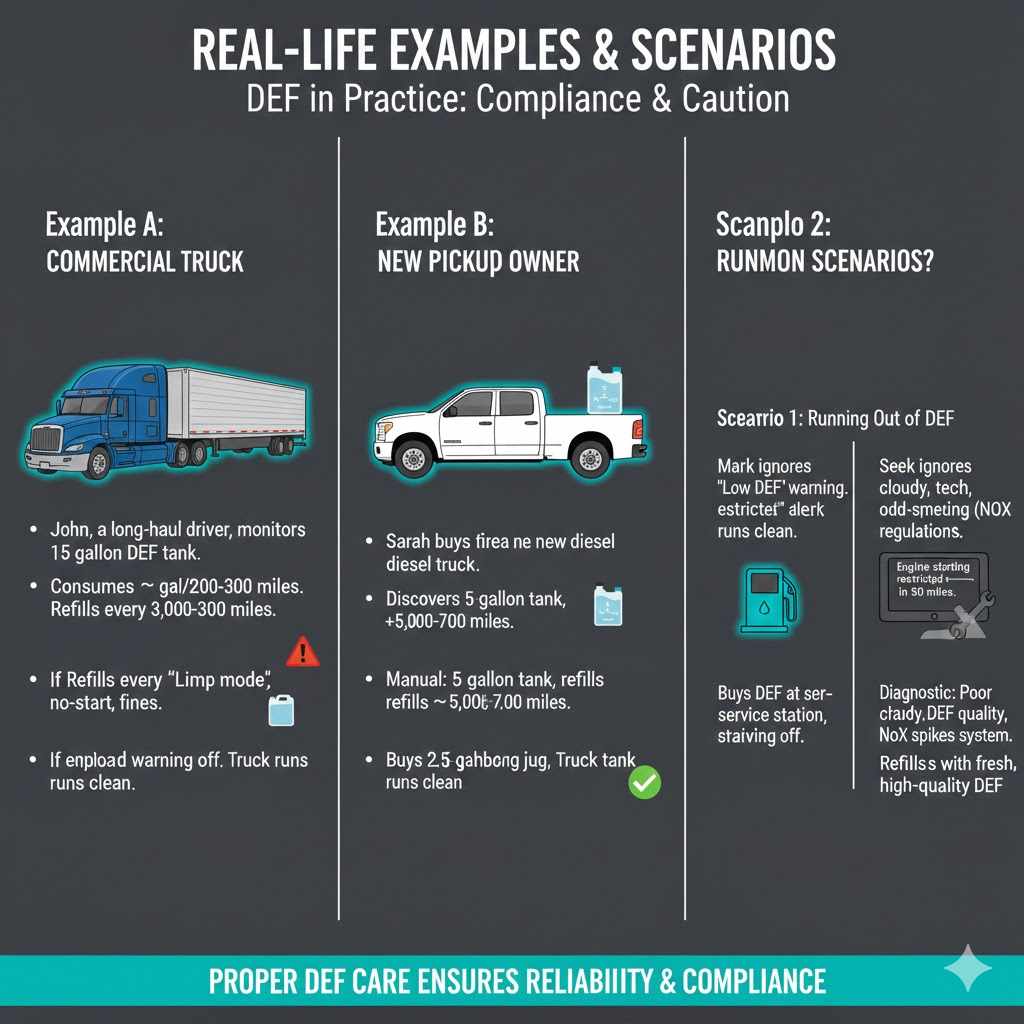
Example A A Commercial Truck and DEF
John drives a large semi-truck for a logistics company. His truck is equipped with a state-of-the-art SCR system, which is mandatory for compliance with current emissions regulations in the United States and Canada. The truck has a large, 15-gallon DEF tank.
John typically drives about 500 miles a day. His truck’s DEF consumption is roughly 1 gallon for every 200-300 miles driven, depending on load and terrain. This means he needs to refill his DEF tank about every 3,000 to 4,500 miles.
During his routine pre-trip inspections and fuel stops, John checks his DEF gauge. When the gauge gets low, or he sees the dashboard warning light, he pulls into a truck stop and purchases DEF. He uses a dedicated spout to fill his tank, ensuring no spills.
If he were to run out of DEF, his truck’s engine would go into limp mode, severely limiting its speed and power, or it might refuse to start altogether, causing significant business disruption and potential fines from transportation authorities.
Example B A New Diesel Pickup Truck Owner
Sarah recently bought a new diesel pickup truck. She noticed a small, blue cap near her diesel fuel filler and wasn’t sure what it was for. Her owner’s manual explained that her truck uses DEF as part of its SCR system to reduce emissions.
The manual indicated her DEF tank capacity is 5 gallons and that she should expect to refill it roughly every 5,000 to 7,000 miles. Sarah found a small, 2.5-gallon jug of DEF at her local auto parts store for about $15. She took it home and followed the instructions in her manual.
She opened the blue DEF cap, poured the DEF from the jug into the tank, and replaced the cap. The dashboard warning light for low DEF turned off. Sarah felt relieved and confident that she was properly maintaining her new truck and helping to keep the air cleaner.
She now knows to keep an eye on her DEF level and to purchase more when needed.
Scenario 1 Running Out of DEF
Mark is driving his diesel car on a long road trip. He has been seeing a “Low DEF” message on his dashboard for a few days but has been putting off refilling it, thinking he has plenty of time. Today, the message suddenly changed to “Engine starting restricted in 50 miles.”
Mark realizes he needs to find a place to buy DEF immediately. He pulls over at the next available service area. He finds a small convenience store that sells DEF in 1-gallon jugs.
He purchases two jugs and heads back to his car.
He opens the blue DEF filler cap and carefully pours both gallons into the tank. After refilling, he starts the car, and the warning message is gone. He drives for a few more miles, and the “Engine starting restricted” warning disappears as well.
Mark learned a valuable lesson about not delaying DEF refills; if he had waited longer, his car would have become undrivable.
Scenario 2 Contaminated DEF
A mechanic is performing routine maintenance on a diesel truck. He notices that the DEF fluid in the tank appears cloudy and has a strange odor. He suspects contamination.
The mechanic runs a diagnostic test on the SCR system. The system reports frequent NOx spikes and indicates that the DEF quality is poor. He explains to the owner that the DEF has likely been contaminated, possibly by dirt or debris entering the tank during a refill.
To fix this, the mechanic recommends draining and flushing the DEF tank and the entire SCR system. Then, he will refill it with fresh, high-quality DEF. This situation serves as a reminder of the importance of using clean equipment and methods when refilling DEF to ensure the system functions correctly and avoids costly repairs.
Frequently Asked Questions
Question: Do all diesel engines require DEF
Answer: No, not all diesel engines require DEF. Only diesel vehicles equipped with Selective Catalytic Reduction (SCR) systems need DEF to reduce emissions. Older diesel vehicles or those with different emission control technologies do not use DEF.
Question: Can I put DEF in my diesel fuel tank
Answer: Absolutely not. DEF is a separate fluid used in the exhaust system. Putting DEF in your diesel fuel tank can cause severe damage to your engine and fuel system.
Question: Where is the DEF tank usually located
Answer: The DEF tank filler cap is typically blue and often found near the diesel fuel filler neck. It may also be located under the hood or in the trunk of some vehicles.
Question: How often do I need to refill DEF
Answer: Refill frequency depends on your vehicle’s DEF tank size and your driving habits. Most vehicles will alert you when the DEF level is low, and you’ll typically refill it every few thousand miles.
Question: What happens if my diesel vehicle runs out of DEF
Answer: If your diesel vehicle runs out of DEF, its engine performance will likely be reduced (limp mode), or the engine may refuse to start altogether to ensure compliance with emission standards.
Final Thoughts
Now you know the truth about diesel exhaust fluid. Not all diesels need it, only those with SCR systems for modern emission control. Always check for the blue DEF cap or your owner’s manual to be sure.
Refilling is simple and keeps your diesel running clean and legally. Keep an eye on your DEF level and refill when alerted to avoid any issues.